The Ancient Flatbread of the Aegean
Long before modern pizza became famous around the world, the islanders of the Aegean were already baking something remarkably similar.
Its name was Ladenia.
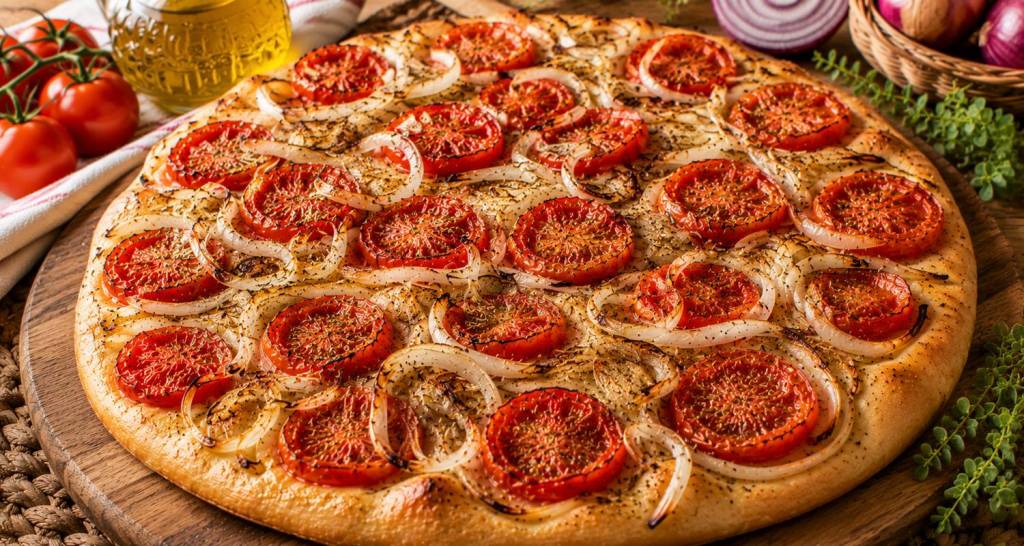
Made with nothing more than bread dough, ripe tomatoes, onions and generous amounts of extra virgin olive oil, Ladenia has been nourishing families on the tiny island of Kimolos for centuries.
Many food historians consider it one of the oldest surviving flatbreads in the Mediterranean.
Its beauty lies in its simplicity.
No cheese.
No olives.
No elaborate toppings.
Only the freshest summer ingredients and excellent olive oil.
That is exactly how the people of Kimolos have prepared it for generations.
As the island’s older cooks still say:
“Good tomatoes and good olive oil are all Ladenia needs.”
A Taste of Island Life
Life on Kimolos was always closely connected to the land.
When tomatoes ripened under the Cycladic sun and onions were freshly harvested, families kneaded bread dough, stretched it into large flat rounds and generously covered it with vegetables from their gardens.
The olive oil wasn’t simply an ingredient.
It was the soul of the recipe.
During baking, the onions slowly caramelized while the tomatoes concentrated their sweetness, creating a naturally rich topping without adding anything else.
Simple ingredients.
Extraordinary flavor.
Authentic Ladenia of Kimolos – Serves 6–8
For the Dough
- 500 g strong bread flour
- 320 ml lukewarm water
- 8 g dry yeast (or 20 g fresh yeast)
- 1 tsp salt
- 2 tbsp extra virgin olive oil
For the Topping
- 4 large ripe tomatoes, thinly sliced
- 3 large onions, thinly sliced
- 120 ml extra virgin olive oil
- Salt
- Dried oregano
Nothing else.
No cheese.
No olives in the authentic version.
Instructions
Prepare the Dough
In a large bowl, combine the flour, yeast, salt, olive oil and lukewarm water.
Knead until smooth and elastic.
Cover and let the dough rise until doubled in size.
Prepare the Topping
Slice both the tomatoes and onions into thin rounds.
Do not sauté them.
They bake directly on the dough, allowing their natural sweetness to develop in the oven.
Assemble
Stretch the dough into a generously oiled baking pan.
Drizzle a little olive oil over the dough.
Arrange the tomato and onion slices evenly across the surface.
Season with salt and oregano.
Finish with the remaining olive oil.
Don’t be shy. The people of Kimolos never were.
Bake
Bake at 200–220°C (390–430°F) for 40–45 minutes, or until:
- he crust is crisp and golden
- the onions are beautifully caramelized
- the tomatoes have concentrated their sweetness
This is where the magic happens.
Extra Tips
- Use the ripest summer tomatoes available.
- Slice the onions very thinly so they caramelize naturally.
- Don’t reduce the olive oil—it creates the authentic texture and flavor.
- Allow the baked Ladenia to rest for 10 minutes before slicing.
- It is delicious warm, at room temperature, and even the next day.
What to Serve with Ladenia
Ladenia is often enjoyed as a light meal or part of a traditional Greek table.
Best Wine Pairings
Because of its fresh tomato flavor and generous olive oil, Ladenia pairs beautifully with crisp Greek white wines.
White Wines
- Assyrtiko
- Aidani
- Athiri
- Savatiano
Rosé
A dry Greek rosé also complements the sweetness of the onions perfectly.
Non-Alcoholic Pairings
- Sparkling water with lemon
- Homemade lemonade
- Iced mountain tea
Nutritional Value
Despite its simplicity, Ladenia is surprisingly nutritious.
Tomatoes provide lycopene, vitamin C and antioxidants.
Onions contribute beneficial plant compounds and natural prebiotic fiber.
Extra virgin olive oil offers heart-healthy monounsaturated fats and polyphenols.
The bread supplies complex carbohydrates that provide lasting energy.
Health Benefits
As part of a balanced Mediterranean diet, Ladenia may help support:
- Heart health through extra virgin olive oil
- Digestive health thanks to onions and dietary fiber
- Immune function with vitamin C and antioxidant-rich tomatoes
- Healthy aging through polyphenols and lycopene
- Sustained energy from complex carbohydrates
- An anti-inflammatory eating pattern when enjoyed alongside vegetables and olive oil
Frequently Asked Questions (FAQ)
- What is Ladenia?
Ladenia is a traditional flatbread from the Greek island of Kimolos, topped only with tomatoes, onions, olive oil and oregano.
- Is Ladenia similar to pizza?
Although they look similar, Ladenia is much older and follows a completely different culinary tradition rooted in the Cycladic islands.
- Why doesn’t authentic Ladenia contain cheese?
The original island recipe celebrates the flavor of summer vegetables and olive oil without additional toppings.
- Can I add olives?
You certainly can if you like, but authentic Kimolos Ladenia contains no olives.
- Why are the vegetables placed on the dough raw?
Baking everything together allows the onions to caramelize naturally while the tomatoes slowly concentrate their sweetness.
- Can I prepare it ahead of time?
Yes.
Many island families enjoy Ladenia at room temperature, making it perfect for picnics, beach meals and outdoor gatherings.
A Timeless Taste of the Cyclades
Authentic Ladenia of Kimolos reminds us that the finest recipes are often the simplest.
Bread.
Tomatoes.
Onions.
Olive oil.
Four humble ingredients transformed into one of Greece’s oldest and most beloved island specialties.
Every slice tells the story of the Cyclades, where good food has always begun in the garden and ended around a family table.
Every Greek recipe tells a story. Discover authentic flavors, traditions, and timeless family recipes with CookTheGreekWay.