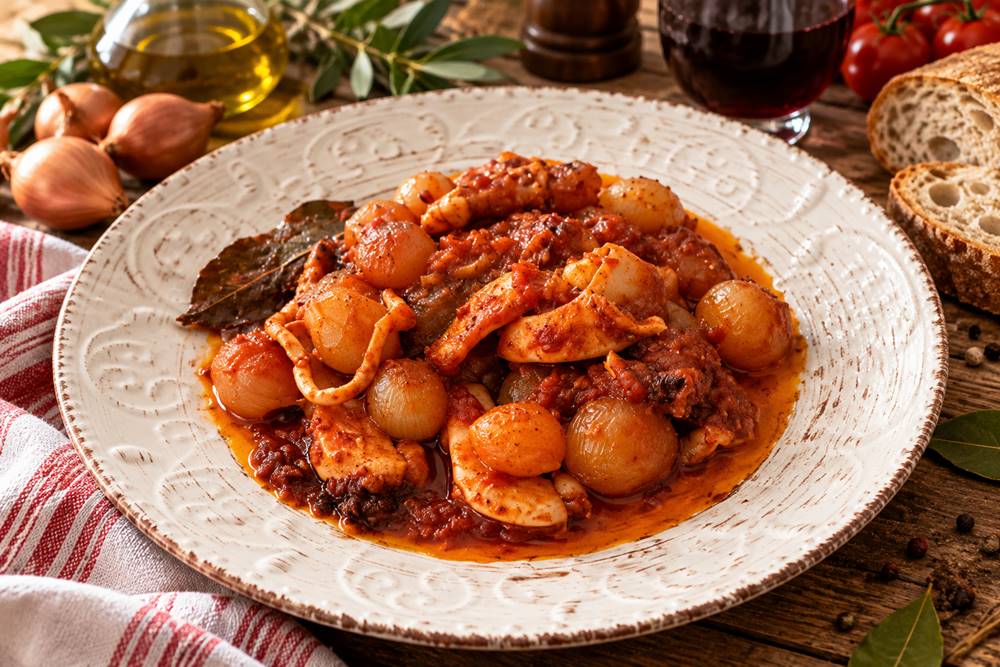
Some dishes surprise you from the very first bite. Soupies stifado, or Greek cuttlefish stifado, was one of those dishes for me.
Tender pieces of cuttlefish, sweet whole pearl onions and a rich tomato sauce flavored with red wine, vinegar, bay leaves and allspice create something wonderfully intense. The sauce becomes thick and glossy as it cooks, while the onions turn soft and almost sweet.
Stifado is one of the most recognizable slow-cooked preparations of Greek cuisine. Although many people immediately think of meat when they hear the word, seafood versions are also part of the Greek cooking repertoire. Cuttlefish works particularly well because its distinctive flavor stands up beautifully to the wine, tomato and spices.
And when the sauce reaches the stage we call melomeni in Greek — mellow, concentrated and almost silky — you will definitely need bread!
Greek Cuttlefish Stifado – Soupies Stifado
Ingredients (Serves 4–5)
- 1 kg (2.2 lb) cleaned cuttlefish, fresh or frozen
- 700–800 g (1.5–1.75 lb) small pearl onions, peeled and left whole
- 2 garlic cloves
- 400 g (14 oz) ripe chopped tomatoes or canned tomatoes
- 1 tbsp tomato paste
- 100 ml (⅓ cup + 1 tbsp) dry red wine
- 2 tbsp red wine vinegar
- 80–100 ml (⅓–scant ½ cup) extra virgin olive oil
- 2 bay leaves
- 4–5 allspice berries
- Freshly ground black pepper
- Salt, as needed
- 100–150 ml hot water, only if necessary
How to Make Cuttlefish Stifado
Cut the cleaned cuttlefish into fairly large pieces.
Heat about two-thirds of the olive oil in a wide saucepan. Add the pearl onions and sauté over medium heat for 5–7 minutes, gently shaking the pan so they color without breaking apart.
Add the garlic and cuttlefish and cook for another 2–3 minutes. Stir in the tomato paste and cook for about 30 seconds.
Pour in the red wine and vinegar and allow them to cook for about 2 minutes.
Add the tomatoes, bay leaves, allspice and black pepper. Add only a little hot water if necessary — cuttlefish releases liquid as it cooks.
Cover, reduce the heat and simmer gently for approximately 35 minutes. Check the cuttlefish and onions, then continue cooking for another 10–15 minutes. If there is plenty of liquid, remove the lid for the final stage.
The cuttlefish should be tender, the onions intact and beautifully softened, and the sauce thick, glossy and concentrated rather than watery.
Taste before adding salt, drizzle over the remaining olive oil and let the stifado rest for 15–20 minutes before serving.
Tips for Perfect Soupies Stifado
- Don’t cut the cuttlefish too small. Larger pieces remain succulent during slow cooking.
- Be gentle with the pearl onions. I prefer shaking the saucepan rather than constantly stirring them.
- Most importantly, don’t rush the final reduction. This is where an ordinary tomato sauce transforms into that wonderfully melomeni stifado sauce.
- And don’t overcook the cuttlefish unnecessarily. Once tender, it is ready.
What to Serve with Cuttlefish Stifado
My first choice is simple: fresh crusty country bread for soaking up every drop of sauce.
For a larger meal, serve it with plain rice or pilaf and a fresh green salad. A simple cabbage salad also works beautifully in autumn.
For wine, choose a dry Greek red with moderate body, such as a young Agiorgitiko, or a dry rosé if you prefer something lighter.
A glass of tsipouro or ouzo can also accompany smaller portions served as a seafood meze.
Nutritional Value & Benefits
Cuttlefish is naturally rich in high-quality protein and supplies important micronutrients including vitamin B12, selenium, phosphorus and copper, while also providing marine omega-3 fatty acids.
Protein contributes to the maintenance of muscle and normal body tissues. Vitamin B12 supports normal nervous-system function and red-blood-cell formation, while selenium contributes to normal immune and thyroid function and helps protect cells from oxidative stress.
The onions and tomatoes add plant compounds and micronutrients, while extra virgin olive oil provides predominantly monounsaturated fats.
Cuttlefish also contains cholesterol and the final dish’s sodium content depends heavily on added salt, so portion size and seasoning matter.
FAQ
- Can I use frozen cuttlefish?
Yes. Thaw it completely, drain it well and pat it dry before cooking.
- Can I make cuttlefish stifado a day ahead?
Yes. Like many slow-cooked dishes, its flavors develop beautifully after resting. Refrigerate it promptly and reheat gently.
- Why did my cuttlefish become tough?
Cuttlefish can be tough when insufficiently cooked. For stifado, gentle simmering allows its connective tissue to soften. Check tenderness rather than relying solely on the clock.
- Can I make stifado without cinnamon or cloves?
Absolutely. This version uses bay leaves and allspice for warmth and aroma, allowing the cuttlefish, onions, wine and tomato to remain the stars.
A Seafood Stifado Worth Discovering
Rich, spicy, slightly sweet from the onions and deeply savory from the cuttlefish, this is one of those Greek dishes that tastes far more elaborate than its simple ingredients suggest.
And that thick red sauce with tender cuttlefish and whole mellow onions? Keep the bread close.
Kali orexi!
Every Greek recipe tells a story. Discover authentic flavors, traditions, and timeless family recipes with CookTheGreekWay.



Leave a comment