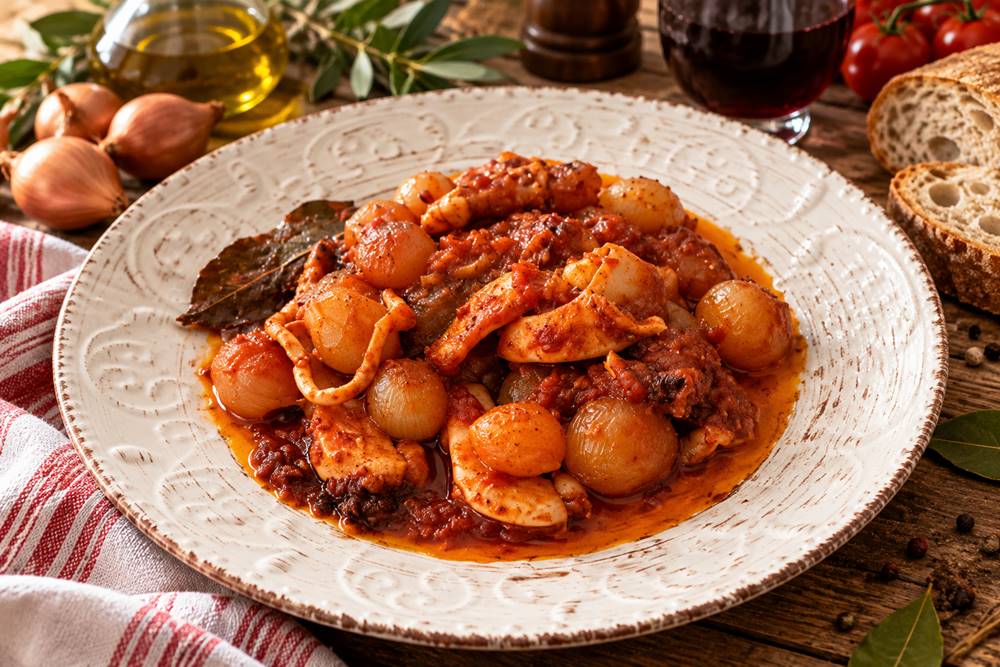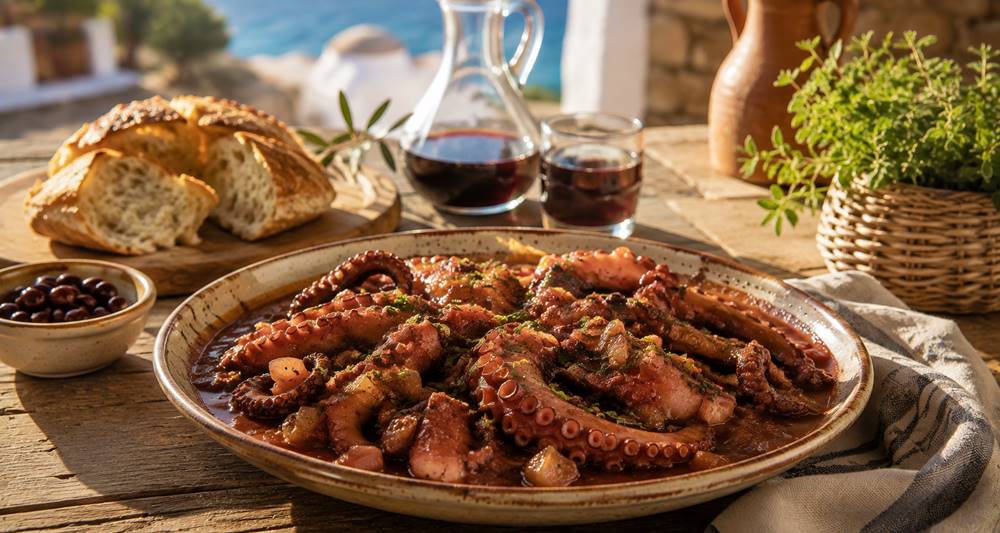
Few dishes capture the soul of the Greek islands as beautifully as Htapodi Krasato. For generations, fishermen prepared octopus with the simplest ingredients they had on hand: onions, tomatoes, local red wine, olive oil and fragrant herbs.
Slowly simmered until perfectly tender, this humble dish became a favourite family meal and a beloved meze served in seaside tavernas throughout Greece.
Every island has its own version. Some add cinnamon, others bay leaves or allspice, while many old fishermen insist that the best recipe needs nothing more than good wine, sweet onions and patience.
Authentic Greek Octopus in Red Wine (Serves 4)
Ingredients
- 1.2 kg fresh or frozen octopus
- 3 large onions, sliced
- 3 garlic cloves, chopped
- 3 ripe tomatoes, grated
- 2 tbsp tomato paste
- 150 ml dry red wine
- 80 ml extra virgin Greek olive oil
- 2 bay leaves
- 4–5 whole allspice berries
- Freshly ground black pepper
- Salt (only if needed)
- Fresh parsley for serving
Method
If using frozen octopus, thaw completely. Cut into medium-sized pieces.
Place the octopus in a heavy pot over medium heat without adding water. It will release its own juices. Simmer for about 20 minutes.
Add the olive oil and onions. Cook gently until the onions become soft and sweet.
Stir in the garlic and tomato paste, then add the grated tomatoes.
Pour in the red wine and allow the alcohol to evaporate for 2–3 minutes.
Add the bay leaves and allspice. Cover and simmer over low heat for approximately 45–60 minutes, or until the octopus is fork-tender and the sauce has thickened beautifully.
Taste before seasoning, as octopus is naturally salty.
Sprinkle with fresh parsley and serve warm with crusty bread.
Traditional Secrets
- Frozen octopus is often naturally more tender than fresh.
- Never boil octopus quickly; slow cooking is the secret.
- Add salt only after tasting.
- A full-bodied dry red wine gives the richest flavour.
- The dish tastes even better the following day.
Serving Suggestions
Serve with:
- rustic country bread
- creamy mashed potatoes
- rice pilaf
- roasted baby potatoes
- grilled seasonal vegetables
- traditional Greek salad
Wine Pairing
Pair with:
- Agiorgitiko
- Limnio
- Xinomavro
- or a light dry rosé.
Approximate Nutritional Value (per serving)
- Calories: 360 kcal
- Protein: 36 g
- Fat: 17 g
- Carbohydrates: 10 g
- Fibre: 2 g
Health Benefits
Octopus is naturally rich in high-quality protein, while remaining relatively low in fat.
It provides vitamin B12, selenium, iron, phosphorus and copper, nutrients that support energy metabolism, the nervous system and normal immune function.
Combined with extra virgin olive oil, tomatoes and onions, this recipe follows the principles of the Mediterranean Diet and delivers antioxidants together with heart-friendly monounsaturated fats.
Frequently Asked Questions
- Can I use frozen octopus?
Yes. Many Greek cooks actually prefer it because freezing naturally tenderises the meat.
- Do I need to boil the octopus first?
No. Traditional recipes allow it to cook slowly in its own juices.
- Which wine should I use?
A dry Greek red wine with good acidity is ideal.
- Can I make it in advance?
Absolutely. It is often even more delicious the next day.
- Can I freeze leftovers?
Yes. Freeze in an airtight container for up to two months.
Greek Octopus in Red Wine is much more than a seafood recipe. It is a celebration of island life, where the sea, local wine and simple ingredients come together to create a timeless Mediterranean classic.
Whether enjoyed at a family table or overlooking the Aegean Sea, every bite tells the story of Greece’s rich culinary heritage.
Every Greek recipe tells a story. Discover authentic flavors, traditions, and timeless family recipes with CookTheGreekWay.