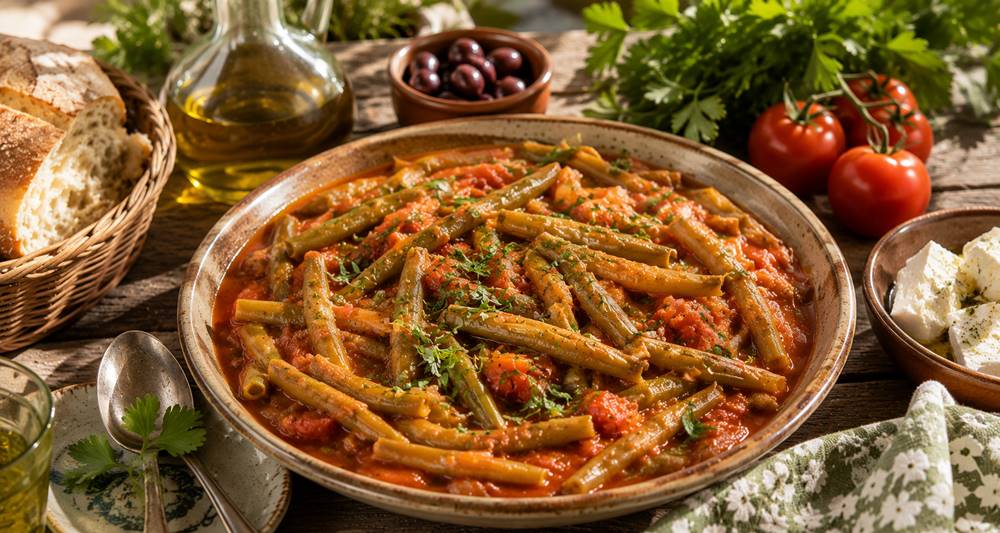
There are recipes that instantly remind us of summer in Greece.
Not because they are elaborate, but because they capture the essence of the season: vegetables picked from the garden, ripe tomatoes warmed by the sun, fragrant olive oil and meals shared slowly under the shade of a vine.
Ampelofasoula Ladera is one of those recipes.
Although green beans are well known around the world, yardlong beans have been cultivated in many Greek home gardens for generations. During July and August, they were harvested early in the morning and cooked the very same day with tomatoes, onions and generous extra virgin olive oil.
It is a humble dish, yet one that perfectly represents the philosophy of traditional Greek home cooking: simple ingredients, seasonal produce and patience.
A Dish from the Greek Garden
Ampelofasoula thrive in the hot Greek summer.
Unlike ordinary green beans, they grow long and slender, remaining tender when harvested young.
For decades, families throughout mainland Greece—especially in Thessaly, Central Greece and the Peloponnese—grew them alongside tomatoes, peppers, zucchini and eggplants.
When all these vegetables reached their peak in August, the famous Greek ladera dishes filled family tables almost every day.
Ampelofasoula Ladera became one of the most beloved because it required only a few ingredients and celebrated the flavour of the vegetables themselves.
Authentic Greek Yardlong Beans Recipe (Servings 4–6)
Ingredients
- 1 kg fresh yardlong beans (Ampelofasoula)
- 2 large onions, finely sliced
- 3 garlic cloves, finely chopped
- 700 g ripe tomatoes, grated or chopped
- 120 ml extra virgin Greek olive oil
- ½ bunch fresh parsley, chopped
- Salt
- Freshly ground black pepper
- Optional: 1 small potato, cut into wedges
Method
Wash the yardlong beans thoroughly.
Trim only the ends and cut them into pieces approximately 8–10 cm long.
Heat the olive oil in a wide pot.
Cook the onions over medium-low heat until soft and translucent.
Add the garlic and cook for one minute.
Add the tomatoes and allow the sauce to simmer for about 10 minutes.
Stir in the yardlong beans and coat them well with the tomato sauce.
If necessary, add a small amount of hot water.
Cover and cook over low heat for approximately 40–50 minutes until the beans are tender and the sauce has become rich and glossy.
Add the parsley during the last few minutes of cooking.
Taste and adjust the seasoning.
Allow the dish to rest for 15 minutes before serving.
Like many Greek ladera, it tastes even better the following day.
Traditional Secrets
- Harvest the beans while they are still young and tender.
- Do not overcook them; they should remain soft without falling apart.
- Use fully ripe summer tomatoes.
- Cook slowly over low heat.
- Never skimp on good-quality olive oil.
- Fresh parsley should always be added at the end.
- The dish improves after resting.
Serving Suggestions
Serve with:
- Greek feta cheese
- crusty country bread
- Kalamata olives
- cucumber and tomato salad
- grilled sardines for a complete Mediterranean meal
Wine Pairing
This dish pairs beautifully with:
- Assyrtiko
- Moschofilero
- Roditis
- a light dry rosé
Approximate Nutritional Value (per serving)
- Calories: 260 kcal
- Protein: 5 g
- Carbohydrates: 18 g
- Fibre: 8 g
- Fat: 18 g
- Vitamin C: High
- Vitamin A: Moderate
- Folate: Good source
- Potassium: Good source
Health Benefits
Because this recipe follows the principles of the Mediterranean Diet, it offers several nutritional advantages.
- Rich in Fibre
Supports healthy digestion and helps maintain satiety.
- Heart-Friendly
Extra virgin olive oil provides monounsaturated fats that support cardiovascular health.
- Immune Support
Tomatoes, parsley and yardlong beans provide vitamin C and antioxidants.
- Gut-Friendly
The combination of vegetables and fibre contributes to a healthy digestive system.
- Weight-Friendly
Low in saturated fat while remaining satisfying.
- Plant-Based Nutrition
Ideal for vegetarian and vegan Mediterranean eating patterns.
Frequently Asked Questions
- What are Ampelofasoula?
Ampelofasoula are yardlong beans traditionally grown in Greek home gardens during summer.
- Can I substitute green beans?
Yes. Green beans may be used, although the flavour and texture are slightly different.
- Can I freeze this dish?
Yes. It freezes well for up to three months.
- Can I prepare it a day ahead?
Absolutely. Like most Greek ladera, the flavour improves the next day.
- Is this recipe vegan?
Yes. The traditional recipe contains no animal products.
- Can I add potatoes?
Many Greek families do. Potatoes absorb the tomato sauce beautifully.
- Which olive oil is best?
High-quality extra virgin Greek olive oil.
- Can I serve it cold?
Yes. Many Greeks enjoy it at room temperature during summer.
Ampelofasoula Ladera reminds us that the greatest Greek recipes are often the simplest.
Fresh vegetables, excellent olive oil and slow cooking create a meal that is nourishing, economical and deeply connected to the rhythm of the Greek countryside.
Every spoonful tells the story of summer gardens, family lunches and recipes lovingly passed from one generation to the next.
Every Greek recipe tells a story. Discover authentic flavors, traditions, and timeless family recipes with CookTheGreekWay.

 CookTheGreekWay