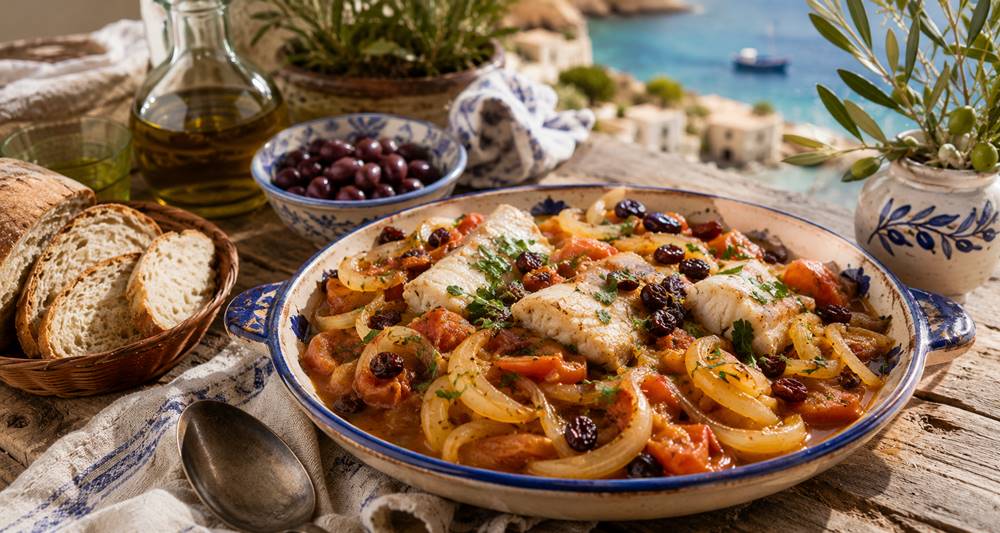
Traditional Salt Cod with Onions, Tomatoes and Raisins
Some traditional Greek dishes reveal their character immediately. Others carry their story quietly, hidden behind a curious name, a handful of humble ingredients and a recipe passed from one generation to the next.
Bakaliaros Tsiladia belongs to the second category.
This traditional dish from Messinia, in the southwestern Peloponnese, brings together salt cod, slowly softened onions, ripe tomatoes, Corinthian raisins and generous Greek olive oil. The result is a wonderfully balanced combination of savoury, sweet and gently acidic flavours.
The cod provides depth and salinity. The onions become almost creamy as they cook. The tomato gives the sauce body, while the small black raisins add a subtle sweetness that may initially seem unexpected but makes perfect sense within the culinary history of the region.
For me, this is exactly the kind of recipe worth preserving: a dish that tells us not only what people ate, but also how geography, trade and necessity shaped the Greek table.
What Does “Tsiladia” Mean?
The precise origin of the word tsiladia is not completely certain. One widely repeated explanation connects it to a local rendering of the phrase “ts’ ladias”, meaning approximately “of the oil” or “cooked in oil.”
The interpretation is fitting because olive oil is not merely a cooking fat in this recipe. It forms the foundation of the sauce and brings together the onions, tomatoes, raisins and fish.
The dish is now strongly associated with Messinia, one of Greece’s most important olive-growing regions and the home of Kalamata, a historic commercial port.
A Recipe Born from Trade and Rural Ingenuity
Salt cod is not native to Greek waters. It reached the Greek mainland as a preserved imported food that could travel long distances without refrigeration.
Because it kept well, salt cod became particularly valuable in inland and mountainous communities, where fresh fish was difficult to obtain. It was sold in towns and villages by travelling merchants and gradually became part of the local culinary tradition.
Messinia was also historically renowned for its production and export of Corinthian currants, the tiny, dark Greek raisins that once played a major role in the regional economy.
At the port of Kalamata, imported preserved fish and locally produced raisins existed within the same commercial world. The combination of salt cod and currants may therefore reflect the meeting of two important products: one arriving by sea and the other leaving the region for distant markets.
Food traditions rarely emerge from a single recorded moment. Nevertheless, Bakaliaros Tsiladia beautifully expresses the commercial and agricultural identity of Messinia: olive oil, tomatoes, onions, raisins and preserved fish brought together in one deeply regional dish.
Sweet and Savoury Flavours in Greek Cooking
The use of raisins in a fish dish may surprise anyone unfamiliar with older Greek regional cooking.
However, sweet and savoury combinations have deep roots in the cuisines of the Mediterranean. Dried fruit was used not only in desserts but also in pies, rice dishes, meat stews, vegetable fillings and seafood recipes.
In Bakaliaros Tsiladia, the raisins do not make the dish taste sugary. They soften the sharpness of the tomato, complement the natural sweetness of the onions and balance the lingering saltiness of the cod.
The secret is moderation. We want small bursts of sweetness, not a sweet tomato sauce.
Authentic Bakaliaros Tsiladia Recipe
Ingredients (Servings 6)
- 1–1.2 kg salt cod, preferably a thick centre-cut piece
- 3–4 large onions, thinly sliced
- 2 garlic cloves, finely chopped
- 500 g ripe tomatoes, grated or finely chopped
- 1 tablespoon tomato paste
- 50–60 g Corinthian currants
- 1–2 bay leaves
- 120 ml extra virgin olive oil, plus more if needed
- 80–100 g all-purpose flour, for coating the fish
- freshly ground black pepper
- ½ teaspoon sugar, only if the tomatoes are very acidic
- a little water, as needed
- olive oil for shallow-frying
Do not add salt before tasting the finished sauce. Even properly desalted cod may retain enough salt to season the entire dish.
How to Desalt Salt Cod Properly
Cut the cod into large serving pieces and rinse them under cold running water to remove the surface salt.
Place the pieces in a large bowl with the skin facing upwards and cover them completely with plenty of cold water.
Refrigerate for 24–36 hours, changing the water every 4–6 hours.
Very thick pieces may require up to 48 hours.
Before cooking, cut off a tiny piece from the thickest section, simmer it briefly and taste it. This is the most reliable way to determine whether the fish has been sufficiently desalted.
Drain the cod and dry it extremely well with kitchen paper.
Method
- Prepare the Raisins
Place the Corinthian currants in a small bowl and cover them with lukewarm water.
Leave them to soften for approximately 10–15 minutes, then drain them well.
This step prevents the raisins from absorbing too much moisture from the sauce during cooking.
- Lightly Fry the Cod
Place the flour in a shallow dish.
Coat each piece of cod lightly, shaking off all excess flour.
Heat a shallow layer of olive oil in a large frying pan over medium heat.
Fry the pieces briefly for approximately 2 minutes on each side, just until they form a light golden crust. They should not cook completely at this stage.
Transfer the fish carefully to a plate lined with kitchen paper.
The light flour coating helps the cod retain its shape and later thickens the tomato sauce very gently.
- Slowly Cook the Onions
Add approximately 120 ml extra virgin olive oil to a wide saucepan or deep ovenproof pan.
Add the sliced onions and cook over low to medium-low heat for 15–20 minutes.
Stir occasionally and allow them to soften gradually without browning.
Add the garlic during the final minute.
The onions should become sweet, translucent and silky. Rushing this stage or allowing them to burn will change the character of the entire dish.
- Prepare the Tomato Sauce
Add the tomato paste and cook for approximately 1 minute, stirring continuously.
Pour in the grated tomatoes.
Add the bay leaves, freshly ground black pepper and, only if necessary, a small amount of sugar.
Simmer gently for 10–15 minutes until the sauce begins to thicken.
Add the drained currants and cook for another 3–4 minutes.
Taste the sauce before adding any salt.
- Finish the Dish
Arrange the lightly fried cod pieces over the onion and tomato sauce in a single layer.
Spoon some of the sauce over the fish.
Add a small amount of hot water only if the sauce appears too thick.
Cover and simmer over very low heat for approximately 15–20 minutes, gently shaking the pan once or twice instead of stirring.
Alternatively, transfer the dish to a preheated oven and bake at 180°C for approximately 20–25 minutes.
The cod is ready when it flakes easily but remains juicy and holds its shape.
Leave the dish to rest for at least 15 minutes before serving.
Bakaliaros Tsiladia is particularly delicious when served warm rather than piping hot.
The Most Important Secrets
Choose Thick Pieces of Cod
Thick centre-cut pieces remain succulent and are less likely to break apart during frying and simmering.
Do Not Rush the Desalting Process
The final dish cannot be corrected easily if the cod remains overly salty. Keep the fish refrigerated throughout the soaking process and change the water regularly.
Dry the Fish Thoroughly
Wet cod will not fry properly, and the hot oil may splatter dangerously.
Use Only a Light Dusting of Flour
The flour should create a delicate surface, not a heavy crust. Shake off the excess before frying.
Cook the Onions Slowly
The sauce depends on the onions becoming naturally sweet and almost melting into the tomato.
Use Real Corinthian Currants
Corinthian currants are smaller, darker and more intensely flavoured than ordinary raisins. They are one of the ingredients that give this Messinian dish its distinctive identity.
Do Not Overuse the Raisins
They should balance the salt cod and tomato rather than dominate them. Approximately 50–60 g is enough for a family-sized dish.
Avoid Excess Salt
Never season the sauce before tasting the desalted cod. The fish will release some remaining salinity during cooking.
Shake the Pan Instead of Stirring
Once the cod has been added, avoid stirring with a spoon. Gently shake the pan by its handles to distribute the sauce without breaking the fish.
Allow the Dish to Rest
A short resting period helps the sauce settle and allows the flavours to come together.
Traditional Variations
As with many regional recipes, household methods vary.
Some cooks:
- fry the cod before adding it to the sauce;
- bake the floured cod without frying;
- prepare the dish entirely on the stovetop;
- use only fresh tomato;
- combine fresh tomato with a little tomato paste;
- add more raisins for a noticeably sweeter result;
- include a small amount of dry white wine;
- add a pinch of cinnamon or cloves.
The most recognisable Messinian version, however, is built around salt cod, onions, tomato, Corinthian currants and abundant olive oil.
What to Serve with Bakaliaros Tsiladia
Because this is a rich and aromatic dish, the best accompaniments are simple.
Serve it with:
- crusty country bread
- boiled greens with lemon
- wild chicory or dandelion greens
- a simple cabbage salad
- steamed potatoes
- roasted peppers
- Kalamata olives
- a green salad with a sharp lemon dressing.
Bread is almost essential because the onion, tomato and olive oil sauce is one of the best parts of the dish.
Avoid pairing it with another heavy tomato-based dish, a rich cheese pie or fried appetisers. The cod should remain the centrepiece of the meal.
Wine Pairing
Bakaliaros Tsiladia pairs beautifully with a dry Greek white wine that has fresh acidity and enough character to balance the tomato, olive oil and sweetness of the raisins.
Good choices include:
- Roditis, particularly a fresh, mineral expression;
- Moschofilero, for its aromatic freshness and lively acidity;
- Assyrtiko, especially if you prefer a firmer, more mineral wine;
- a dry white wine from the Peloponnese;
- a light, dry rosé.
Avoid heavily oaked white wines, very tannic reds and noticeably sweet wines.
For a non-alcoholic pairing, serve chilled sparkling water with lemon or a lightly infused water with citrus peel and fresh herbs.
Estimated Nutritional Value
The following values are approximate and may vary depending on how much oil and flour are absorbed, the size of the cod portions and the success of the desalting process.
Per serving, based on 6 servings
- Calories: approximately 480–540 kcal
- Protein: approximately 35–42 g
- Total fat: approximately 25–31 g
- Saturated fat: approximately 4–5 g
- Carbohydrates: approximately 22–28 g
- Fibre: approximately 3–4 g
- Sugars: approximately 10–13 g
- Sodium: highly variable
Salt cod can remain high in sodium even after soaking, so the sodium content cannot be estimated reliably without analysing the final product.
Potential Health Benefits
High-Quality Protein
Cod provides complete protein containing the essential amino acids required for maintaining muscles, tissues and normal body functions.
A protein-rich main course may also help support satiety when served as part of a balanced meal.
Vitamin B12 and Selenium
Cod naturally provides vitamin B12 and selenium.
Vitamin B12 contributes to normal red blood cell formation and nervous-system function, while selenium supports normal thyroid function and helps protect cells from oxidative stress.
Olive Oil and the Mediterranean Diet
Extra virgin olive oil provides mostly monounsaturated fat and forms an important part of the traditional Mediterranean dietary pattern.
In this recipe it replaces heavier animal fats and gives the dish richness, flavour and texture.
Tomatoes and Onions
Tomatoes provide carotenoids, including lycopene, while onions contribute a variety of plant compounds.
Cooking tomatoes with olive oil may help the body absorb fat-soluble carotenoids more effectively.
Fish as Part of a Balanced Diet
Health organisations commonly recommend including fish regularly within a balanced dietary pattern. The American Heart Association recommends two servings of fish per week, particularly when fish replaces foods higher in saturated fat. Cod is a lean fish and contains less omega-3 fat than oily fish such as sardines, salmon or mackerel, so it should not be described as an especially rich source of omega-3.
An Important Note About Sodium
The main nutritional concern in this dish is sodium.
Salt cod is preserved with a large quantity of salt, and although soaking removes much of it, the final sodium level depends on:
- the thickness and curing of the cod;
- the length of soaking;
- how often the water is changed;
- whether extra salt is added during cooking.
For this reason:
- desalt the fish carefully;
- do not add salt automatically;
- serve moderate portions;
- accompany it with unsalted vegetables or salad;
- avoid salty cheese, cured meats and heavily salted olives in the same meal.
The World Health Organization recommends that adults consume less than 2,000 mg of sodium per day, equivalent to less than 5 g of salt. People who need to restrict sodium should treat salt-cod dishes cautiously and seek individual guidance when appropriate.
Frequently Asked Questions
- What is Bakaliaros Tsiladia?
Bakaliaros Tsiladia is a traditional Messinian dish made with desalted salt cod, onions, tomatoes, Corinthian currants and olive oil.
- Is Bakaliaros Tsiladia from Zakynthos?
No. The dish is primarily associated with Messinia in the southwestern Peloponnese, particularly the wider culinary tradition around Kalamata.
- Why are Raisins Added to the Cod?
The raisins balance the salinity of the cod and the acidity of the tomatoes. They also reflect the historic importance of Corinthian currant production in the Peloponnese.
- Can I Use Fresh Cod?
Fresh cod can be used, and some modern versions do so, but salt cod gives the traditional dish its characteristic flavour and historical identity.
- How Long Should Salt Cod Be Soaked?
Most salt cod requires 24–36 hours in cold water in the refrigerator, with frequent water changes. Very thick pieces may require up to 48 hours.
- How Do I Know When the Cod Is Properly Desalted?
Cut off a small piece from the thickest part, simmer it briefly and taste it. The fish should remain pleasantly seasoned but not aggressively salty.
- Must the Cod Be Fried?
Light frying is common and helps the fish hold its shape. However, it may also be lightly floured and baked or placed directly into the sauce for a lighter variation.
8. Can I Make the Dish Without Flour?
Yes. The cod may be cooked directly in the sauce, although it will be more delicate and the sauce may remain slightly thinner.
- Can I Leave Out the Raisins?
You can, but the raisins are one of the defining characteristics of the Messinian recipe. Without them, the dish becomes closer to a general Greek salt cod in tomato and onion sauce.
- Can I Prepare It in Advance?
Yes. In fact, the flavour often improves after several hours. Prepare it earlier in the day, allow it to rest and serve it warm.
- How Long Does It Keep?
Store leftovers in a covered container in the refrigerator for up to 2 days.
- Can Bakaliaros Tsiladia Be Frozen?
It can be frozen, although the fish may become slightly softer after thawing. Freeze it in its sauce for up to 1 month and thaw it slowly in the refrigerator.
- Is It Suitable for Lent?
Traditional fasting rules vary by day and religious observance. Fish is permitted on certain feast days during fasting periods but not throughout every strict fast, so the dish should be served according to the particular calendar and household tradition.
Bakaliaros Tsiladia is not an elaborate restaurant creation. It is a dish born from preservation, trade, regional agriculture and the practical intelligence of home cooking.
Imported salt cod met Messinian olive oil, local onions, tomatoes and Corinthian currants. From that meeting came a recipe that is both humble and unexpectedly sophisticated.
Its beauty lies in contrast: salty and sweet, rich and acidic, rustic and complex.
Served warm with country bread and a glass of crisp Greek white wine, it offers a genuine taste of the old Messinian table—and a small piece of Greek culinary history that deserves to be remembered.
Every Greek recipe tells a story. Discover authentic flavors, traditions, and timeless family recipes with CookTheGreekWay.