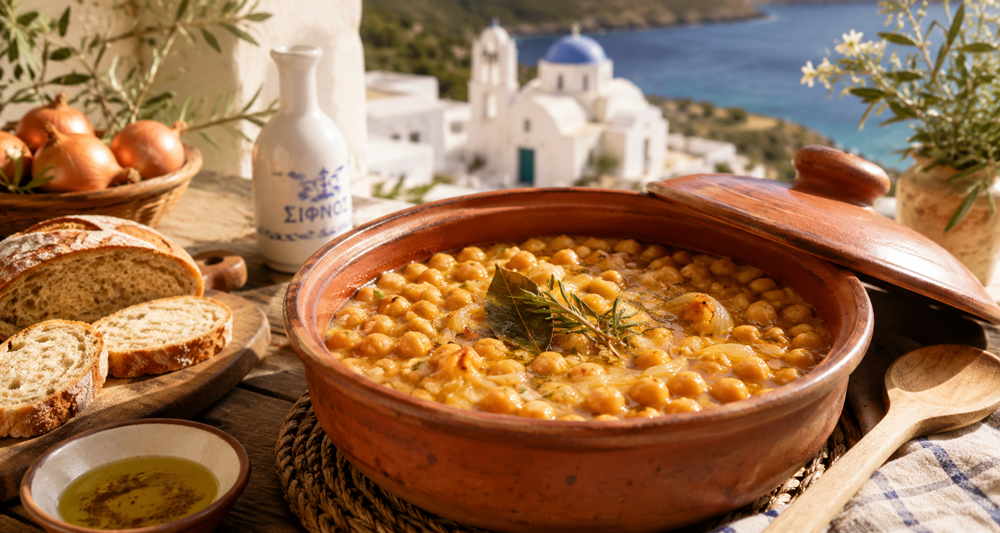
The Soul of Sunday Cooking in the Cyclades
Some recipes impress with dozens of ingredients. Others become unforgettable through simplicity, patience, and tradition. Revithada, the famous chickpea stew of Sifnos, belongs to the second category.
It is one of the most iconic dishes of the Greek islands and a true symbol of slow cooking. For generations, Saturday evenings in Sifnos followed the same beloved ritual. Families prepared their chickpeas inside the traditional clay pot known as the “skepastaria”, added onions, olive oil, bay leaves, and water, then carried the pot to the village’s wood-fired oven.
The stew slowly cooked overnight in the fading heat of the oven. By Sunday lunchtime, the chickpeas had transformed into an incredibly creamy dish with a rich golden broth and deep, comforting flavor.
Revithada perfectly represents the philosophy of traditional Greek cuisine: a handful of humble ingredients, excellent extra virgin olive oil, plenty of patience, and respect for time.
Authentic Sifnos Revithada
Ingredients (Serves 6)
- 500 g small dried chickpeas
- 2 large onions, finely chopped
- 120–150 ml extra virgin olive oil
- 2 bay leaves
- 1 sprig fresh rosemary (optional)
- Salt
- Freshly ground black pepper
- Water, as needed
Instructions
- Soak the Chickpeas
Wash the chickpeas thoroughly and soak them in plenty of cold water for 12–18 hours.
If possible, change the soaking water once.
- Prepare the Clay Pot
Drain the chickpeas and place them in a clay pot.
Add:
- chopped onions
- bay leaves
- rosemary
- olive oil
Cover with water, leaving approximately 4–5 cm (about 2 inches) above the chickpeas.
- Slow Baking
Cover the clay pot tightly.
Bake:
- at 140–150°C (285–300°F) for 6–8 hours, or
ideally at 120°C (250°F) for 8–10 hours.
Traditionally, Revithada remained inside the village wood-fired oven all night.
- Finish
Add the salt near the end of cooking.
Instead of stirring with a spoon, gently shake the pot to keep the chickpeas whole while naturally thickening the broth.
Traditional Secrets
- Choose small chickpeas, as they cook more evenly and become creamier.
- Don’t be afraid of using plenty of onions—they melt into the broth and create natural sweetness.
- A clay pot is the secret behind the silky texture.
- High-quality extra virgin olive oil is not simply an ingredient—it is one of the stars of the dish.
- Low temperature and long cooking time make all the difference.
- Always add salt toward the end of cooking.
- Like many traditional Greek dishes, Revithada tastes even better the following day.
How to Make It in a Home Oven
If you don’t own a traditional clay pot, use:
- a covered ovenproof casserole dish, or
- a Pyrex dish tightly sealed with aluminum foil.
Bake at 160°C (320°F) for approximately 3½–4½ hours.
Always make sure the chickpeas remain covered with liquid. If needed, add hot water, never cold.
Shorter Version
If you’re short on time, first simmer the chickpeas for 45–60 minutes until they begin to soften.
Transfer them to your baking dish with the onions, olive oil, and remaining ingredients.
Bake at 180°C (355°F) for about 1½–2 hours, until the broth becomes naturally creamy.
Extra Tips
- For the most authentic flavor, use only bay leaves.
- A few drops of fresh lemon juice just before serving brighten the entire dish.
- Avoid opening the oven frequently during baking.
- Always add hot water if more liquid is needed.
- A clay pot produces the richest, creamiest texture.
What to Serve with Revithada
Side Dishes
- Rustic country bread
- Greek olives
- Capers
- Pickled sea fennel (kritamo)
- Fresh spring onions
- A slice of Greek feta cheese (outside fasting periods)
Wine Pairing
- Dry white wine from the Cyclades
- Tsikoudia or Tsipouro
- Sparkling water with fresh lemon
Nutritional Value
Revithada is one of the finest examples of the Mediterranean diet and an excellent plant-based meal.
It is naturally rich in:
- Plant protein
- Dietary fiber
- Iron
- Magnesium
- Potassium
- Folate
- Complex carbohydrates
- Heart-healthy monounsaturated fats from extra virgin olive oil
Health Benefits
Traditional Sifnos Revithada may contribute to:
- Supporting cardiovascular health
- Promoting healthy digestion thanks to its high fiber content
- Supporting healthy aging and longevity as part of the Mediterranean diet
- Maintaining muscle mass through plant-based protein
- Providing iron and folate for healthy blood formation
- Enhancing satiety and supporting healthy weight management
Frequently Asked Questions (FAQ)
- Do I really need a clay pot?
Not necessarily, but a traditional clay pot distributes heat gently and gives Revithada its signature creamy texture.
2. Why is salt added at the end?
Adding salt later helps the chickpeas soften more easily during the long cooking process.
- Can I use larger chickpeas?
Yes, but small chickpeas cook more evenly and produce a creamier broth.
- Can I freeze Revithada?
Absolutely. It freezes very well for up to three months.
- Why does Revithada taste even better the next day?
As it rests, the broth thickens naturally and the flavors continue to develop, making the stew even richer and more delicious.
This authentic Sifnos Revithada is much more than a chickpea stew. It is a beautiful reminder that the finest Greek recipes are often born from simple ingredients, slow cooking, and traditions lovingly passed down from one generation to the next.
Every Greek recipe tells a story. Discover authentic flavors, traditions, and timeless family recipes with CookTheGreekWay.

 CookTheGreekWay