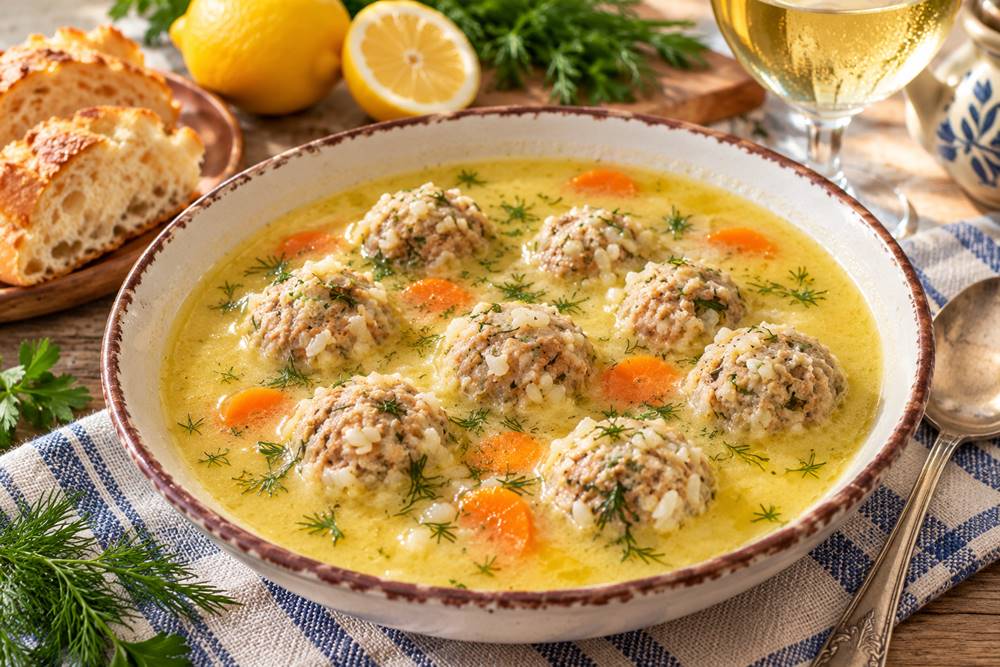
There are few dishes that remind me of Greek home cooking quite like «Youvarlakia Avgolemono». Tender beef and rice meatballs, gently simmered in broth and finished with a silky lemon-egg sauce, make this one of Greece’s most comforting family meals.
But why do Greeks call them «youvarlakia»?
The name comes from the Turkish word «yuvarlak», meaning “round,” referring to the shape of the meatballs. The Greek diminutive «-akia» gives us «youvarlakia», literally suggesting little round balls.
Although the name reflects centuries of culinary exchange, the dish has become a beloved part of Greek home cooking, especially during autumn and winter.
Traditional Greek Youvarlakia Recipe (Servings 4–5)
Ingredients
For the meatballs
- 600 g ground beef
- 120 g Carolina or medium-grain rice
- 1 large onion, grated
- 1 egg
- 3 tbsp chopped parsley
- 2 tbsp chopped dill
- 3 tbsp extra virgin olive oil
- Salt and freshly ground black pepper
For the broth
- 1.3–1.5 litres water or mild beef stock
- 1 carrot, finely diced
- 2 tbsp extra virgin olive oil
- Salt to taste
For the avgolemono sauce
- 2 large eggs
- Juice of 2 medium lemons (70–80 ml)
- 300–350 ml hot cooking broth
Instructions
- Prepare the meatballs.
Rinse and drain the rice. Combine it with the ground beef, grated onion, egg, parsley, dill, olive oil, salt and pepper. Knead gently for 3–4 minutes. Refrigerate for 20 minutes. - Shape them.
With slightly damp hands, form approximately 22–26 evenly sized meatballs. - Prepare the broth.
Bring the water or stock, carrot and olive oil to a gentle simmer in a wide saucepan. - Cook slowly.
Carefully lower the meatballs into the broth. Avoid stirring during the first 10 minutes. Cover partially and simmer gently for 30–40 minutes, until the rice is tender and the beef is fully cooked. Add a little hot water if necessary. - Make the avgolemono.
Remove the saucepan from the heat. Whisk the eggs, gradually add the lemon juice, then slowly whisk in 300–350 ml hot broth to temper the mixture. - Finish the soup.
Pour the avgolemono back into the saucepan. Gently shake the pan to distribute the sauce without breaking the meatballs. Do not boil again.
Let the soup rest for 10 minutes before serving.
Tips for Perfect Youvarlakia
- Choose medium-grain rice: Carolina rice absorbs moisture beautifully and helps keep the meatballs tender.
- Avoid overworking the meat: Gentle mixing creates a softer texture.
- Keep the simmer low: Vigorous boiling may cause the meatballs to break apart.
- Temper the eggs gradually: Adding hot broth slowly helps prevent curdling.
- Adjust the lemon: Begin with slightly less if you prefer a milder sauce.
For food safety, ground beef should reach an internal temperature of 71°C (160°F).
What to Serve with Greek Meatball Soup
I love serving youvarlakia with crusty Greek country bread, a simple lettuce and spring onion salad, or a refreshing cabbage and carrot salad.
For wine, I enjoyed my homemade Youvarlakia Avgolemono with a chilled glass of Greek Malagousia, and the pairing was wonderful! Its delicate floral and fruity notes complemented the lemony sauce beautifully, making this comforting Greek dish even more enjoyable.
Also, I recommend a crisp Moschofilero or an elegant Assyrtiko. Their freshness complements the lemony sauce.
Sparkling water with lemon is another lovely choice.
Nutritional Value and Health Benefits
Estimated nutrition per serving (based on five servings):
- Calories: 460–520 kcal
- Protein: 28–32 g
- Carbohydrates: 24–30 g
- Fat: 26–32 g
- Fibre: 1–2 g
Actual values depend on the beef’s fat content, portion size and broth.
Youvarlakia provide high-quality protein for muscle maintenance, iron and vitamin B12 from beef, and carbohydrates from rice for energy. The eggs contribute additional protein and nutrients, while the lemon juice supplies some vitamin C.
Prepared with moderate salt and leaner beef, this can be a nourishing, satisfying homemade meal.
Frequently Asked Questions
- Can I make youvarlakia without eggs in the meatballs?
Yes. The rice and careful shaping can help hold them together, although the texture may be slightly different.
- Why did my meatballs fall apart?
The mixture may have been too wet, insufficiently shaped, or cooked at too vigorous a boil.
- Can I thicken avgolemono without flour?
Absolutely. Eggs naturally give the sauce a silky texture. The rice also releases some starch into the broth.
- Can I prepare youvarlakia ahead of time?
Yes. Refrigerate promptly and keep for up to 3–4 days. Reheat gently until thoroughly hot, avoiding prolonged boiling that may affect the sauce.
- Can I freeze them?
For the best texture, freeze the cooked meatballs and broth before adding the avgolemono. Prepare the lemon-egg sauce fresh after reheating.
A Taste of Greek Home
For me, youvarlakia are more than meatball soup. They represent the warmth of a Greek family table: simple ingredients, careful cooking and the wonderful fragrance of fresh lemon.
Serve them warm, with good bread and plenty of love.
Every Greek recipe tells a story. Discover authentic flavors, traditions, and timeless family recipes with CookTheGreekWay.



Leave a Reply