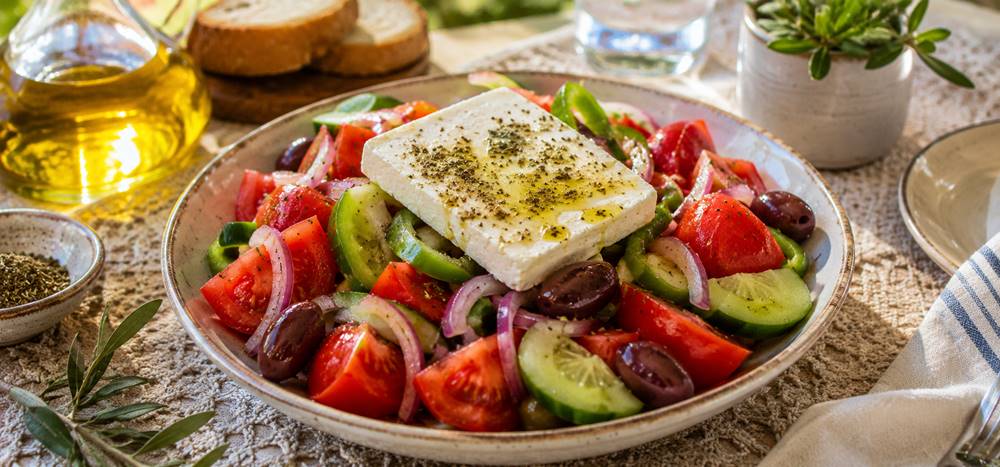
Few dishes represent the spirit of Greece as beautifully as the Greek Village Salad, known locally as Horiatiki. Fresh, colorful, and wonderfully simple, it reflects the philosophy of traditional Greek cooking: let exceptional ingredients speak for themselves.
Long before it became famous worldwide, Horiatiki was the everyday summer meal of farmers and shepherds. During the hottest months, families gathered vegetables straight from the garden, added local olives, a generous slice of feta, fragrant oregano, and excellent extra virgin olive oil. There was no elaborate preparation—only freshness and authenticity.
Every region of Greece has its own subtle variation, yet the essence remains unchanged: ripe tomatoes, crisp vegetables, creamy feta, olives, and olive oil that brings everything together.
One thing is certain—without good tomatoes, there is no true Horiatiki.
Authentic Greek Village Salad
Ingredients (Serves 3–4)
- 4 ripe, fragrant tomatoes
- 1 large cucumber
- 1 small green bell pepper
- ½ medium onion
- 10–12 Kalamata or naturally cured black olives
- 150–200 g feta cheese, served as one thick block
- 5–6 tbsp extra virgin olive oil
- ½–1 tsp dried Greek oregano
- Salt
Optional
- 1–2 tsp red wine vinegar
- A few drops of olive brine
Instructions
- Prepare the tomatoes
Keep the tomatoes at room temperature.
Cut them into large, rustic chunks directly into a serving bowl.
Lightly salt them and let them rest for 8–10 minutes.
Their juices will combine with the olive oil to create the salad’s natural dressing.
- Add the vegetables
Slice the cucumber into thick rounds or half-moons.
Thinly slice:
- the green pepper
- the onion
Add them together with the olives.
- Dress the salad
If using vinegar, add it first and toss gently.
Pour over the olive oil and mix lightly so it combines with the tomato juices.
- Finish with the feta
Place one generous block of feta on top.
Do not crumble it.
Sprinkle with dried oregano, rubbing it between your palms to release its aroma.
Finish with another drizzle of extra virgin olive oil.
Allow the salad to rest for about five minutes before serving.
The Great Secrets of Authentic Horiatiki
- Always use ripe, seasonal tomatoes at room temperature.
- Cut the vegetables into generous rustic pieces.
- Salt only the tomatoes at first, then adjust seasoning if needed.
- Rub the oregano between your palms before sprinkling it over the salad.
- Use excellent extra virgin olive oil generously, but never excessively.
- Red wine vinegar is optional and should only enhance—not overpower—the tomatoes.
- Place the feta on top as a whole piece.
- Serve immediately with crusty village bread for dipping into the delicious juices.
Traditional Regional Variations
Cyclades
- Capers
- Caper leaves
- Pickled sea fennel
- Local island cheese instead of feta
Crete
- Fresh mizithra or xinomizithra
- Cretan olives
- Barley rusks served underneath or alongside
Aegean Islands
- Naturally cured olives
- Capers
- Pickled sea fennel
- A splash of red wine vinegar
Peloponnese & Central Greece
- Slightly more red wine vinegar
- Cracked green olives
- Fresh purslane when in season
Thessaly & Macedonia
- Hot green pepper instead of part of the sweet pepper
- Local feta with a stronger flavor
- Green or cracked olives
Extra Tips
- Always prepare the salad just before serving.
- Never refrigerate tomatoes before using them.
- Taste the olive oil—it is one of the stars of the recipe.
- For the richest flavor, let the tomatoes release their juices before adding the olive oil.
- Use authentic Greek feta made from sheep’s milk or a sheep-goat milk blend.
What to Serve with Greek Village Salad
Perfect Pairings
- Lamb chops
- Pork souvlaki
- Chicken skewers
- Stuffed vegetables (Gemista)
- Fresh village bread
Wine Pairing
- Assyrtiko
- Moschofilero
- Savatiano
- Vidiano
- Dry Rosé
- Light Retsina
Nutritional Value
Greek Village Salad is naturally rich in:
- Vitamin C
- Vitamin A
- Potassium
- Calcium
- Lycopene
- Polyphenols
- Healthy monounsaturated fats
- Dietary fiber
Health Benefits
As a cornerstone of the Mediterranean diet, Horiatiki may help:
- Support heart health through extra virgin olive oil.
- Reduce inflammation thanks to tomatoes, oregano, and olive oil.
- Promote digestive health with fresh vegetables and fiber.
- Strengthen bones through calcium-rich feta cheese.
- Support immune function with vitamin C and antioxidants.
- Contribute to healthy aging as part of a balanced Mediterranean lifestyle.
FAQ
- What makes a Greek Village Salad authentic?
Authentic Horiatiki uses ripe seasonal tomatoes, cucumber, onion, green pepper, olives, a whole block of feta, oregano, and extra virgin olive oil—without lettuce.
- Why is feta served as one piece?
Traditional Greek salads always feature a thick slice of feta placed on top so everyone can cut off their own portion.
- Should tomatoes be refrigerated?
No. Tomatoes should always be kept at room temperature to preserve their flavor and aroma.
- Is vinegar necessary?
Not always. If the tomatoes are naturally sweet and flavorful, many Greek cooks omit vinegar entirely.
- Which olives are traditionally used?
Kalamata olives, naturally cured black olives, or regional green olives are all traditional choices.
- Why is good olive oil so important?
Extra virgin olive oil is the soul of Horiatiki. Together with the tomato juices, it creates the salad’s signature dressing.
- Can I add lettuce?
Traditionally, no. Authentic Greek Village Salad never includes lettuce. Its beauty lies in the simplicity and quality of its ingredients.
Every Greek recipe tells a story. Discover authentic flavors, traditions, and timeless family recipes with CookTheGreekWay.


 CookTheGreekWay