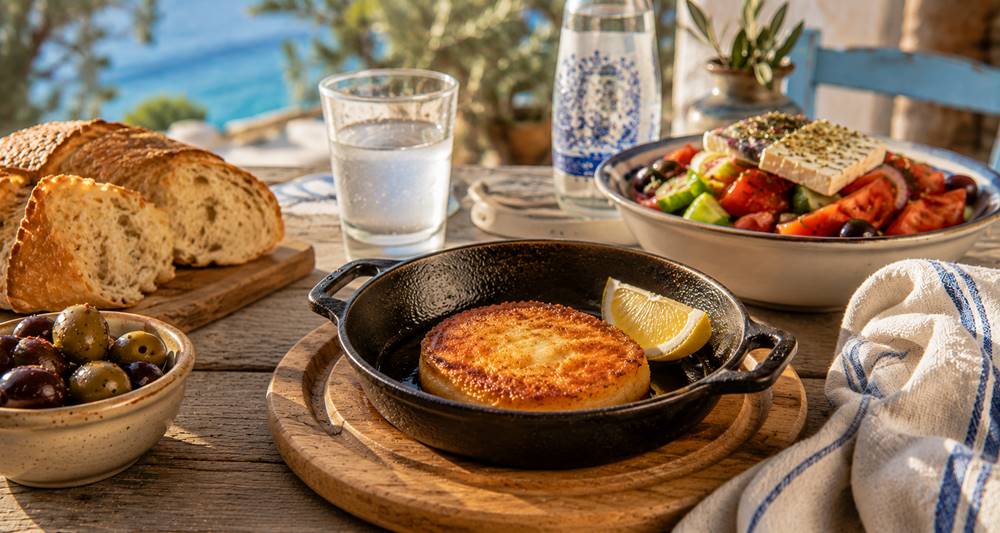
Few Greek appetizers are as iconic as Saganaki. Crispy on the outside and wonderfully soft inside, this beloved meze has been served in traditional tavernas for generations.
Despite its worldwide popularity, “saganaki” is not actually the name of the cheese. The word comes from the small two-handled frying pan —called sagani— used to prepare the dish. Over time, the cooking vessel gave its name to one of Greece’s most famous appetizers.
The most traditional version is made with Kefalotyri, a hard sheep’s and goat’s milk cheese that develops a crisp golden crust while remaining deliciously creamy inside.
Authentic Greek Saganaki Recipe
Ingredients (Serves 2)
- 250 g Kefalotyri cheese (one thick slice)
- 3 tbsp all-purpose flour
- Water
- Extra virgin olive oil for frying
- Lemon wedges
Method
Pat the cheese dry.
Lightly moisten it with water and coat it with flour, shaking off any excess.
Heat a small amount of olive oil in a heavy frying pan over medium-high heat.
Fry the cheese for about 2 minutes on each side until beautifully golden.
Transfer immediately to a serving plate and drizzle with fresh lemon juice.
Serve hot while the centre is still soft.
Traditional Secrets
- Cut the cheese about 1.5–2 cm thick.
- Shake off excess flour to create a light crust.
- Do not move the cheese while frying.
- Turn it only once.
- Serve immediately.
- Fresh lemon is essential.
Other Traditional Cheeses for Saganaki
Although Kefalotyri is the classic choice, several regional Greek cheeses are also excellent:
- Graviera (especially from Crete or Naxos)
- Kasseri
- Formaela PDO (Arachova)
- Talagani
- Manouri (for a softer variation)
Each region proudly uses its own local cheese, making Saganaki one of Greece’s most versatile traditional appetizers.
Serving Suggestions
Serve Saganaki with:
- crusty country bread
- Greek salad
- grilled vegetables
- olives
- fresh tomatoes
- oregano and lemon
- grilled seafood
- octopus
- fried calamari
It is also an excellent starter before grilled meats or traditional Greek meze.
It pairs beautifully with:
- Ouzo, whose delicate anise aromas balance the richness of the fried cheese.
- Tsipouro, especially the unflavoured version served in northern Greece.
- Raki (Tsikoudia) in Crete, where Graviera Saganaki is particularly popular.
- Dry white wines such as Assyrtiko, Moschofilero and Roditis.
- A crisp dry rosé.
- A cold Greek lager for a classic taverna experience.
Approximate Nutritional Value (per serving)
- Calories: 330 kcal
- Protein: 19 g
- Fat: 25 g
- Carbohydrates: 7 g
- Calcium: High
- Vitamin B12: Good source
- Phosphorus: High
Health Benefits
Kefalotyri is naturally rich in high-quality protein and calcium, supporting normal muscle function and healthy bones and teeth. It also provides vitamin B12 and phosphorus, important for energy metabolism and the nervous system.
Because it is fried and naturally high in sodium and saturated fat, Saganaki is best enjoyed in moderation as part of a balanced Mediterranean diet, accompanied by fresh vegetables and salad.
Frequently Asked Questions
- What does “Saganaki” mean?
It refers to the small frying pan (sagani) used to cook the cheese.
- Which cheese is most traditional?
Kefalotyri is considered the classic and most authentic choice.
- Can I use Graviera?
Yes. Graviera is one of the most popular regional alternatives.
- Why is my cheese melting?
The cheese may be too soft or cut too thin. Choose a firm cheese and slice it at least 1.5 cm thick.
- Should I add lemon?
Absolutely. Fresh lemon balances the richness of the fried cheese.
- Can I prepare it in advance?
No. Saganaki should always be served immediately after frying for the best texture.
Authentic Greek Saganaki proves that the simplest recipes are often the most memorable.
With only a few quality ingredients, it delivers everything that defines Greek hospitality: generous flavours, beautiful simplicity and the joy of sharing good food around the table.
Whether enjoyed in a seaside taverna or at home, Saganaki remains one of the true symbols of traditional Greek cuisine.
Every Greek recipe tells a story. Discover authentic flavors, traditions, and timeless family recipes with CookTheGreekWay.