There is an old Greek saying:
“Every thing in its season, and chub mackerel in August.”
In Greek, “Kathe pragma ston kairo tou ki o kolios ton Avgousto.”
It is one of those expressions that perfectly captures the wisdom of traditional Greek cooking: eat ingredients when nature offers them at their best.
Kolios, the Greek name commonly used for chub mackerel, has long been associated with the summer table. August is traditionally considered its month, when the fish is particularly flavourful and rich.
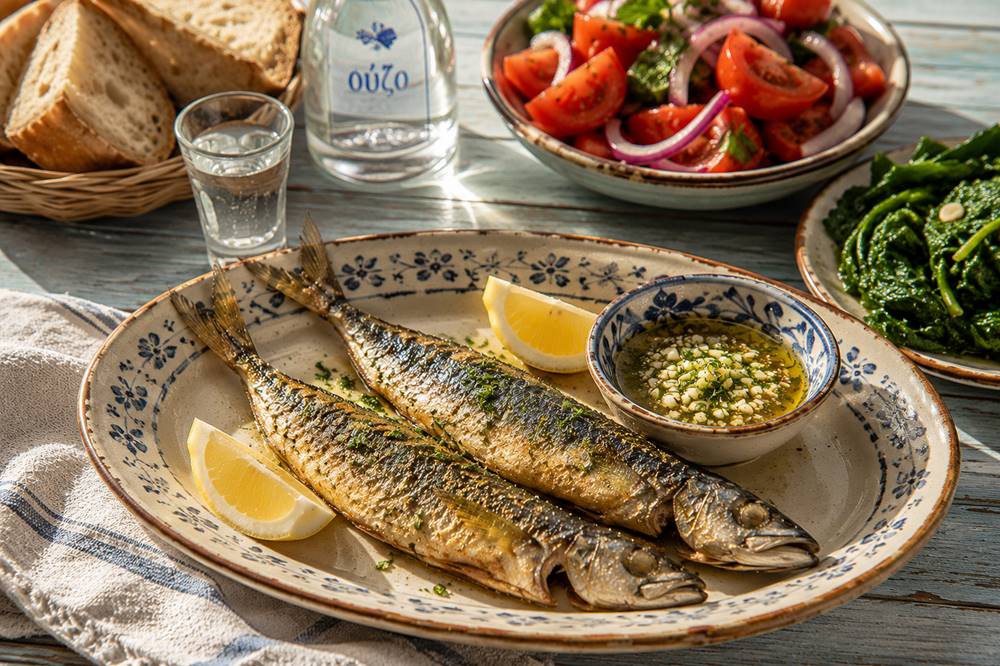
In coastal homes, such fish did not need complicated sauces. A hot frying pan, a little flour, olive oil and fresh lemon were often enough.
Add a tomato salad, greens, country bread and a small glass of ouzo, and you have one of the simplest pleasures of the Greek summer.
Authentic Greek Fried Chub Mackerel Recipe (Serves 4)
Ingredients
- 4 medium whole chub mackerel, cleaned
- 100 g all-purpose flour
- Salt
- Freshly ground black pepper
- Olive oil for frying
- 2 lemons
For the Optional Garlic-Lemon Dressing
- 4 tbsp extra virgin olive oil
- Juice of 1 lemon
- 1 small garlic clove, finely minced
- 1 tbsp chopped parsley
- A little dried oregano
Method
Rinse the cleaned fish briefly and pat them very thoroughly dry with kitchen paper.
Season lightly with salt and pepper.
Place the flour on a plate and coat each fish lightly, shaking off all excess flour. We want a delicate crust rather than a heavy coating.
Heat enough olive oil in a wide frying pan to cover the bottom generously.
When the oil is hot, carefully add the fish without overcrowding the pan.
Fry over medium-high heat for approximately 4–5 minutes on each side, depending on their size, until the skin is crisp and beautifully golden and the flesh is cooked through.
Transfer to kitchen paper briefly.
Serve immediately with fresh lemon wedges.
For the dressing, simply whisk the olive oil with lemon juice, garlic, parsley and oregano and serve it on the side.
Tips for Perfect Fried Kolios
- Dry the fish extremely well. This helps prevent splattering and creates a crispier exterior.
- Don’t use too much flour. A thin coating is all you need.
- Keep the oil properly hot. If it is not hot enough, the fish will absorb unnecessary oil.
- Don’t overcrowd the pan. Fry in batches if necessary.
- Don’t overcook it. Mackerel is naturally juicy and oily; excessive cooking makes the flesh dry.
- Serve it immediately. Fried fish is at its best straight from the pan.
What to Serve with Fried Chub Mackerel
For a true Greek summer table, serve it with:
- Greek tomato and onion salad
- boiled wild greens (horta) with lemon and olive oil
- rustic country bread
- boiled potatoes with olive oil and oregano
- grilled peppers
- olives
- skordalia for a richer traditional meal
The freshness and acidity of these accompaniments balance the naturally rich flavour of the fish beautifully.
What to Drink with Kolios
This is made for a leisurely Greek meze table.
Ouzo is an excellent pairing, particularly when the fish is served with salad, greens and small meze.
Tsipouro is another wonderfully traditional choice.
For wine, try a crisp Greek white such as Assyrtiko, Roditis or Moschofilero. Their acidity works particularly well with oily fish and fresh lemon.
Approximate Nutritional Value
Per serving, excluding side dishes and depending on the amount of oil absorbed:
- Calories: 350–430 kcal
- Protein: 30–35 g
- Fat: 22–28 g
- Carbohydrates: 8–12 g
Chub mackerel is naturally rich in omega-3 fatty acids, high-quality protein, vitamin B12, selenium and phosphorus. Nutritional values vary according to fish size and cooking method.
Health Benefits
- Heart Health
Oily fish provides EPA and DHA omega-3 fatty acids, which contribute to normal heart function.
- Brain & Nervous System
Omega-3 fats and vitamin B12 play important roles in normal brain and nervous-system function.
- Muscle Health
Its high-quality protein provides essential amino acids needed for the maintenance of muscle mass.
- Bone Health
Fish contributes nutrients including phosphorus and vitamin D, although exact vitamin D levels vary.
- Immune Support
Selenium contributes to the normal function of the immune system and helps protect cells from oxidative stress.
FAQ
- What is kolios in English?
Kolios is commonly translated as chub mackerel, particularly Scomber colias, a mackerel species found in the Mediterranean and eastern Atlantic.
- Why do Greeks associate kolios with August?
The association is so strong that it survives in the traditional Greek proverb “Kathe pragma ston kairo tou ki o kolios ton Avgousto” —a reminder of the importance of eating seasonally.
- Can I cook the fish without flour?
Yes. However, a very light flour coating helps produce the characteristic golden exterior of traditional pan-fried fish.
- Can I use regular mackerel?
Yes. If chub mackerel is unavailable where you live, another fresh mackerel can be prepared using the same method.
- Is fried mackerel healthy?
Mackerel is a highly nutritious oily fish. Frying increases the dish’s calorie and fat content, so the amount and quality of frying oil matter. Serve it with vegetables and salad for a more balanced meal.
- Can I prepare it ahead?
It is possible, but I don’t recommend it. The texture is at its best immediately after frying.
- Ouzo or wine?
Both! Ouzo gives you the classic Greek seaside-meze experience, while a crisp, acidic Greek white wine is excellent with the richness of the fish.
A Taste of August in Greece
Few recipes express the philosophy of old Greek home cooking better than fried kolios.
It doesn’t try to transform a seasonal ingredient into something complicated. It simply allows a good fish to taste like itself.
Golden from the pan, brightened with fresh lemon and surrounded by tomatoes, greens, bread and good company, it is exactly the kind of meal that reminds me why traditional Greek food has endured for generations.
Sometimes, the simplest table is the one we remember best.
Every Greek recipe tells a story. Discover authentic flavors, traditions, and timeless family recipes with CookTheGreekWay.