There are certain aromas that immediately take me back to a Greek family celebration. Meat slowly roasting in the oven, oregano, garlic and lemon mingling with potatoes that absorb every drop of the delicious pan juices.
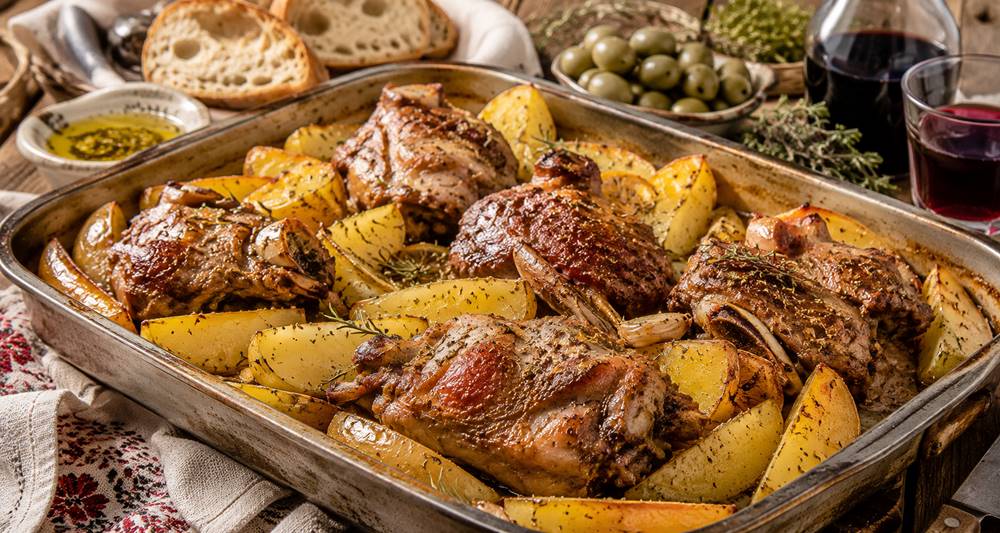
Roasted goat with potatoes is exactly that kind of food.
In Greece, goat and lamb have long held a special place at festive tables, particularly in rural and pastoral communities where livestock farming was part of everyday life. They were not necessarily everyday meats; a roast could mark a Sunday gathering, a religious feast, a wedding or another special family occasion.
And few summer celebrations are as important in Greece as August 15, the Dormition of the Virgin Mary, often called the “Easter of the summer.” Across the country, villages celebrate with church services, local festivals (panigyria), music, dancing and, of course, tables filled with food.
For me, a pan of tender goat surrounded by golden potatoes perfectly captures that generous Greek festive table.
Traditional Greek Roasted Goat Recipe (Serves 6)
Ingredients
- 2 kg goat meat, preferably shoulder or leg, cut into large portions
- 1.5 kg potatoes
- 5 garlic cloves
- 120 ml extra virgin olive oil
- Juice of 2 large lemons
- 1 tbsp dried Greek oregano
- 1 tsp dried thyme, optional
- Salt
- Freshly ground black pepper
- 250 ml water
- 1 tsp mustard, optional
Method
Preheat the oven to 180°C / 350°F.
Peel the potatoes and cut them into large wedges.
Place the goat in a large roasting pan and arrange the potatoes around it.
Make several small incisions in the meat and insert pieces of garlic inside — one of those old-fashioned tricks that gives the roast wonderful flavour from within.
Season everything generously with salt, pepper and oregano.
Whisk together the olive oil, lemon juice, water and mustard, if using. Pour over the meat and potatoes and toss the potatoes gently to coat.
Cover the pan tightly with baking paper and foil and roast for approximately 1½ hours.
Remove the covering, baste the meat with the pan juices and continue roasting for another 40–60 minutes, until the goat is tender and beautifully browned and the potatoes have crisp golden edges.
Allow the meat to rest for 10–15 minutes before serving.
Grandma’s Tips
- Don’t rush the roasting. Goat benefits from slow cooking. Give it time to become tender.
- Garlic goes inside the meat. Small garlic pieces inserted into little cuts flavour the roast much more deeply.
- Cut the potatoes generously. Thin potatoes can disintegrate before the meat is ready.
- Baste, don’t drown. Spoon the pan juices over the meat during the final stage of roasting.
- Keep some hot water nearby. If the pan dries before the meat becomes tender, add a little hot—not cold—water.
- Lemon at the right moment matters. Reserve a little fresh lemon juice to brighten the dish just before serving if you enjoy a stronger lemon flavour.
- And perhaps the most important grandmother’s rule: leave the browned corners of the potatoes alone! Those are usually the first pieces everyone steals from the roasting pan.
What Salads Go with Roasted Goat?
A rich roast needs something fresh and acidic alongside it. I would choose:
- Horiatiki, the classic Greek village salad
- Tomato and onion salad with oregano
- Cucumber salad with vinegar and herbs
- Boiled horta with lemon and olive oil
- Roasted Florina peppers
- Cabbage salad during the cooler months
Add feta, olives and rustic country bread and you have a complete Greek celebration table.
What to Drink
- A dry Greek red wine is a wonderful match, particularly Agiorgitiko or a moderately structured Xinomavro.
- A dry rosé also works beautifully for a summer feast.
- And at a traditional village celebration, don’t be surprised to see tsipouro appear with the opening meze before the main meal.
Approximate Nutritional Value
Per serving, including potatoes:
- Calories: 600–700 kcal
- Protein: 45–50 g
- Carbohydrates: 40–45 g
- Fat: 30–35 g
Values vary considerably according to the cut of goat and the amount of olive oil and potatoes consumed.
Nutritional Benefits
Goat meat provides high-quality protein, important for maintaining muscle mass. It is also a source of iron, zinc and vitamin B12, nutrients involved in normal red blood cell formation, immune function and energy metabolism.
Potatoes provide carbohydrates, potassium and vitamin C, while extra virgin olive oil contributes predominantly monounsaturated fats.
Although nutritious, this is a substantial festive dish. Portion size matters, particularly because the potatoes absorb olive oil and meat juices during roasting.
FAQ
- Is goat traditionally eaten in Greece?
Yes. Goat has a long history in Greek rural and island cooking and remains particularly important in many regional cuisines.
- What cut of goat is best for roasting?
Shoulder and leg are excellent choices. Bone-in pieces provide particularly good flavour.
- How do I keep goat meat tender?
Cook it slowly, keep it covered during the first part of roasting and make sure there is sufficient moisture in the pan.
- Can I prepare it with lamb instead?
Absolutely. The same basic lemon, garlic and oregano preparation works beautifully with lamb.
- Why cover the roasting pan first?
It helps retain moisture while the meat tenderises. Uncovering it later allows both meat and potatoes to develop their characteristic golden crust.
- Can I prepare it the day before?
You can season the goat and prepare the marinade in advance, but I prefer roasting it on the day it will be served.
- What makes Greek lemon potatoes special?
They roast in the same pan as the meat, absorbing olive oil, lemon, herbs and savoury roasting juices while developing crisp edges.
A Greek Feast to Remember
For me, this is the kind of recipe that explains Greek cooking better than anything elaborate ever could.
One large roasting pan arrives at the centre of the table. Everyone reaches for a favourite piece of meat or the crispiest potato. Bread is passed around to soak up the juices, glasses are filled, conversations become louder and nobody is in a hurry to leave.
That is Greek roasted goat with potatoes — not simply Sunday lunch, but a dish made for sharing, celebration and the long summer table.
Every Greek recipe tells a story. Discover authentic flavors, traditions, and timeless family recipes with CookTheGreekWay.