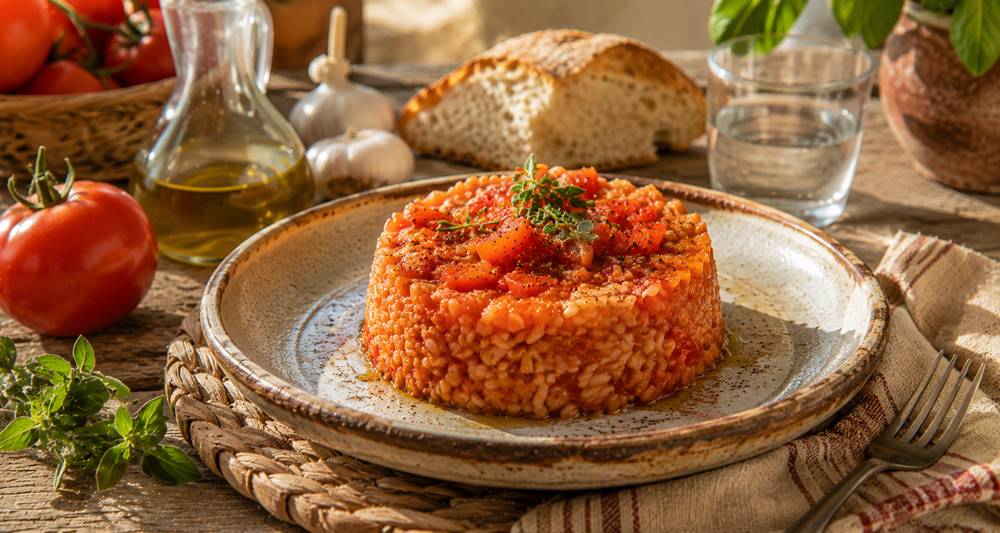
Some of the dishes I associate most strongly with a Greek summer are also the simplest.
In Thessaly, where vegetable gardens once supplied much of what appeared on the family table, August meant baskets overflowing with ripe tomatoes. Nothing was wasted. Tomatoes became sauces, salads, ladera dishes and simple meals such as tomato rice.
This is not an elaborate recipe. It belongs to the everyday cooking of the countryside: onion softened in olive oil, juicy summer tomatoes cooked until sweet, and rice simmered slowly in their flavourful juices.
It is the kind of food our grandmothers could prepare with ingredients already available in the kitchen and garden.
And that simplicity is precisely what makes it special.
Authentic Thessalian Tomato Rice Recipe (Serves 4)
Ingredients
- 300 g medium-grain rice
- 700–800 g very ripe tomatoes, grated
- 1 large onion, finely chopped
- 2 garlic cloves, finely chopped
- 80 ml extra virgin olive oil
- 700–800 ml hot water or light vegetable stock, approximately
- 2 tbsp chopped fresh parsley
- Salt
- Freshly ground black pepper
- A pinch of sugar, only if the tomatoes are particularly acidic
Method
Heat the olive oil in a wide saucepan over medium-low heat.
Add the onion and cook gently for 6–8 minutes until soft and translucent without allowing it to brown. Add the garlic and cook for another minute.
Pour in the grated tomatoes and season with pepper and a little salt. Simmer for about 10 minutes, allowing the tomatoes to lose some of their excess liquid and develop a deeper flavour.
Add the rice and stir for 1–2 minutes so every grain is coated in the tomato and olive oil.
Gradually add the hot water or stock. Simmer gently, stirring occasionally, until the rice is tender and has absorbed most of the liquid, approximately 15–18 minutes depending on the variety.
Add a little more hot water if necessary.
Stir in the parsley shortly before removing the pan from the heat.
Leave the tomato rice covered for 5–10 minutes before serving.
For an elegant presentation, spoon it into a small bowl or cooking ring, press very gently and turn it onto a rustic plate.
My Tips for Perfect Tomato Rice
- Use truly ripe tomatoes. This is a seasonal dish, and the flavour depends on sweet, sun-ripened summer tomatoes.
- Choose medium-grain rice. It absorbs the tomato beautifully while giving the dish its characteristic soft, comforting texture.
- Don’t drown the rice. Add the liquid gradually. Traditional tomato rice should be juicy and melomeno—beautifully mellow and bound together—but never watery.
- Let the tomato cook first. Giving the tomato sauce 10 minutes before adding the rice concentrates its flavour.
- Allow it to rest. A few minutes off the heat make an enormous difference to both texture and flavour.
What to Serve with Thessalian Tomato Rice
In a traditional Greek summer meal, serve it with:
- feta cheese;
- country bread;
- Kalamata olives;
- grilled peppers;
- cucumber salad;
- tzatziki;
- fried zucchini or zucchini fritters.
It can be served as a vegetarian main course or as a side dish with grilled chicken, lamb, meatballs or simply grilled fish.
What to Drink with It
A fresh, crisp Greek white wine works beautifully. Try Roditis or Moschofilero, while a light dry rosé is another excellent summer choice.
For a completely traditional Thessalian table, a small glass of tsipouro can be served before the meal with feta, olives and other small meze.
Approximate Nutritional Value
Per serving:
- Calories: 390–430 kcal
- Protein: 6–7 g
- Carbohydrates: 60–65 g
- Fat: 14–16 g
- Fibre: 4–5 g
Actual values depend on the rice, olive oil and serving size.
Is Tomato Rice Healthy?
Tomatoes provide vitamin C, potassium and lycopene, an antioxidant carotenoid. Cooking tomatoes makes lycopene more bioavailable, while consuming them with olive oil may further support its absorption.
Extra virgin olive oil contributes mainly monounsaturated fats, while onion, garlic, tomato and herbs add a variety of plant compounds.
Rice provides carbohydrates and energy, making the dish satisfying without requiring meat.
For a balanced Mediterranean-style meal, serve a moderate portion alongside vegetables and a source of protein such as feta, fish or legumes.
FAQ
- Is Thessalian Tomato Rice the same as Bourani?
No. The well-documented traditional Bourani of Tyrnavos is associated with greens, rice and the Clean Monday carnival tradition. Tomato rice is a different dish.
- What rice should I use?
Medium-grain rice is an excellent choice because it absorbs the tomato sauce while remaining pleasantly tender.
- Can I use canned tomatoes?
Yes, but during summer, fresh ripe tomatoes provide the flavour that defines this traditional dish.
- Can I add feta while cooking?
Traditionally, I prefer serving feta alongside the rice rather than cooking it into the dish.
- Can I make it vegan?
The tomato rice itself is naturally vegan when prepared with water or vegetable stock.
- Can I prepare it in advance?
Yes, although it is best freshly cooked or at room temperature. If reheating, add a spoonful of water because the rice continues to absorb moisture.
A Taste of the Thessalian Summer
Traditional Thessalian tomato rice reminds me why I love the old recipes of the Greek countryside.
They didn’t need long ingredient lists or complicated techniques. They relied on what was ripe, fresh and available.
A few tomatoes from the garden, rice from the pantry, an onion and good olive oil were enough to feed a family.
And on a warm August day, served with feta, bread and olives, sometimes that is all a Greek table really needs.
Every Greek recipe tells a story. Discover authentic flavors, traditions, and timeless family recipes with CookTheGreekWay.