Some of Greece’s most beloved recipes were never written in cookbooks.
They were created in village kitchens, baked in wood-fired ovens, and remembered by heart.
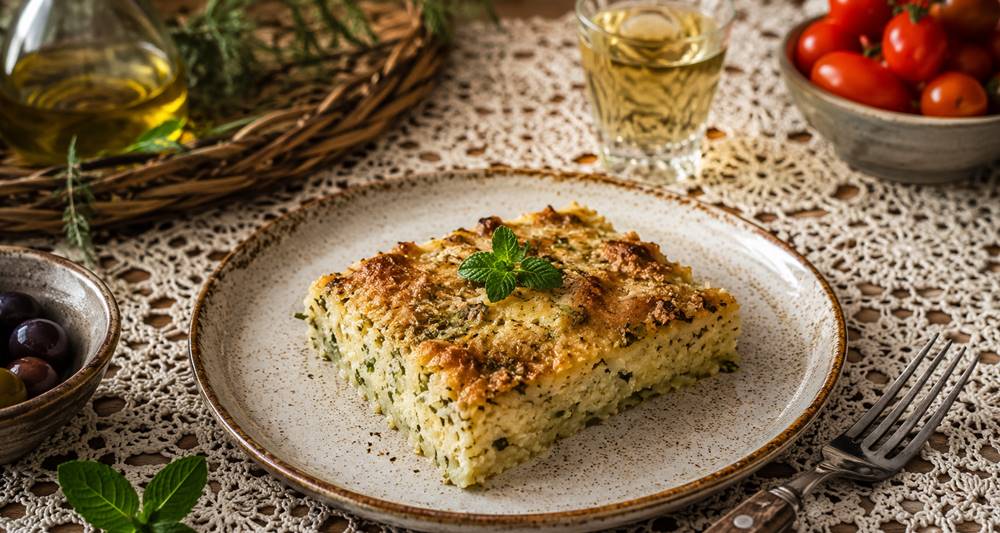
Traditional Patatopita without pastry is one of those recipes.
Long before ready-made pastry became common, women on many Aegean islands prepared this simple potato pie whenever there wasn’t enough time to roll out homemade phyllo—or when everyday ingredients were all they had.
Made with humble potatoes, local cheese, fragrant herbs and extra virgin olive oil, this pie is proof that the simplest recipes are often the most delicious.
A Taste of the Aegean
This rustic pie has been prepared for generations across the Cyclades, the Dodecanese and many small Aegean islands.
Rather than being considered a “lazy” recipe, it reflected the wisdom of island cooking: making nourishing meals with whatever was available from the family garden and local dairy.
Each household had its own version, but the philosophy remained the same:
Simple ingredients.
Wonderful flavour.
Nothing wasted.
Traditional Greek Crustless Potato Pie
Serves 6
Ingredients
- 1 kg (2.2 lb) potatoes
- 250 g feta cheese, crumbled
- 2 eggs
- 1 large onion, finely chopped
- 4 tbsp extra virgin olive oil
- 2 tbsp fresh mint, chopped
- Fresh parsley, chopped
- Freshly ground black pepper
- 3–4 tbsp all-purpose flour
- About 100 ml milk or water
Instructions
Prepare the Potatoes
Grate the potatoes using the coarse side of a grater or slice them into very thin rounds.
If they release too much liquid, gently squeeze them.
Prepare the Filling
In a large bowl combine:
- Potatoes
- Crumbled feta
- Eggs
- Onion
- Mint
- Parsley
- Flour
- Olive oil
- Milk (or water)
Mix until everything comes together into a thick mixture.
Bake
Grease a baking dish generously with olive oil.
Spread the mixture evenly to about 2–3 cm (1 inch) thick.
Drizzle a little more olive oil over the surface.
Bake at 180°C (350°F) for 60 minutes or until beautifully golden with a crisp top.
Allow it to cool slightly before slicing.
The Traditional Island Secret
Many Cycladic families never added milk.
The potatoes, eggs and olive oil alone were enough to bind the pie.
The result was firmer, more rustic and closer to the oldest island recipes.
Traditional Greek Tip: Heat the olive oil in the baking dish before pouring in the potato mixture. This old Greek kitchen trick creates a delicious crispy bottom crust while ensuring the pie releases easily from the pan.
Traditional Cheese Combinations
- Feta + Anthotyro
70% feta
30% anthotyro
The feta provides saltiness while the anthotyro creates a wonderfully creamy texture.
- Feta + Myzithra
A classic Cycladic combination.
More delicate.
More aromatic.
Perfect with fresh mint.
- Feta + Xinomyzithra
Perhaps the most authentic island variation.
The xinomyzithra adds:
- Gentle acidity
- Creamy texture
- Distinct Aegean character
- Feta + Naxos Graviera
A true celebration of Greek cheese.
Feta contributes its tangy flavour while Graviera adds richness, sweetness and depth.
Grandmother’s Tips
- Never rinse the grated potatoes.
- Use fresh mint instead of dried whenever possible.
- A generous drizzle of olive oil before baking creates the most beautiful golden crust.
- Let the pie rest for 15 minutes before cutting.
- It tastes equally delicious warm or at room temperature.
What to Serve with Crustless Potato Pie
This traditional pie is satisfying enough to be served as a light meal or as part of a larger Greek table.
Perfect Side Dishes
- Greek village salad (Horiatiki)
- Seasonal tomato salad
- Cucumber and yogurt salad
- Boiled wild greens (Horta)
- Marinated olives
Fresh crusty country bread is always welcome.
Best Wine Pairings
Its creamy potatoes and salty cheese pair beautifully with fresh Mediterranean wines.
White Wines
- Assyrtiko
- Moschofilero
- Vidiano
- Robola
Rosé
A dry Greek rosé is an excellent choice during spring and summer.
Non-Alcoholic Pairings
- Sparkling water with lemon
- Homemade lemonade
- Greek mountain tea
- Fresh orange juice
Extra Cooking Tips
- Use starchy potatoes for the best texture.
- Fresh herbs make a remarkable difference.
- High-quality extra virgin olive oil is essential.
- Bake until the edges become deeply golden and slightly crisp.
- Leftovers are delicious the next day.
Nutritional Value
This rustic pie offers an excellent balance of carbohydrates, protein and healthy fats.
Potatoes provide complex carbohydrates, potassium, vitamin C and dietary fibre.
Feta contributes calcium, phosphorus and protein.
Extra virgin olive oil supplies heart-healthy monounsaturated fats and powerful antioxidants.
Fresh herbs add vitamins and natural aromatic compounds.
Health Benefits
As part of the Mediterranean diet, this traditional pie provides many valuable nutrients:
- Rich in potassium for healthy blood pressure
- Good source of calcium for bones and teeth
- Provides protein for muscle maintenance
- Contains vitamin C to support the immune system
- Rich in healthy olive oil fats
- Naturally satisfying and energy-rich
- Supports digestive health thanks to potatoes and fresh herbs
Frequently Asked Questions (FAQ)
- Can I make it without milk?
Yes.
Many authentic island recipes use only potatoes, eggs and olive oil.
- Which potatoes work best?
Starchy potatoes produce the fluffiest texture and the crispiest crust.
- Can I prepare it in advance?
Absolutely.
Many people enjoy it even more the following day.
- Can I freeze it?
Yes.
Allow it to cool completely before freezing for up to two months.
- Can I add different cheeses?
Certainly.
Traditional combinations include Anthotyro, Myzithra, Xinomyzithra and Naxos Graviera.
A Slice of Everyday Greek Life
Unlike festive pies wrapped in delicate phyllo, this humble potato pie represents everyday life on the Greek islands.
It reminds us that the greatest recipes are often born from simplicity rather than abundance.
Made with pantry staples, baked with love and shared around the family table, it continues to tell the quiet story of Greek island hospitality—one slice at a time.
Every Greek recipe tells a story. Discover authentic flavors, traditions, and timeless family recipes with CookTheGreekWay.

 CookTheGreekWay