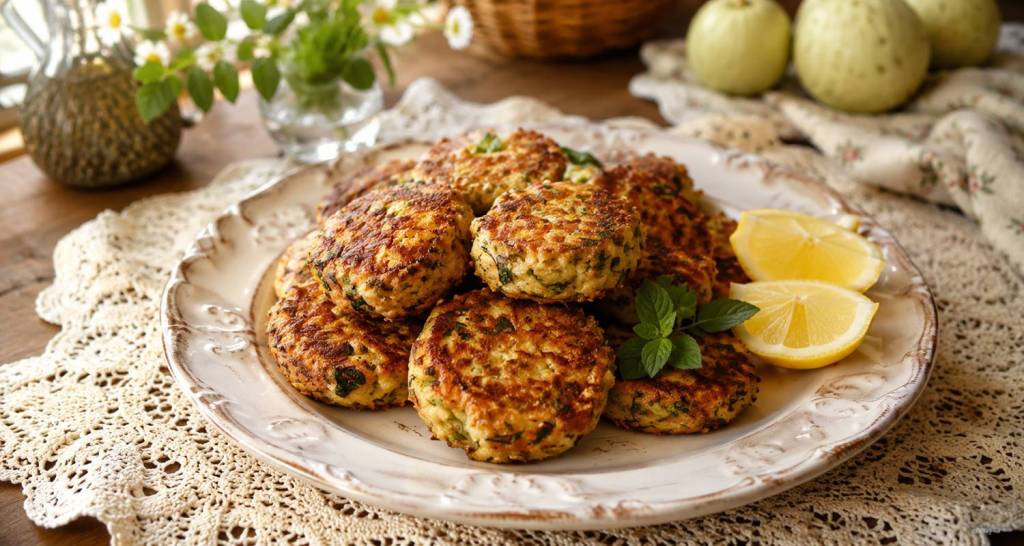
Few dishes capture the essence of a Greek summer quite like Kolokythokeftedes, the famous Greek zucchini fritters. Crispy on the outside, tender on the inside, and bursting with the fresh aromas of mint and herbs, they are one of Greece’s most beloved appetizers.
Every bite brings back memories of family gatherings, seaside tavernas, village festivals, and long summer lunches shared with loved ones.
These delicious fritters were born from the need to make good use of the abundant zucchini harvested from home gardens during the summer months. Today, they can be found throughout Greece, especially on the islands of Crete, the Cyclades, and the Dodecanese, where every family has its own treasured version.
Although zucchini arrived in Europe after the discovery of the Americas during the 16th century, it became widely cultivated in Greece between the 17th and 18th centuries. By the 19th century, it had become a staple ingredient in Greek home gardens, and that’s when Kolokythokeftedes became a cherished part of traditional Greek cuisine.
Greek grandmothers often say:
“If it doesn’t smell like fresh mint, it’s not a real zucchini fritter.“
And they couldn’t be more right.
Authentic Greek Zucchini Fritters (Kolokythokeftedes)
Ingredients
- 1 kg (2.2 lb) fresh zucchini, grated
- 200 g (7 oz) feta cheese, crumbled
- 2 large eggs
- 1 small onion, grated
- 1 generous handful fresh mint, finely chopped
- A small handful fresh parsley, finely chopped
- 4–6 tablespoons all-purpose flour
- Salt (use sparingly, as feta is already salty)
- Freshly ground black pepper
- Extra virgin olive oil, for frying
Instructions
Step 1 – The Most Important Secret: Remove the Moisture
Grate the zucchini using the coarse side of a grater.
Lightly sprinkle with salt and let it rest for 20–30 minutes.
Then squeeze out as much liquid as possible using your hands or a clean kitchen towel.
This is the most important step.
If the zucchini retains too much moisture, the fritters will fall apart while frying.
Step 2 – Prepare the Mixture
In a large mixing bowl, combine:
- grated zucchini
- feta cheese
- eggs
- onion
- fresh mint
- parsley
- black pepper
Gradually add the flour until the mixture holds together on a spoon.
It should be soft—not as firm as dough.
Step 3 – Fry the Fritters
Heat plenty of extra virgin olive oil over medium-high heat.
Drop spoonfuls of the mixture into the hot oil and gently flatten each one.
Fry until golden brown on both sides.
Authentic Kolokythokeftedes are thin, crispy around the edges, and soft in the center.
Grandma’s Secrets
- Drain the zucchini thoroughly
This is the secret to perfectly crispy fritters.
- Don’t overdo the flour
Too much flour makes the fritters dense instead of light and fluffy.
- Be generous with the mint
Fresh mint is the signature flavor of authentic Kolokythokeftedes.
- Add a little anthotyro cheese
Replace about 50 g of feta with fresh anthotyro cheese for an even creamier texture.
- A touch of fennel
In several Greek islands, a little fresh fennel is added together with the mint, creating an incredible aroma.
- Fry in extra virgin olive oil
Traditional Greek fritters were almost always fried in olive oil, which gives them their distinctive Mediterranean flavor.
What to Serve with Greek Zucchini Fritters
These fritters pair wonderfully with:
- Greek yogurt
- Tzatziki
- Dakos (Cretan barley rusks with tomato and feta)
- Greek village salad
- Fresh tomato salad
- Crispy fried potatoes
- Rustic crusty bread
Best Wine Pairings
They pair beautifully with:
- Assyrtiko
- Moschofilero
- Vidiano
- Robola
- A light-quality Retsina
If you prefer beer, a crisp lager or pilsner makes an excellent match.
Nutritional Value
Greek zucchini fritters are both satisfying and nutritious.
Zucchini is naturally rich in:
- Dietary fiber
- Potassium
- Vitamin C
- Vitamin A
- Antioxidants
- Water (over 90%)
Feta cheese provides:
- Calcium
- High-quality protein
- Phosphorus
- Vitamin B12
Extra virgin olive oil contributes heart-healthy monounsaturated fats and powerful antioxidants.
Health Benefits
- Supports healthy digestion thanks to its fiber content.
- Rich in antioxidants that help protect cells from oxidative stress.
- Potassium contributes to healthy heart and muscle function.
- Feta cheese provides calcium that helps maintain strong bones and teeth.
- Zucchini is naturally low in calories, making these fritters an excellent choice for a balanced Mediterranean diet.
Frequently Asked Questions (FAQ)
- Why do my zucchini fritters fall apart while frying?
The zucchini probably wasn’t drained well enough, or the mixture contains too much moisture.
- Can I bake them instead of frying?
Yes. Bake them at 200°C (390°F) for about 25–30 minutes, flipping them halfway through.
- Can I freeze them?
Absolutely. They can be frozen either before or after frying for up to three months.
- What’s the best cheese to use?
Traditional Kolokythokeftedes are made with feta cheese, but adding a little fresh anthotyro creates an even creamier texture.
- Which herbs are essential?
Fresh mint is indispensable. Parsley and a little fresh fennel are wonderful additions.
- How do I make them extra crispy?
Drain the zucchini thoroughly, use properly heated olive oil, and make the fritters small and thin.
Authentic Greek Zucchini Fritters (Kolokythokeftedes) are a perfect example of how simple, fresh ingredients can become something truly unforgettable.
Crispy, aromatic, and packed with Mediterranean flavors, they’re equally delicious as an appetizer, a light lunch, or part of a traditional Greek meze spread.
One bite is enough to bring the taste of a Greek summer straight to your table.