Some recipes are more than just food—they are memories. Traditional Greek Briam is one of them. It carries the aroma of summer gardens, ripe tomatoes, freshly picked vegetables, and family lunches gathered around a large table. As one of the most beloved dishes of Greek cuisine, Briam proves that simple, seasonal ingredients can create something truly extraordinary.
The word Briam is believed to originate from the Turkish word biryan, meaning roasted or baked food. In Greece, however, it evolved into a unique dish that reflects the country’s culinary tradition. From Crete to Northern Greece, every family has its own version, yet the philosophy remains the same: fresh vegetables, generous amounts of extra virgin olive oil, and slow baking until everything becomes beautifully tender and caramelized.
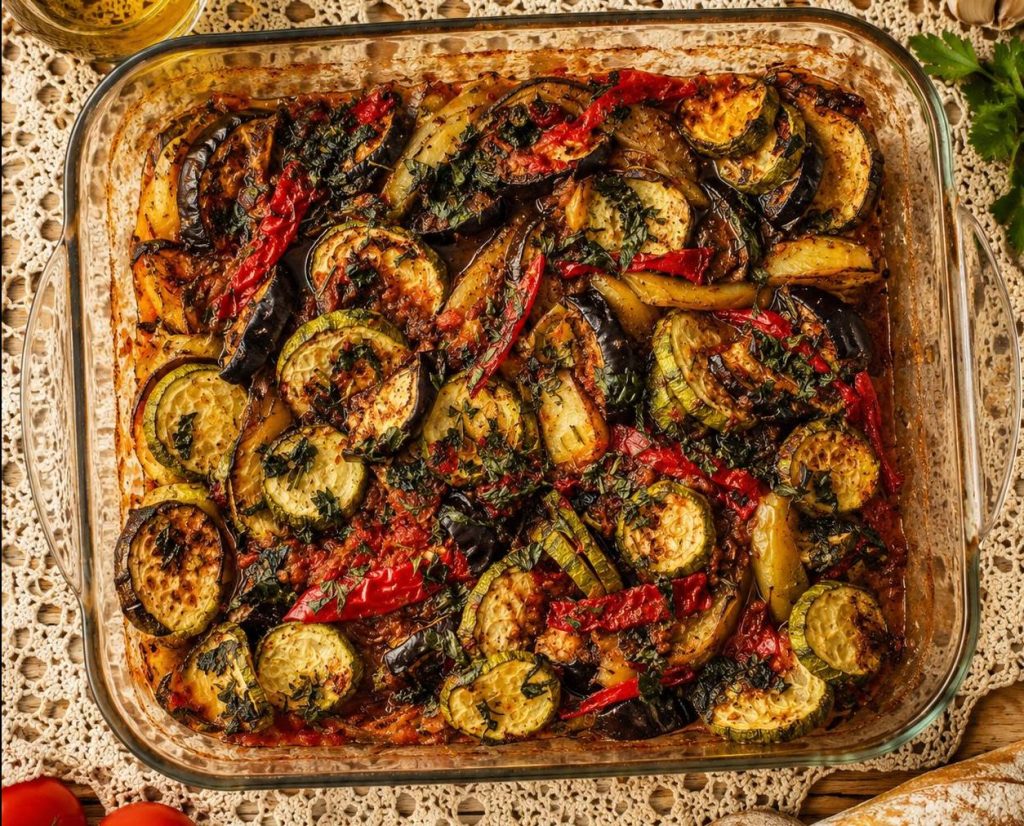
The secret to authentic Briam isn’t complexity. It’s all about the quality of the vegetables and the patience to let them cook slowly. The potatoes become buttery, the eggplants melt in your mouth, the zucchini stay sweet and tender, while the tomatoes transform into a rich, naturally sweet sauce that brings every ingredient together!
Authentic Greek Briam – The Taste of the Greek Summer in One Baking Dish
Ingredients (Serves 6–8)
- 4 large potatoes
- 3 zucchini
- 2 large eggplants
- 2 green bell peppers
- 2 red bell peppers
- 4 ripe tomatoes, grated
- 1 large onion
- 3 garlic cloves
- 1 bunch fresh parsley
- 150–180 ml extra virgin olive oil
- Salt
- Freshly ground black pepper
- A pinch of dried oregano
Instructions
Step 1 – Prepare the vegetables
Slice the potatoes into thin rounds or half-moons. Cut the zucchini into rounds, the eggplants into slices, and the peppers into strips. Try to keep all vegetables at a similar thickness so they cook evenly.
Step 2 – Prepare the tomato mixture
In a large bowl, combine the grated tomatoes, finely chopped onion, minced garlic, chopped parsley, salt, pepper, oregano, and half of the olive oil.
Step 3 – Assemble the Briam
Place all the vegetables into a large baking dish. Pour the tomato mixture over them and gently toss everything together using your hands until evenly coated. Drizzle with the remaining olive oil and add about half a glass of water.
Step 4 – Bake
Bake in a preheated oven at 180°C (350°F) for 1 hour 45 minutes to 2 hours.
Authentic Briam should never be rushed. Slow cooking allows the potatoes to become soft, the tomatoes to caramelize, and the edges of the vegetables to develop that irresistible golden color and deep flavor.
Grandma’s Traditional Secrets
- Don’t be afraid of the olive oil. In traditional Greek “ladera” dishes, olive oil is one of the main ingredients—not simply a seasoning.
- Always use fully ripe tomatoes. Their natural sweetness is the soul of this recipe.
- Let the vegetables caramelize around the edges. Those crispy bits are everyone’s favorite.
- Briam tastes even better the following day after all the flavors have blended together.
A Taste of Greek Tradition
For generations, Briam has been one of the most popular summer meals in Greek villages. Families would harvest vegetables straight from their gardens and bake them slowly in traditional wood-fired ovens. It was the perfect meal for hot summer days because it could be enjoyed warm, at room temperature, or even cold.
It was often served simply with a piece of feta cheese, olives, and freshly baked country bread. Many Greeks still remember dipping warm bread into the rich tomato and olive oil juices left in the baking pan—a simple pleasure that perfectly captures the essence of a Greek summer.
Extra Tips
- Add a few fresh basil leaves during the last 10 minutes of baking for extra aroma.
- Sprinkle a little breadcrumbs over the vegetables during the final 15 minutes if you prefer a crispier top.
- Briam keeps beautifully in the refrigerator for up to three days and reheats perfectly.
What to Serve with Briam
Traditional accompaniments include:
- Greek feta cheese
- Rustic country bread
- Kalamata olives
- Greek village salad (Horiatiki)
- Grilled sardines or anchovies for those who would like additional protein.
Wine & Drink Pairings
- A crisp Assyrtiko white wine.
- A refreshing Moschofilero.
- A light dry rosé.
- For a non-alcoholic option, homemade lemonade with fresh mint or chilled Greek mountain tea.
Nutritional Value
Briam is a wonderful example of the Mediterranean diet. It is naturally rich in dietary fiber, vitamins A and C, potassium, antioxidants, and heart-healthy monounsaturated fats from extra virgin olive oil.
Health Benefits
- Supports heart health.
- Strengthens the immune system.
- Rich in powerful antioxidants.
- Promotes healthy digestion thanks to its high fiber content.
- Helps you stay full longer while providing wholesome nutrition.
Frequently Asked Questions (FAQ)
- Why does Briam need such a long baking time?
Slow baking allows the vegetables to soften completely, release excess moisture, and develop their rich, caramelized flavor.
- Can I prepare Briam a day ahead?
Absolutely. Many people believe Briam tastes even better the next day.
- Can I add other vegetables?
Yes. Carrots, mushrooms, or even sweet potatoes can be added without losing the traditional character of the dish.
- Why does authentic Briam contain so much olive oil?
Because Briam belongs to the family of traditional Greek ladera dishes, where extra virgin olive oil is a key ingredient that creates its signature silky texture and rich flavor.
- Is Briam served hot or cold?
Both. While delicious straight from the oven, many Greeks actually prefer it warm or at room temperature the following day.
Traditional Greek Briam is proof that some of the world’s finest dishes are created from the simplest ingredients. A baking dish filled with colorful vegetables, fragrant herbs, ripe tomatoes and golden olive oil brings together the authentic flavors of the Greek countryside and the warmth of Mediterranean hospitality in every bite.