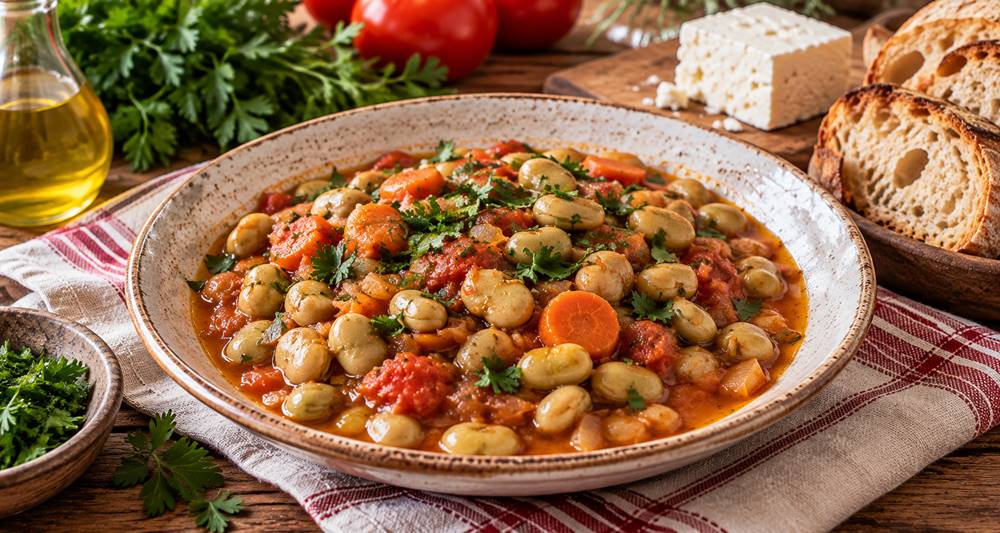
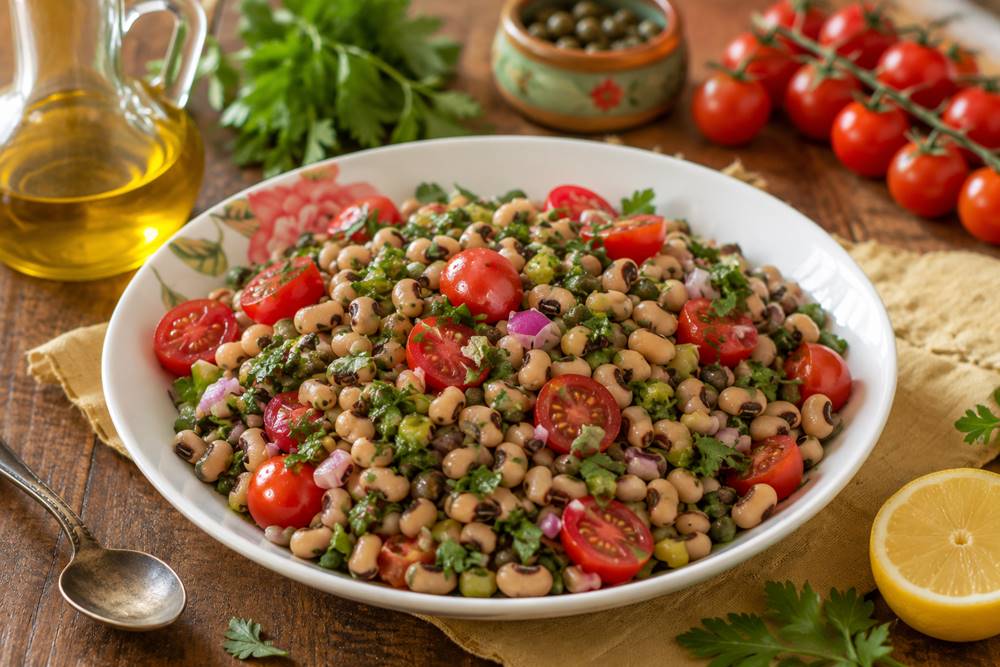
There are some Greek dishes that never need complicated ingredients to make them memorable. Hantres laderes, fresh shelling beans slowly cooked with tomato and olive oil, are a perfect example.
Hantres are the mature beans found inside fresh bean pods, traditionally cooked while they are still tender. Their beautiful appearance explains their Greek name: hantres means “beads.” When fresh beans are unavailable, frozen hantres work beautifully, making this dish easy to enjoy beyond their short season.
Like other Greek ladera, the magic comes from slow cooking, good tomatoes and generous extra virgin olive oil. The result should be juicy but not watery, with a rich sauce that has almost melted around the beans.
Greek Hantres Laderes – Fresh Shelling Beans in Tomato & Olive Oil
Ingredients (Serves 4)
- 500 g (17.6 oz) fresh shelled hantres beans, or frozen
- 1 large onion, finely chopped
- 1 medium carrot, sliced
- 500 g (17.6 oz) ripe tomatoes, grated
- 1 tsp tomato paste
- 80–100 ml (⅓–scant ½ cup) extra virgin olive oil
- ½ bunch fresh parsley, finely chopped
- 350–450 ml (1½–2 cups) hot water, as needed
- Salt
- Freshly ground black pepper
How to Make Hantres Laderes
Heat about two-thirds of the olive oil in a wide saucepan over medium heat. Add the onion and cook gently for 4–5 minutes until soft but not browned.
Add the carrot and cook for another 2–3 minutes. Stir in the tomato paste and cook briefly to deepen its flavor.
Add the fresh or frozen hantres and stir gently to coat them with the olive oil. Pour in the grated tomatoes and about 350 ml hot water. Add most of the parsley and bring everything to a gentle boil.
Reduce the heat, partially cover the pan and simmer for approximately 40–50 minutes, or until the beans are tender. Cooking time may vary depending on how mature the beans are, so start checking them after about 35 minutes. Add a little more hot water only if necessary.
Season with salt and pepper during cooking.
For the final few minutes, remove the lid and allow the tomato sauce to reduce. The finished dish should be thick, glossy and wonderfully mellow, with a little olive oil visible around the edges rather than a watery sauce.
Remove from the heat, add the remaining olive oil and parsley and let the hantres rest for 20–30 minutes before serving.
Tips for Perfect Hantres
If using fresh beans, choose plump pods with beans that are developed but still tender. Frozen hantres can go directly into the pan without thawing.
Don’t rush the cooking. Gentle heat allows the beans to soften while the tomato, onion and olive oil gradually become one sauce.
And don’t serve them piping hot. Like many Greek ladera, hantres are at their best warm or at room temperature, when their flavors become much more pronounced.
What to Serve with Hantres
For me, the perfect companions are feta cheese and thick slices of crusty country bread — especially because leaving that tomato and olive-oil sauce on the plate would be a shame!
They also work beautifully alongside olives, a simple cabbage or green salad, or as part of a larger Greek vegetable and meze table.
For wine, try a fresh dry Greek rosé or a light, fruit-forward red. If I were setting a late-summer Greek table, I would choose an Agiorgitiko rosé.
For a more rustic pairing, a small glass of tsipouro also fits naturally.
Nutritional Value & Health Benefits
Hantres are legumes and provide plant protein, complex carbohydrates and dietary fiber, making this a filling meat-free meal. Beans also supply nutrients including folate, iron, potassium and magnesium.
Their fiber contributes to normal bowel function and supports digestive health as part of a varied diet. Tomatoes add vitamin C, potassium and carotenoids such as lycopene, while extra virgin olive oil provides predominantly monounsaturated fats.
Because olive oil is an important ingredient in traditional ladera, this isn’t necessarily a low-calorie dish — but it is a fine example of how legumes, vegetables and olive oil come together in the Mediterranean dietary pattern.
FAQ
- Can I use frozen hantres instead of fresh?
Yes. Frozen hantres are an excellent substitute and can usually be cooked directly from frozen.
- Do I need to soak hantres before cooking?
No. Fresh and frozen shelling beans don’t require the overnight soaking used for dried beans.
- Can I make hantres laderes ahead of time?
Absolutely. They are delicious later the same day and often even better once the flavors have had time to settle.
- Are hantres laderes vegan?
Yes, the dish itself is naturally vegan. Simply omit feta as a side dish if you want to keep the entire meal vegan.
A Simple Greek Dish Worth Rediscovering
Hantres laderes are exactly the kind of food I love sharing: humble ingredients, seasonal roots and a cooking method that lets each ingredient taste like itself.
A bowl of beans, ripe tomato, parsley and good Greek olive oil — sometimes that is all a table needs.
Kali orexi!
Every Greek recipe tells a story. Discover authentic flavors, traditions, and timeless family recipes with CookTheGreekWay.

 CookTheGreekWay
Leave a comment