Some recipes don’t need an introduction in a Greek home.
You smell them frying in the kitchen and immediately know what’s coming.
Keftedakia, the small fried Greek meatballs that generations of families have cooked at home, are one of those dishes.
They are eaten throughout the year, but for me they have a particularly strong connection with Greek summer.
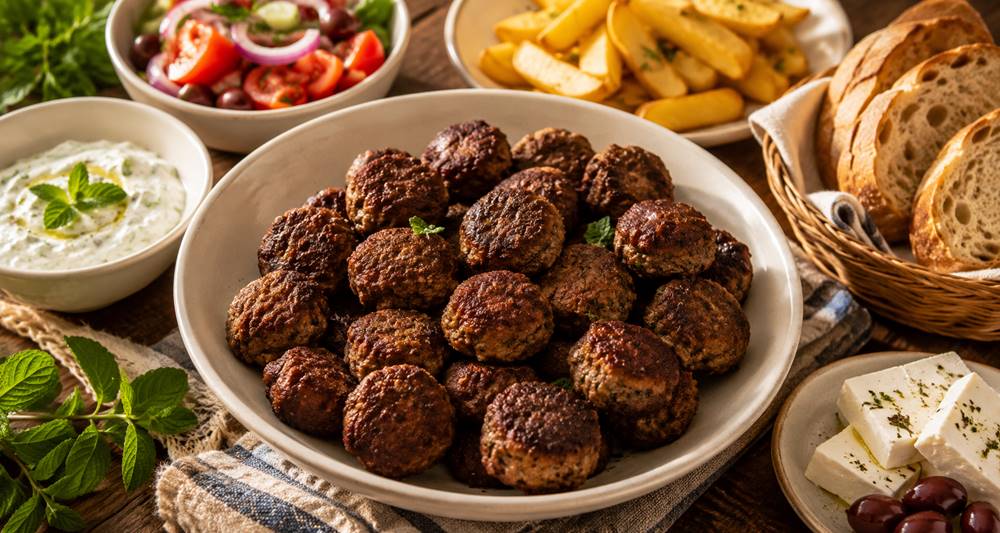
Perhaps it is the fresh mint. Perhaps it is because they are so good served warm or at room temperature. Or perhaps it is everything that surrounds them: ripe tomato salad, tzatziki, feta, fried potatoes, rustic bread and a cold drink on a table that nobody is in a hurry to leave.
I recently made them again using this simple traditional combination, and they reminded me why some recipes simply don’t need improving.
Good minced beef, stale bread, onion, egg, fresh mint, parsley and a little wine vinegar. Nothing complicated.
And they were irresistible.
Authentic Greek Keftedakia Recipe (Makes: approximately 25–30 small meatballs)
Ingredients
- 500 g ground beef
- 2 thick slices stale rustic bread, crumb only
- 1 medium onion, very finely chopped or grated
- 1 egg
- 2–3 tbsp fresh mint, finely chopped
- 1–2 tbsp fresh parsley, finely chopped
- 1 tbsp wine vinegar
- Salt
- Freshly ground black pepper
- A little all-purpose flour, for coating
- Olive oil, for frying
Method
Soak the stale bread briefly in water. Squeeze it extremely well with your hands until almost all the moisture has been removed.
Crumble it into a large bowl with the ground beef.
Add the onion, egg, mint, parsley, wine vinegar, salt and pepper.
Now use your hands.
Knead the mixture thoroughly until everything is evenly incorporated and the mixture becomes soft and cohesive.
Cover and refrigerate for at least 1 hour. If you have time, leave it for 2–3 hours.
Shape into small meatballs and flatten them very slightly rather than making perfect round balls.
Place a little flour on a plate and roll each meatball lightly through it. Shake off all the excess flour.
Heat olive oil in a frying pan. When properly hot, fry the keftedakia in batches, leaving enough room between them.
Turn them as necessary until they develop a deep golden-brown crust and are fully cooked in the centre.
Transfer briefly onto absorbent kitchen paper and serve.
And try not to eat half of them before they reach the table. That’s probably the most difficult part of the recipe.
Grandma’s Secrets for Perfect Keftedakia
- Use stale bread, not breadcrumbs
This is one of my favourite old-fashioned tricks. Soaked stale bread gives the interior a wonderfully soft and fluffy texture.
The important part is squeezing it extremely well before adding it to the meat.
- Don’t forget the vinegar
A spoonful of wine vinegar is an old addition found in Greek meatball making. It contributes acidity and flavour without making the finished meatballs taste vinegary.
- Fresh mint makes the difference
For me, this is the aroma of Greek keftedakia.
Parsley adds freshness, but mint gives them their unmistakable summer personality.
- Give the mixture time to rest
One hour in the refrigerator is good. Two or three is even better.
The mixture firms up, becomes easier to shape and the flavours have time to mingle.
- Keep them small
These aren’t giant meatballs. Small, slightly flattened keftedakia give us plenty of that delicious fried exterior while remaining juicy inside.
- Don’t overcrowd the pan
Fry in batches. Adding too many at once lowers the oil temperature and prevents proper browning.
- Garlic and cumin?
Not in my basic version.
There are numerous regional and family variations of Greek meatballs, but I prefer this simple combination. Cumin in particular takes the flavour profile toward other Greek meat preparations, most famously soutzoukakia.
What to Serve with Greek Keftedakia
This is where a simple plate of meatballs can become a wonderful Greek summer meal.
My ideal table would include:
- homemade tzatziki
- Greek Horiatiki salad
- simple tomato and onion salad
- fried potatoes
- feta cheese and olives
- roasted or fried peppers
- rustic country bread
Keftedakia are also wonderful as part of a Greek meze spread, where everyone helps themselves from several small dishes.
And because they don’t have to be piping hot, they’re particularly convenient for relaxed summer entertaining.
What to Drink with Keftedakia
For a casual summer meal, a cold beer is difficult to beat.
For a Greek meze table, try ouzo or tsipouro, particularly when the meatballs are accompanied by tzatziki, feta, olives and salad.
If you prefer wine, choose a fresh dry rosé or a medium-bodied Greek red that won’t overwhelm the mint and herbs.
Approximate Nutritional Value
Per serving of approximately 5 meatballs, depending on their size and the amount of oil absorbed:
- Calories: 300–380 kcal
- Protein: 22–27 g
- Fat: 18–25 g
- Carbohydrates: 10–15 g
- Iron: naturally present in beef
- Vitamin B12: naturally present in beef
The exact nutritional values vary according to the fat percentage of the beef, meatball size and frying method.
Nutritional Benefits
- High-Quality Protein
Beef and egg provide complete protein containing essential amino acids, contributing to the maintenance of muscle mass.
- Iron
Beef provides heme iron, a form of iron that is readily absorbed by the body. Iron contributes to normal red blood cell and haemoglobin formation.
- Vitamin B12
Beef is naturally rich in vitamin B12, which contributes to normal nervous-system function and energy metabolism.
- Zinc
Beef also provides zinc, which contributes to normal immune function.
Of course, keftedakia are fried food, so I prefer to look at the whole meal rather than give them a health halo. Pairing a reasonable portion with tomato salad, vegetables and tzatziki creates a more balanced plate.
FAQ
- What does “keftedakia” mean?
Keftedakia (κεφτεδάκια) literally refers to small keftedes — Greek meatballs. The diminutive fits their traditional small size.
- Can I prepare the mixture the night before?
Yes. Keep it properly covered and refrigerated, then shape and fry the meatballs the following day.
- Why do Greek meatballs contain bread?
Soaked stale bread helps create a tender, lighter interior rather than a dense meatball.
- Can I use breadcrumbs instead?
You can, but the texture will be different. For this traditional home-style version, I strongly prefer soaked stale bread.
- Why add vinegar to keftedakia?
A small amount provides acidity and flavour. It is an old-fashioned addition that works particularly well in the meat mixture.
- Is mint essential?
Recipes vary from family to family, but fresh mint is one of the flavours strongly associated with Greek keftedes and is the herb I wouldn’t leave out of this version.
- Can Greek keftedakia be baked instead?
They can, but they won’t be quite the same recipe. Traditional fried keftedakia owe much of their character to their golden fried crust.
- Are keftedakia summer food?
They are eaten all year round in Greece, but they are especially enjoyable during summer. Fresh mint, ripe tomatoes, tzatziki and the fact that the meatballs are delicious even when no longer piping hot make them ideal for a Greek summer table.
The Taste of a Greek Summer
There is something wonderfully familiar about a plate piled high with homemade keftedakia.
Perhaps it isn’t just the meatballs themselves.
It’s the bowl of tzatziki beside them. The tomatoes that actually taste of summer. The feta and bread in the middle of the table. Someone stealing a fried potato. Someone else taking “just one more” meatball.
And the smell of fresh mint that somehow brings everything together.
Keftedakia may belong to every season, but on a long Greek summer evening, I think they taste just a little better.
Every Greek recipe tells a story. Discover authentic flavors, traditions, and timeless family recipes with CookTheGreekWay.