There are dishes in Greek cooking that need no introduction at a family table. The moment their aroma begins to fill the kitchen, everyone knows that something comforting is coming.
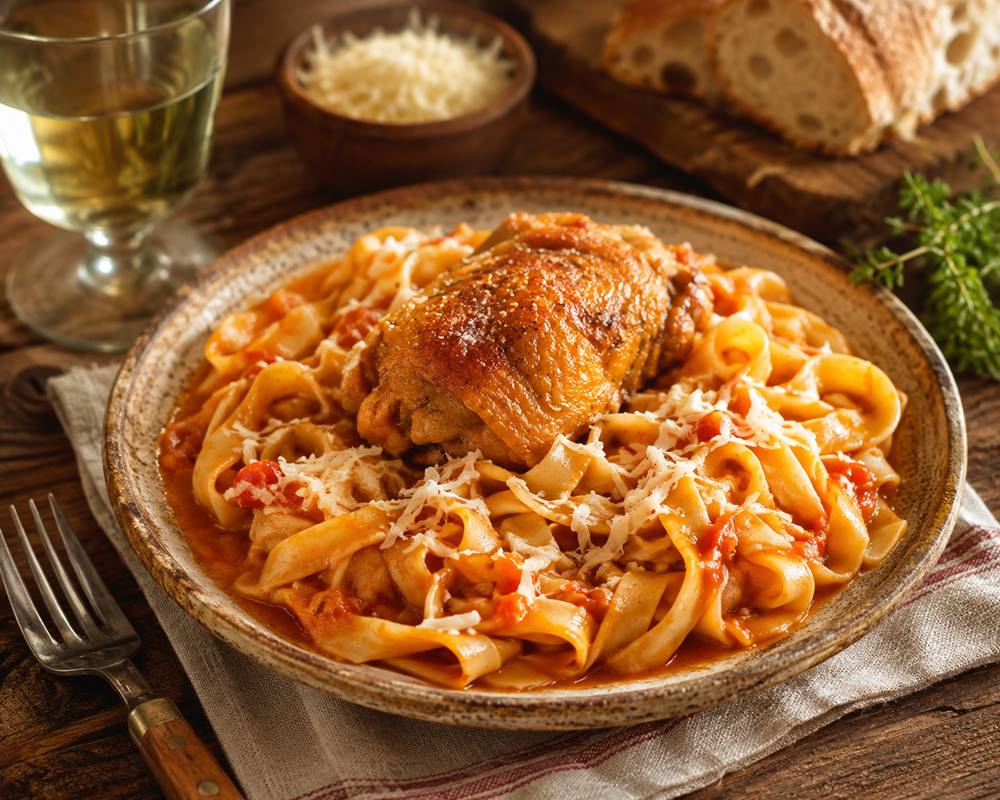
Chicken with hilopites is one of those dishes.
Tender pieces of chicken are slowly cooked with onion, garlic, wine and ripe fresh tomatoes. Then the sauce, chicken and traditional Greek pasta come together in the oven, where the hilopites absorb all those wonderful juices.
It is simple food, but it tastes like home.
Hilopites are one of Greece’s traditional pastas. They are generally made with wheat, eggs and milk and can be found in different shapes and sizes depending on the region — from tiny squares to wider strips. Traditional Greek pasta has long been part of everyday meals as well as Sunday and festive family tables.
For generations, preparing pasta was also part of the rhythm of rural household life. Pasta could be prepared and dried so that the family had food available for the months ahead.
And hilopites have a particular talent: they love sauce.
Rather than treating them like ordinary pasta and drowning them in water, I prefer allowing them to finish cooking directly in the chicken and tomato juices. That’s where this dish becomes special.
Many excellent Greek versions use tomato paste or preserved tomatoes, and both have their place in our cooking. Classic recipes also combine chicken, hilopites, tomato, onion, olive oil and grated cheese.
But when I make this dish in late summer or early September, I want fresh tomatoes.
At this time of year, Greek tomatoes are still ripe, sweet and full of juice. They give the sauce a lighter freshness while the hilopites bring us gently toward the warmer, more comforting food of autumn.
For me, this is a beautiful September dish: one foot in summer and the other in autumn.
Traditional Greek Chicken with Hilopites Recipe (Serves: 5–6)
Ingredients
- 1 whole free-range or country-style chicken, about 1.5 kg (3.3 lb), cut into portions
- 400–450 g (14–16 oz) traditional Greek hilopites
- 5–6 ripe tomatoes, about 750–800 g (26–28 oz)
- 1 large yellow onion, finely chopped
- 1 garlic clove
- 70 ml (about ¼ cup + 1 tsp) extra virgin olive oil
- 100 ml (⅓ cup + 1 tbsp) dry white wine
- 1 bay leaf
- Salt, to taste
- Freshly ground black pepper
- Approximately 700–900 ml (3–3¾ cups) hot water or light chicken stock, as needed
- Grated dry mizithra or kefalotyri cheese, for serving
Instructions
- Prepare the tomatoes
Grate the ripe tomatoes using the coarse side of a box grater, discarding the skins. Keep all their juice and pulp.
- Brown the chicken
Heat the olive oil in a wide, heavy-bottomed pot over medium-high heat.
Add the chicken pieces and brown them well on all sides.
Don’t rush this step. Browning gives the chicken and eventually the sauce much deeper flavor. We don’t want the chicken simply to boil in tomato sauce.
If necessary, brown it in batches rather than overcrowding the pot.
- Build the sauce
Add the chopped onion and cook until softened.
Add the garlic and cook briefly, taking care not to burn it.
Pour in the white wine and allow it to simmer until most of the alcohol has evaporated.
Add the grated fresh tomatoes with all their juices, the bay leaf, salt and freshly ground black pepper.
- Slowly cook the chicken
Add a little hot water or light chicken stock.
Cover and simmer gently until the chicken is almost tender.
The exact cooking time depends on your chicken. A true free-range country chicken may need considerably longer than a standard supermarket chicken.
- Transfer to the baking pan
Preheat the oven to 200°C / 395°F.
Transfer the chicken and all its tomato sauce to a deep baking pan.
Add enough hot water or chicken stock to provide sufficient liquid for the hilopites to cook later.
Place the pan in the oven and continue cooking until the chicken is tender.
- Add the hilopites
When the chicken is almost completely cooked, add the hilopites directly to the baking pan.
Gently stir them into the sauce, making sure they are mostly surrounded by liquid.
Return the pan to the oven and cook for approximately 10–15 minutes, depending on the size and thickness of your hilopites and the manufacturer’s instructions.
Check them as they cook and add a little more hot water or stock if necessary.
- The important part: don’t let them become dry!
Remove the baking pan from the oven while there is still a little sauce left around the hilopites.
They will continue absorbing liquid as the dish rests.
Leave everything for 5–10 minutes before serving.
Finish with plenty of grated dry mizithra or kefalotyri.
Tips & Secrets for Perfect Chicken with Hilopites
- Use chicken with the bone. It gives the sauce much more flavor than boneless chicken breast. Keeping the skin during cooking also adds richness; you can remove it when eating if you prefer.
- Use the ripest tomatoes you can find. This version deliberately doesn’t rely on tomato paste. The tomatoes need to have real flavor.
- Don’t add cold water to a hot baking pan. Keep your water or stock hot so you don’t interrupt the cooking process.
- Watch the hilopites carefully. Traditional handmade hilopites can behave very differently from commercially produced pasta. Some need only a few minutes; thicker ones need longer.
- Take the pan out while you think the hilopites are still a little too juicy.
They aren’t.
Hilopites continue absorbing sauce very quickly after they leave the oven. If they look perfectly dry and finished while still inside it, they can become much too dry by the time everyone sits down to eat.
- And don’t skip the 5–10 minute rest. That’s when the sauce settles and clings beautifully to the pasta.
What to Serve with Greek Chicken and Hilopites
This is already a substantial one-pan main course, so I wouldn’t surround it with heavy side dishes.
A simple seasonal green salad dressed with olive oil and lemon is enough. In late summer, a tomato and cucumber salad also works beautifully.
You can put some feta and olives on the table, although I would keep the feta separate because the dry mizithra or kefalotyri already gives the pasta plenty of salty cheese flavor.
And, of course, good Greek country bread never looks out of place on this table — particularly when there is tomato sauce left in the pan.
Wine Pairing
Because this version uses fresh tomato and chicken rather than a heavy meat sauce, I would pair it with a dry Greek rosé or a medium-bodied dry white wine.
A Moschofilero can work nicely if you want something fresh and aromatic, while a dry rosé made from Agiorgitiko is a particularly lovely match with the tomato sauce.
For me, the rosé wins here.
Nutritional Value
This is a complete and satisfying meal rather than a light pasta dish.
Chicken provides high-quality protein, along with nutrients including B vitamins, while the hilopites provide carbohydrates — the principal energy component of the meal.
Fresh tomatoes contribute vitamin C, potassium and carotenoids including lycopene, while extra virgin olive oil provides predominantly monounsaturated fats.
The traditional combination therefore gives us protein + carbohydrates + vegetables + olive oil in one main dish.
The exact nutritional value will vary considerably depending on the chicken pieces, whether the skin is eaten, the amount of cheese used and the particular hilopites, so I would avoid giving artificial-looking calorie numbers unless the finished recipe has actually been nutritionally calculated.
What Can It Contribute to a Balanced Diet?
The protein from chicken contributes to the maintenance and repair of body tissues and muscle mass.
The carbohydrates in hilopites provide energy, making the dish particularly filling.
Tomatoes add plant compounds and micronutrients, while olive oil is one of the characteristic fat sources of the Mediterranean dietary pattern.
Of course, no individual traditional dish can be said to prevent or treat a health condition. Its nutritional value comes from how it fits into an overall balanced Mediterranean-style diet.
FAQ
- What are Greek hilopites?
Hilopites are traditional Greek pasta, commonly made from wheat or semolina with eggs and milk. They may be cut into small squares or longer strips depending on the producer and region.
- Can I make chicken with hilopites without a baking pan?
Yes. Greek chicken with hilopites can also be cooked entirely in a pot; traditional and contemporary recipes use both methods. I particularly like finishing this version in a deep baking pan because the chicken roasts gently while the pasta absorbs the tomato-rich cooking juices.
- What can I use if I can’t find hilopites?
Look for another small egg pasta. Small squares are ideal. In a pinch, a short, relatively flat egg pasta can work, although the result will no longer have quite the same traditional Greek character.
- Can I use canned tomatoes?
Yes. But when ripe fresh tomatoes are in season, I strongly recommend using them. Their freshness is part of the character of this particular recipe.
- Do I have to use a free-range chicken?
No. A regular chicken works perfectly well and will usually cook faster. A country-style or free-range chicken generally has firmer meat and may require additional cooking time.
- Why are my hilopites dry?
They probably absorbed more liquid than expected. Different hilopites absorb different amounts, particularly handmade varieties. Keep hot water or stock nearby and remove the pan from the oven while some sauce is still visible.
- Can I prepare the chicken in advance?
Yes. You can cook the chicken and tomato sauce ahead, refrigerate them safely, then reheat thoroughly and add the hilopites shortly before serving. I wouldn’t cook the pasta far in advance because it will continue absorbing the sauce.
- Which cheese is traditionally served on top?
Dry mizithra or kefalotyri are excellent Greek choices. Both bring a salty, savory finish that works beautifully with the sweet fresh tomato sauce.
A Greek Family Dish Worth Keeping
Chicken with hilopites isn’t complicated food, and that’s precisely why I love it.
It is chicken browned patiently in olive oil, ripe tomatoes grated by hand, a little wine, onion and garlic — and pasta allowed to cook in all those wonderful juices.
In September, when tomatoes are still sweet but evenings begin to hint that autumn is coming, this is exactly the kind of food I want on my table.
Bring the baking pan to the middle, grate some cheese over the hilopites, pour a glass of wine and let everyone help themselves.
Because sometimes the best Greek recipes aren’t the ones that require the most work.
They’re simply the ones that make everyone come to the table.
Kali orexi!
Every Greek recipe tells a story. Discover authentic flavors, traditions, and timeless family recipes with CookTheGreekWay.