A Taste of Santorini’s Volcanic Soil
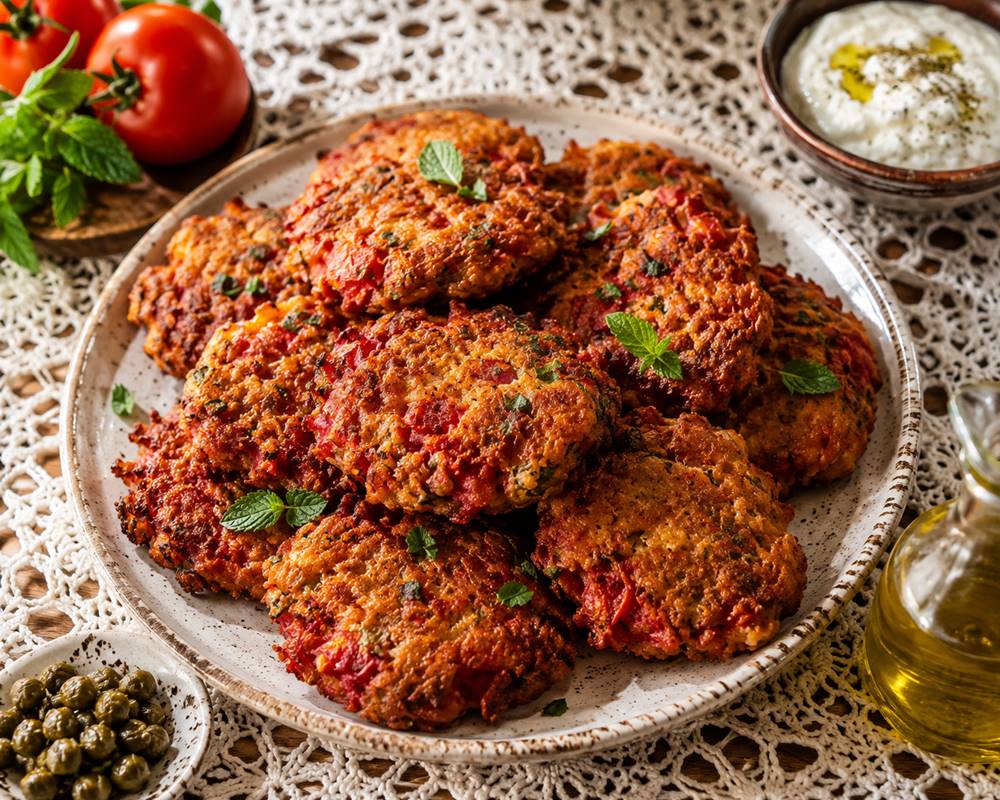
Among the countless recipes of the Greek islands, few are as closely connected to their homeland as Domatokeftedes, the famous tomato fritters of Santorini.
These crispy, golden fritters weren’t created simply to use up tomatoes.
They were born because Santorini’s tiny cherry tomatoes, grown in volcanic soil with almost no rainfall, develop an incredibly concentrated sweetness and naturally low moisture. Their intense flavor makes them unlike any other tomato in the world—and the perfect ingredient for this beloved island specialty.
Simple, rustic and full of sunshine, Domatokeftedes have been a staple of Cycladic family tables for generations.
A Recipe Rooted in the Cyclades
Before tourism transformed Santorini, island families relied on what the land generously provided.
Tomatoes, onions, herbs, olive oil and flour were everyday ingredients.
When tomatoes ripened under the strong Aegean sun, women gathered in their kitchens to prepare batches of tomato fritters for lunch, supper or as part of a generous meze spread.
Each household had its own slight variation, but everyone agreed on one thing:
The tomatoes should always be the star.
As old Santorini cooks used to say:
“The flour follows the tomato—not the other way around.”
This simple saying perfectly captures the philosophy behind authentic Domatokeftedes.
Authentic Santorini Tomato Fritters – Serves 4
Ingredients
- 700 g (1½ lb) small ripe tomatoes (preferably Santorini tomatoes)
- 1 large onion, finely chopped
- 1 generous handful fresh mint, finely chopped
- A little fresh parsley
- 180–220 g (1½–1¾ cups) all-purpose flour
- 1 tsp baking powder (optional—many traditional cooks omit it)
- Salt
- Freshly ground black pepper
- Extra virgin olive oil, for frying
Instructions
Prepare the Tomatoes
Do not grate the tomatoes.
Instead, chop them into very small cubes using a sharp knife.
This preserves both their texture and concentrated flavor.
If using regular tomatoes, place them in a colander for about 15 minutes to drain excess moisture before mixing.
Prepare the Batter
Combine:
- Tomatoes
- Onion
- Fresh mint
- Parsley
- Salt
- Pepper
Gradually add the flour, stirring gently after each addition.
The batter should remain thick but soft, slowly falling from a spoon.
Do not make a stiff dough.
Let the Batter Rest
Allow the mixture to rest for 20–30 minutes.
This is one of Santorini’s oldest cooking secrets.
During this time, the flour naturally absorbs the tomato juices, helping the fritters bind beautifully without becoming heavy.
Fry the Fritters
Heat plenty of extra virgin olive oil.
Using two spoons, gently shape rustic, irregular fritters.
Authentic Domatokeftedes are never perfectly round.
Their crisp, uneven edges are part of their charm.
Fry until deeply golden on both sides.
Drain briefly on a wire rack.
Grandmother’s Secrets
- The sweeter the tomatoes, the better the fritters.
- Fresh mint is essential.
- Olive oil is the only traditional frying fat.
- Let the batter rest before frying.
- Never measure the flour too precisely.
Old Santorini grandmothers used to say:
“The tomato will tell you how much flour it needs.”
Since every harvest contains a different amount of moisture, the flour should always be added gradually until the batter reaches the perfect consistency.
Extra Cooking Tips
- Chop the tomatoes instead of grating them.
- Drain regular tomatoes before mixing.
- Rest the batter before frying.
- Fry over medium-high heat for crispy edges and a juicy center.
- Serve immediately while still warm and crisp.
What to Serve with Domatokeftedes
These traditional tomato fritters are one of Greece’s most beloved meze dishes.
Perfect Pairings
- Tzatziki
- Thick Greek yogurt
- Santorini capers
- Rustic country bread
- Greek village salad (Horiatiki)
- Grilled vegetables
Best Wine Pairings
Their bright tomato flavor pairs beautifully with crisp Greek wines.
White Wines
- Assyrtiko (the classic Santorini pairing)
- Athiri
- Moschofilero
Rosé Wines
A dry Greek rosé is perfect for warm summer evenings.
Non-Alcoholic Pairings
- Sparkling water with lemon
- Homemade lemonade
- Fresh tomato juice
- Iced mountain tea
Nutritional Value
Domatokeftedes combine the nutritional benefits of tomatoes, herbs and extra virgin olive oil.
Tomatoes are rich in lycopene, vitamin C and potassium, while fresh mint contributes antioxidants and aromatic compounds.
Olive oil provides heart-healthy monounsaturated fats and beneficial polyphenols.
Health Benefits
When enjoyed as part of a balanced Mediterranean diet, Domatokeftedes may support:
- Heart health through extra virgin olive oil
- Reduced inflammation thanks to lycopene and olive oil polyphenols
- Immune function through vitamin C from tomatoes
- Healthy digestion with fiber from tomatoes and onions
- Antioxidant protection from fresh herbs and tomatoes
Frequently Asked Questions (FAQ)
- Why are Santorini tomatoes considered the best?
Santorini tomatoes grow in volcanic soil with minimal rainfall, producing exceptionally sweet, flavorful tomatoes with very little moisture.
- Can I use regular tomatoes?
Yes.
Choose ripe, firm tomatoes and drain them well before preparing the batter.
- Why shouldn’t I grate the tomatoes?
Chopped tomatoes retain their texture and prevent the batter from becoming watery.
- Why does the batter need to rest?
Resting allows the flour to absorb the tomato juices naturally, creating light, crispy fritters.
- Can I bake Domatokeftedes instead of frying them?
You can, but frying in olive oil produces the authentic crispy exterior and tender center that define traditional Santorini tomato fritters.
A Bite of the Aegean
Authentic Santorini Tomato Fritters are much more than a delicious appetizer.
They capture the spirit of the Cyclades—where volcanic soil, brilliant sunshine and simple ingredients come together to create unforgettable flavors.
Golden, aromatic and irresistibly crisp, Domatokeftedes remain one of Greece’s finest expressions of island cooking.
Every Greek recipe tells a story. Discover authentic flavors, traditions, and timeless family recipes with CookTheGreekWay.