Few Greek sweets carry as much warmth and tradition as Kalitsounia, the beloved little cheese pastries of Crete.
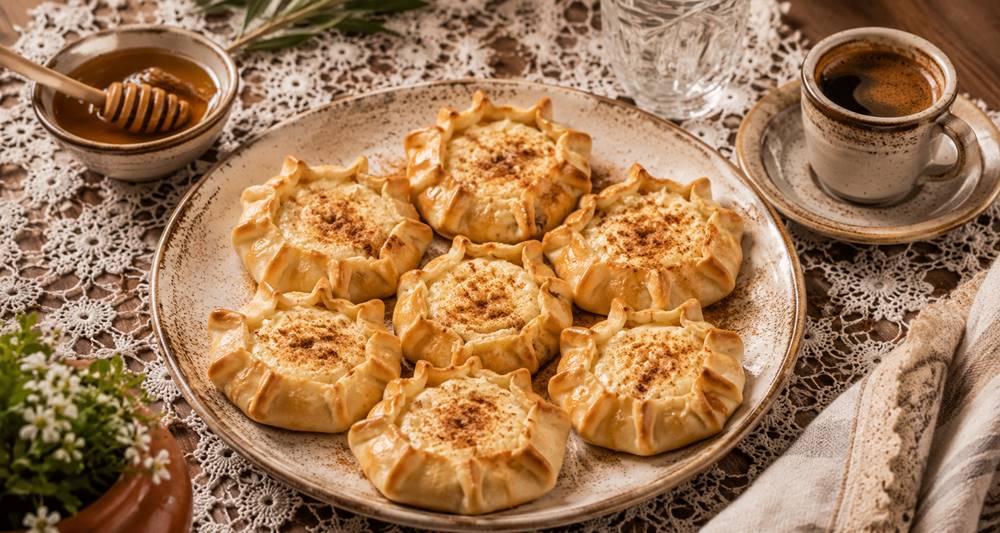
Known as Lychnarakia (“little lamps”) in many parts of the island because of their beautifully pinched edges resembling the flame of an oil lamp, these delicate pastries have been lovingly prepared for generations.
Unlike many modern desserts, authentic Kalitsounia were never overly sweet.
Their gentle sweetness came from fresh sweet myzithra cheese, fragrant honey and the natural aromas of citrus and cinnamon.
Served during Easter, weddings, baptisms and village celebrations, they remain one of Crete’s most treasured traditional treats.
A Sweet Tradition from Crete
Throughout Crete, Kalitsounia symbolized hospitality and celebration.
Women would gather around large wooden tables to prepare dozens of pastries together, carefully shaping each one by hand.
The distinctive pinched edges weren’t merely decorative—they became a signature passed from grandmother to granddaughter, preserving both craftsmanship and family tradition.
Every village developed its own variation, but the heart of the recipe always remained the same:
Fresh local cheese.
Pure thyme honey.
Simple ingredients.
Made with love.
Why Are They Called Lychnarakia?
The name Lychnarakia comes from the Greek word “lychnari”, meaning small oil lamp.
Once shaped, the folded pastry resembles the traditional clay oil lamps that illuminated Greek homes for centuries.
This beautiful resemblance gave the pastries their charming name, especially in central and eastern Crete.
Elsewhere on the island they are simply called Kalitsounia, a name shared with several savory and sweet Cretan pastries.
Traditional Cretan Sweet Kalitsounia
Makes 20–25 pastries
For the Dough
- 500 g all-purpose flour
- 80 ml extra virgin olive oil
- 50 ml fresh orange juice
- 1 small glass of Cretan raki (or dry white wine)
- 1 tbsp sugar
- Lukewarm water, as needed
For the Filling
- 500 g fresh sweet myzithra cheese
- 1 egg
- 2–3 tbsp honey
- 1 tsp ground cinnamon
- Zest of 1 lemon or orange
Instructions
Prepare the Filling
Mix together:
- Sweet myzithra
- Egg
- Honey
- Cinnamon
- Citrus zest
The filling should be creamy but firm enough to hold its shape.
If it feels too soft, refrigerate it for about 30 minutes.
Prepare the Dough
Combine all the dough ingredients and knead until smooth and elastic.
Cover and allow the dough to rest for about 30 minutes.
This resting time is one of the oldest secrets to achieving tender Kalitsounia.
Shape the Pastries
Roll the dough into a thin sheet.
Cut circles approximately 10 cm (4 inches) in diameter.
Place one generous spoonful of filling in the center.
Pinch the edges all around using your fingertips to create the traditional flower-like shape.
This technique has been passed down through generations of Cretan women.
Bake
Bake at 180°C (350°F) for 20–25 minutes until lightly golden.
Do not overbake.
Traditional Kalitsounia should remain pale golden rather than deeply browned.
Grandmother’s Secrets
- Add only a little honey to the filling.
- Brush the pastries with thyme honey immediately after baking.
- Orange zest is often preferred in eastern Crete.
- Fresh sweet myzithra makes all the difference.
- Cinnamon should enhance —not overpower— the delicate cheese flavor.
The Traditional Finishing Touch
Once the pastries have cooled slightly:
- Drizzle with thyme honey
- Sprinkle lightly with cinnamon
- Add toasted sesame seeds if desired
Simple.
Elegant.
Perfectly Cretan.
Extra Baking Tips
- Let the dough rest before rolling.
- Use fresh sweet myzithra whenever possible.
- Chill the filling if it becomes too soft.
- Avoid overbaking to keep the pastries tender.
- They taste even better a few hours after baking.
What to Serve with Kalitsounia
These delightful pastries are traditionally enjoyed as breakfast, dessert or an afternoon treat.
Perfect Pairings
- Greek coffee
- Cretan mountain tea
- Fresh orange juice
- Chamomile tea
- Vanilla ice cream
- Greek yogurt with honey
Best Wine Pairings
Sweet Kalitsounia pair beautifully with aromatic dessert wines.
Dessert Wines
- Muscat of Samos
- Vin Santo
- Malvasia
Nutritional Value
Kalitsounia offer a balanced combination of carbohydrates, protein and healthy fats.
Fresh myzithra provides calcium and protein, while honey contributes natural sugars and antioxidants.
Olive oil supplies heart-healthy monounsaturated fats, and citrus zest adds valuable vitamins and aromatic oils.
Health Benefits
Enjoyed in moderation, Kalitsounia can be part of a balanced Mediterranean lifestyle.
They provide:
- High-quality protein from myzithra
- Calcium for healthy bones and teeth
- Healthy fats from olive oil
- Natural antioxidants from honey
- Vitamin C from fresh citrus zest
- Sustained energy from wholesome ingredients
Frequently Asked Questions (FAQ)
- What’s the difference between Kalitsounia and Lychnarakia?
They are essentially the same traditional Cretan pastry.
Lychnarakia refers to the beautifully pinched, lamp-shaped version, while Kalitsounia is the broader name used for many sweet and savory Cretan pastries.
- Can I use ricotta instead of myzithra?
Yes.
Ricotta is the closest substitute outside Greece, although fresh sweet myzithra offers the most authentic flavor.
- Can I prepare them in advance?
Absolutely.
They keep well for 2–3 days in an airtight container and remain wonderfully tender.
- Can they be frozen?
Yes.
Freeze them after baking and cool completely before storing.
- Why are they brushed with honey after baking?
Traditional Cretan cooks believed this preserved the delicate floral aroma of the thyme honey much better than baking it inside the filling.
A Sweet Taste of Crete
Kalitsounia are more than a traditional dessert.
They are a symbol of Cretan hospitality, craftsmanship and family life.
Every carefully pinched pastry tells a story of village kitchens, festive gatherings and recipes lovingly passed from one generation to the next.
Simple, fragrant and timeless, they remain one of the sweetest expressions of authentic Greek baking.
Every Greek recipe tells a story. Discover authentic flavors, traditions, and timeless family recipes with CookTheGreekWay.