Some recipes are more than food; they are part of a region’s history and culture. Cretan kalitsounia are one of those treasured recipes. From the mountain villages of the White Mountains to the seaside homes of Eastern Crete, these traditional cheese pastries have been a beloved part of Cretan life for generations.
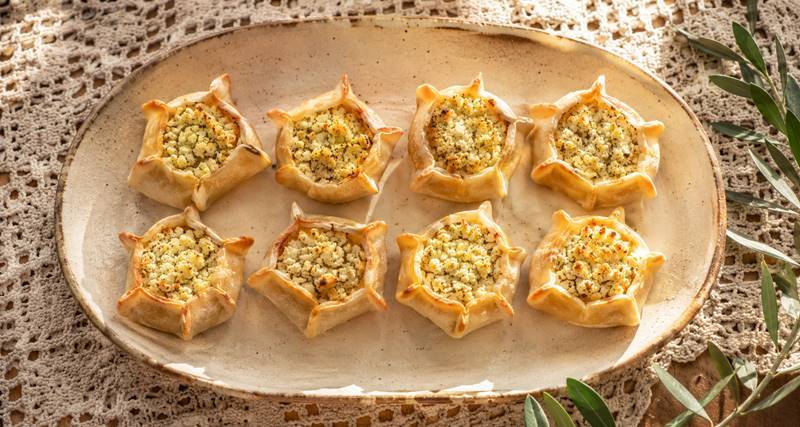
Traditionally prepared for celebrations, festivals, Easter gatherings, and family occasions, kalitsounia are often shaped into beautiful little “lychnarakia,” resembling small lanterns. Their delicate dough, fragrant mint, and creamy cheese filling create a flavor that carries memories of village courtyards, wood-fired ovens, and warm Greek summers.
If you are looking to experience authentic Cretan cuisine, this traditional recipe is the perfect place to start.
Cretan Kalitsounia with Xinomizithra and Mint – A Taste of Crete in Every Bite
Ingredients
For the Dough
- 500 g all-purpose flour
- 80 ml extra virgin olive oil
- 1 small glass of raki (Cretan grape spirit)
- Warm water, as needed
- 1 pinch of salt
For the Filling
- 500 g xinomizithra or sweet mizithra cheese
- 2 eggs
- Plenty of finely chopped fresh mint
- A little black pepper
- A small amount of salt (if needed)
Traditional tip: Many Cretan grandmothers also add a little fresh anthotyro cheese for an even creamier filling.
Instructions
- Prepare the Dough
In a large bowl, combine:
- Flour
- Olive oil
- Raki
- Salt
Gradually add warm water until the dough becomes:
- Soft
- Elastic
- Easy to handle
Cover and let it rest for about 30 minutes.
The Great Cretan Secret
Raki is not added only for flavor.
It helps make the dough:
- Crispier
- Lighter
- Less likely to become soggy after baking
2. Prepare the Filling
In a bowl, mix together:
- Mizithra cheese
- Eggs
- Fresh mint
- Black pepper
The filling should be fluffy and creamy, not watery.
If it seems too wet, add:
- A little anthotyro cheese, or
- A spoonful of breadcrumbs
3. Shaping the Kalitsounia
Roll out the dough into a thin sheet and cut circles using a cutter or glass.
Place a spoonful of filling in the center of each circle.
For Traditional Lychnarakia
Pinch the edges all around to create the characteristic flower-like shape.
For Closed Kalitsounia
Fold the dough into a half-moon shape and seal the edges with a fork.
Alternative Traditional Method
Many Cretan home cooks prefer to divide the dough into small balls first.
Each dough ball is then rolled out individually with a rolling pin into a small round disc before adding the filling.
This method often produces more rustic-looking kalitsounia and makes shaping easier for beginners.
- Baking
Bake in a preheated oven at 180°C (350°F) for 30–40 minutes, or until beautifully golden and lightly reddish-brown.
Grandma’s Secrets
- Mint Is the Soul of Kalitsounia
Do not be shy with the mint. It is what gives kalitsounia their distinctive Cretan aroma.
- Use Quality Cheese
Good xinomizithra makes all the difference.
If the cheese lacks flavor, the kalitsounia will too.
- Let the Dough Rest
Resting the dough improves texture and makes it much easier to roll out.
- Do Not Overfill
Too much filling may cause the pastries to open during baking.
The Sweet-and-Savory Cretan Version
In many parts of Crete, warm kalitsounia are drizzled with:
- Thyme honey
- A sprinkle of cinnamon
The combination of sweet honey and savory cheese is absolutely irresistible.
What to Serve with Kalitsounia
Food Pairings
- Greek village salad
- Green salad with capers or sea fennel
- Olives and traditional rusks
- Roasted vegetables
Drink Pairings
- Cretan raki
- Dry white wine
- Vidiano wine
- Vilana wine
- Dry rosé wine
For Breakfast
In Crete, kalitsounia are often enjoyed for breakfast with coffee or mountain tea.
Nutritional Information
Per Kalitsouni (Approximate)
- Calories: 180–220 kcal
- Protein: 7 g
- Carbohydrates: 18 g
- Fat: 9 g
- Calcium: High content
Health Benefits
Xinomizithra Cheese
- Rich in protein
- Excellent source of calcium
- Supports muscle maintenance and bone health
Fresh Mint
- Aids digestion
- Provides antioxidants
- Adds flavor naturally without additives
Olive Oil
- Rich in heart-healthy monounsaturated fats
- Supports cardiovascular health
- A cornerstone of the Mediterranean diet
Frequently Asked Questions (FAQ)
- Can I make kalitsounia without raki?
Yes. You can substitute it with a little dry white wine or simply add extra olive oil and warm water.
- What is the best cheese to use?
Authentic Cretan xinomizithra provides the most traditional flavor.
- Can I freeze them?
Absolutely. They can be frozen either baked or unbaked for up to 3 months.
- Why do they open during baking?
Usually because they are overfilled or the filling contains too much moisture.
- How long do they keep?
Store them in an airtight container for 2–3 days at room temperature or up to 5 days in the refrigerator.
Cretan kalitsounia are more than a recipe. They are a small piece of Crete’s soul. The aroma of fresh mint, handmade dough, and simple wholesome ingredients comes together to create a pastry that captures the warmth of family gatherings, village traditions, and unforgettable Greek summers.