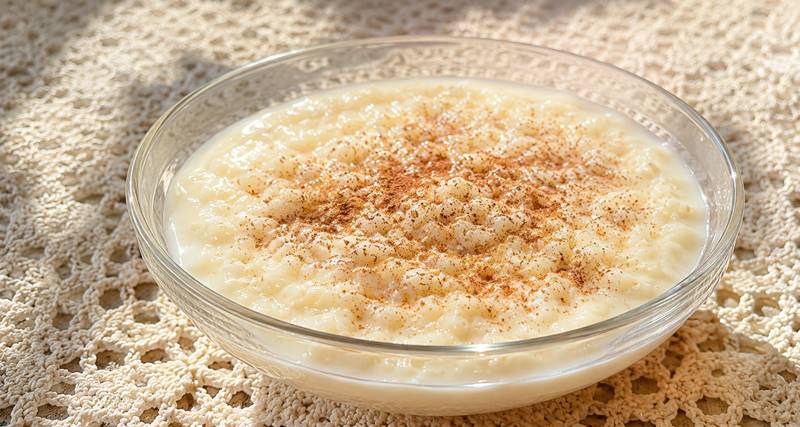
Rizogalo, the beloved Greek rice pudding, is one of the most cherished and timeless desserts in Greek culinary tradition. For many Greeks, it is much more than a sweet treat—it is a taste of childhood, family gatherings, and the comforting warmth of grandma’s kitchen.
In villages throughout Greece, rice pudding was often served during celebrations, local festivals, and family occasions. It was an economical yet nourishing dessert made from simple ingredients that could be found in almost every household: milk, rice, and a little sugar.
The aroma of cinnamon sprinkled generously on top and the delicate scent of lemon simmering in the pot created a dessert filled with comfort and nostalgia. It is no surprise that Rizogalo remains one of Greece’s most beloved traditional desserts.
Rizogalo: The Dessert That Raised Generations of Greeks
Ingredients (6 servings)
- 1 liter whole milk
- 100 g short-grain rice (Glacé rice or Arborio-style rice)
- 100 g sugar
- 1 strip lemon peel
- 1 vanilla pod or 1 tsp vanilla extract
- 1 pinch salt
- Ground cinnamon for serving
Instructions
- Prepare the Rice
Place the rice in a saucepan with approximately 2 cups of water.
Simmer until most of the water has been absorbed.
This is the old-fashioned secret.
Greek grandmothers never cooked the rice directly in the milk.
- Add the Milk
Add:
- the milk
- the lemon peel
- the vanilla
- the pinch of salt
Simmer gently, stirring frequently to prevent sticking.
- Add the Sugar
Add the sugar when the rice is almost fully cooked and tender.
If sugar is added too early, the rice takes longer to soften properly.
- Achieve the Perfect Texture
Continue cooking over low heat until the mixture becomes creamy.
Keep in mind:
Rice pudding thickens significantly as it cools.
For that reason, remove it from the heat while it is still slightly looser than your desired final consistency.
Grandma’s Secret Tips
- Use Whole Milk
The richer the milk, the creamier and more velvety the final result.
- Be Careful with the Lemon Peel
Use only the yellow outer layer.
The white pith can make the pudding bitter.
- Patience Is Essential
Authentic rice pudding should never be rushed.
Low heat and frequent stirring are the keys to success.
- Choose the Right Rice
The best options are:
- Short-grain rice
- Carolina rice
- Arborio-style rice
Avoid long-grain varieties such as Basmati rice.
The Traditional Festival Version
In villages of Thessaly and Macedonia, cooks often added:
- a pinch of ground mastic resin, or
- a leaf of scented geranium (arbaroriza) while the milk simmered
The fragrance was absolutely unforgettable and gave the dessert a unique traditional character.
Serving Suggestions
Divide the rice pudding into individual serving bowls.
Allow it to cool to room temperature before refrigerating.
Just before serving, sprinkle generously with ground cinnamon.
Simple, humble, and comforting, Rizogalo is truly a warm hug in a bowl.
Extra Tips for the Best Rizogalo
- For an even richer flavor, replace a small portion of the milk with heavy cream.
- Add a pinch of Chios mastic for a distinctly Greek aroma.
- Reduce the sugar slightly if you prefer a lighter dessert.
- Garnish with crushed biscuits or toasted almonds for added texture.
- Store in the refrigerator for up to 3 days.
Nutritional Benefits and Health Advantages
When enjoyed in moderation, Greek rice pudding can be part of a balanced diet and offers several nutritional benefits.
Supports Bone Health
Milk is rich in calcium, which helps maintain strong bones and healthy teeth.
Provides High-Quality Protein
The milk contributes valuable protein that supports muscle maintenance and recovery.
Offers Sustained Energy
Rice provides carbohydrates that supply the body with steady, long-lasting energy.
Gentle on Digestion
Traditional rice pudding is considered one of the gentlest desserts for the digestive system.
Suitable for Children and Older Adults
Its soft texture and nourishing ingredients make it an excellent choice for people of all ages.
FAQ – Frequently Asked Questions
- Why did my rice pudding become too thick?
Rice pudding continues to thicken as it cools. Remove it from the heat while it is still slightly runnier than your desired consistency.
- Can I use a different type of rice?
Yes, but short-grain rice varieties such as Glacé, Carolina, or Arborio provide the creamiest texture because of their higher starch content.
- How long does it keep?
Stored in an airtight container in the refrigerator, Rizogalo stays fresh for 2–3 days.
- Can I make it without sugar?
Absolutely. You can substitute sugar with honey or your preferred sweetener and adjust the sweetness to taste.
- Why is the sugar added near the end?
Adding sugar too early can slow the cooking process and prevent the rice from softening properly. That is why traditional Greek cooks always added it toward the end of cooking.
Greek Rizogalo is more than just a dessert—it is a treasured part of Greek culinary heritage, bringing comfort, simplicity, and sweet memories to every spoonful.




 CookTheGreekWay