
Dakos is one of the most iconic dishes of Cretan cuisine and a beloved staple of Greek gastronomy. Simple, wholesome, and bursting with Mediterranean flavors, it perfectly demonstrates how a few high-quality ingredients can create an unforgettable culinary experience.
In Crete, Dakos is also known as “Koukouvagia” and has long been a daily meal for farmers and shepherds. Barley rusks could be stored for months, fresh tomatoes came straight from the garden, and mizithra cheese was made locally.
This combination gave birth to one of the most famous dishes of the Cretan diet and the Mediterranean way of eating.
Dakos: The Treasure of Crete on a Plate
Ingredients
- 2 large Cretan barley rusks
- 2 large ripe tomatoes
- 100 g mizithra or xynomizithra cheese
- Extra virgin olive oil
- Dried oregano
- Salt
- A few olives (optional)
- Capers or sea fennel for a more island-inspired flavor
Instructions
- Lightly Moisten the Rusks
Briefly run the rusks under water. Do not soak them; they only need a quick splash to soften slightly.
- Grate the Tomatoes
Coarsely grate the tomatoes, keeping all their juices.
- Layer the Tomatoes
Spread the grated tomatoes evenly over the rusks and let them sit for about 5 minutes to absorb the juices.
- Add the Cheese
Crumble the mizithra cheese by hand over the tomatoes for a rustic, traditional presentation.
- Finish the Dish
Top with:
- Generous extra virgin olive oil
- Oregano
- A pinch of salt
- Olives, capers, or sea fennel if desired
The Little Cretan Secret
A great Dakos is not simply a salad placed on top of a rusk.
It requires:
- Very ripe, juicy tomatoes
- High-quality extra virgin olive oil
- 5–10 minutes of resting time before serving
This allows the rusk to become soft on the bottom while remaining pleasantly crunchy in the center—the authentic Cretan way.
An Even More Traditional Version
In several villages across Crete, Dakos is prepared by layering:
- A little grated tomato
- The barley rusk
- More grated tomato
- Mizithra cheese
This method helps the rusk absorb more flavor and moisture, creating an even richer result.
Nutritional Value
Dakos is considered one of the healthiest dishes of the Mediterranean diet.
It provides:
- Complex carbohydrates from barley rusks
- Dietary fiber
- Lycopene from tomatoes
- Calcium and protein from mizithra cheese
- Heart-healthy monounsaturated fats from olive oil
- Essential vitamins and antioxidants
Estimated Nutritional Value per Serving
- Calories: 380–450 kcal
- Protein: 12–15 g
- Carbohydrates: 35–40 g
- Fat: 18–22 g
- Fiber: 7–9 g
Health Benefits
Regular consumption of Dakos may contribute to:
- Better digestive health thanks to its fiber content.
- Improved heart health due to olive oil and antioxidant-rich ingredients.
- Stronger bones through the calcium found in mizithra cheese.
- Enhanced immune support from the vitamins and antioxidants in tomatoes.
- Increased satiety and balanced energy levels without excessive calories.
What to Serve with Dakos
Food Pairings
Dakos pairs wonderfully with:
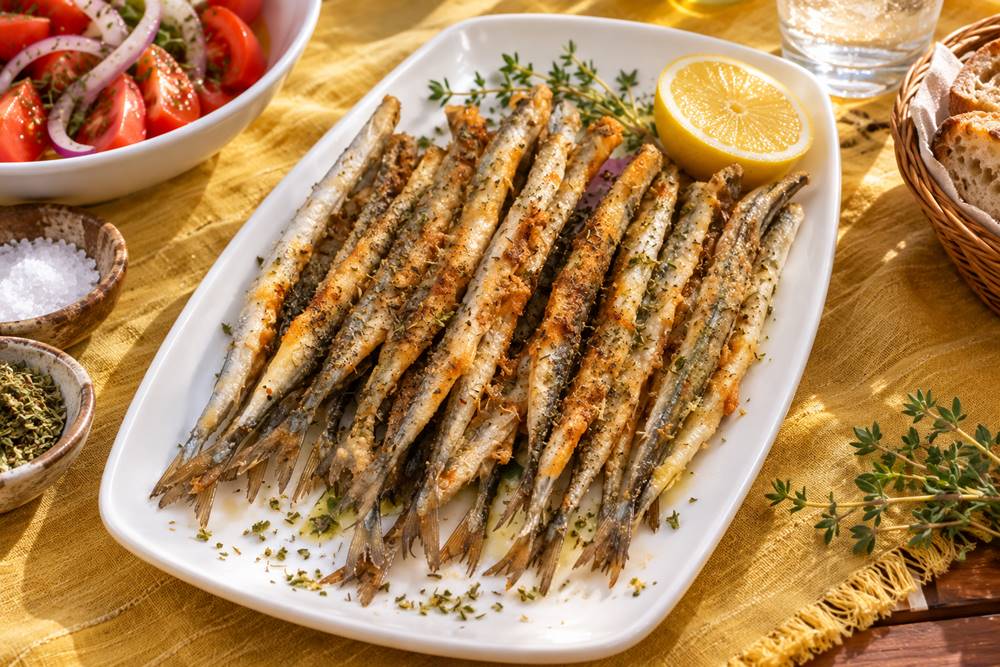
- Grilled sardines
- Marinated anchovies
- Charcoal-grilled octopus
- Grilled calamari
- Traditional Greek sausages
- Assorted Cretan cheeses
Drink Pairings
Enjoy Dakos with:
- Traditional Cretan raki
- Dry white wine
- Vidiano wine from Crete
- Assyrtiko wine
- A light lager beer
Extra Tips for Success
- Always use ripe, flavorful summer tomatoes.
- Olive oil is the star ingredient, not just a garnish.
- Xynomizithra provides the most authentic Cretan flavor.
- Allow the Dakos to rest before serving for the best texture.
- Sea fennel adds a unique coastal and Mediterranean touch.
Frequently Asked Questions (FAQ)
- What is the difference between Mizithra and Xynomizithra?
Xynomizithra has a tangier, slightly acidic flavor and is considered the traditional cheese used in authentic Cretan Dakos.
- Can I use feta cheese instead?
Yes, but the flavor will differ from the traditional Cretan recipe.
- Should I wet the rusks before assembling?
Yes, but only lightly. Over-soaking will make them too soft and mushy.
- How long does Dakos keep?
Dakos is best enjoyed immediately after preparation. If left too long, the rusk may become overly soft.
- Is Dakos suitable for vegetarians?
Absolutely. It is a nutritious and satisfying vegetarian Mediterranean dish.



 CookTheGreekWay