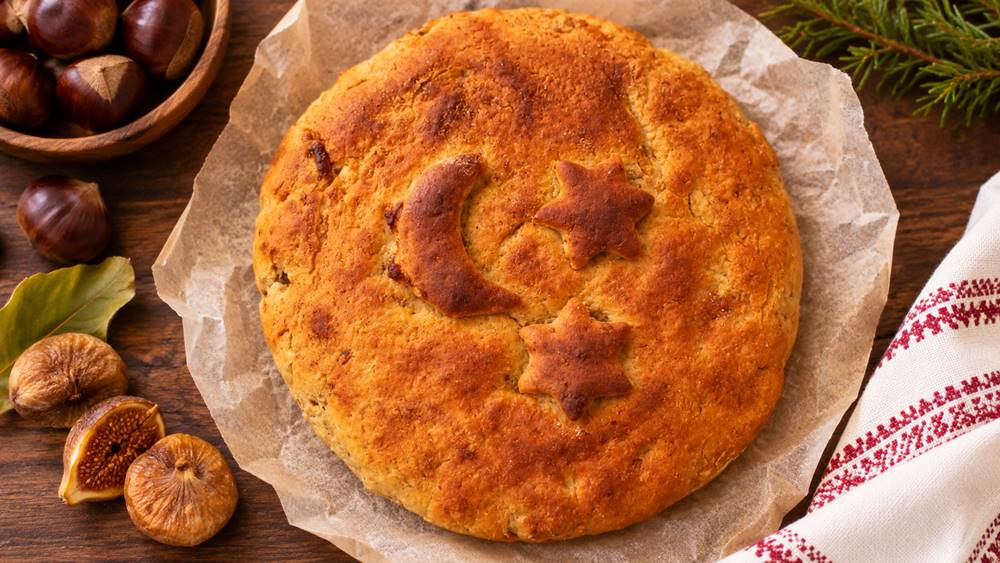
There is something special about homemade bread during the colder months. The aroma filling the kitchen, the warmth of the oven, and the pleasure of slicing a freshly baked loaf bring back the simplicity of traditional home cooking.
Greek chestnut and fig bread captures that feeling beautifully.
Made with flour, cooked chestnuts, dried figs, and a little honey, this rustic loaf has a dense, tender crumb and a naturally sweet, earthy flavor.
Its actual texture is slightly fluffy—closer to bread than to cake—with a subtle, natural sweetness from the chestnuts and figs.
It is wonderful with cheese, a glass of wine, or simply on its own.
Chestnuts, Figs, and Mountain Traditions
Chestnuts have been an important seasonal food in mountainous parts of Greece, particularly in areas where chestnut trees thrive.
In times when wheat was scarce or expensive, rural households sometimes extended their flour supplies with other ingredients, including cornmeal and chestnuts.
Dried figs and other preserved fruits were also valuable winter provisions.
The combination of chestnuts, figs, and bread reflects this resourceful approach to cooking: making nourishing food from ingredients that could be stored throughout the colder months.
Family traditions and local accounts associate similar rustic breads with winter gatherings and festive tables. However, the precise history of this particular chestnut-and-fig combination is not firmly documented.
The recipe below is a home-style reconstruction inspired by Greek mountain ingredients and traditional baking methods.
Ingredients
- 500 g wheat flour, preferably bread flour
- 200 g cooked, peeled chestnuts
- 6–7 dried figs, finely chopped
- 7 g instant dry yeast
- 1 tsp salt
- 1 tbsp honey or grape molasses (petimezi)
- 250–300 ml lukewarm water, as needed
- 2 tbsp extra virgin olive oil
Optional: A few raisins.
For a more rustic variation, replace part of the wheat flour with cornmeal. The loaf will be denser and may need extra water.
How to Make Greek Chestnut and Fig Bread
- Prepare the Chestnuts
Boil the chestnuts until tender, then peel them carefully.
Mash them into a smooth purée, adding a little water if necessary. Allow to cool until lukewarm.
- Make the Dough
In a large mixing bowl, combine the flour, yeast, and salt.
Add the chestnut purée, honey or grape molasses, and olive oil.
Gradually pour in the lukewarm water, mixing until a soft dough forms.
Knead for 8–10 minutes. The dough should be pliable but slightly heavier than ordinary bread dough.
- Add the Figs
Fold the chopped dried figs into the dough, distributing them evenly.
If the figs are very dry, soak them briefly in warm water and drain thoroughly before using.
- Let the Dough Rise
Place the dough in a lightly oiled bowl and cover with a clean kitchen towel.
Leave in a warm place for approximately 60–90 minutes, until noticeably risen.
Because of the chestnut purée, the dough may not double as dramatically as ordinary white bread dough.
- Shape and Bake
Shape into a round or oval loaf and place on a baking tray lined with parchment paper.
Cover and leave for another 20–30 minutes.
Preheat the oven to 180°C (350°F), conventional setting.
Bake for 45–50 minutes, until the crust is golden brown and the center is fully baked.
If using a thermometer, aim for approximately 93–96°C (200–205°F) in the center.
Transfer to a wire rack and cool completely before slicing.
Tips for the Best Result
- Mash the chestnuts thoroughly.
This creates a moist, tender crumb. - Add water gradually.
Chestnut purée varies in moisture. - Avoid adding too much flour.
A stiff dough can produce a dry loaf. - Allow the bread to cool.
Its dense crumb needs time to set.
For a festive finish, brush the warm crust lightly with diluted honey, although this is optional.
How to Serve It
Chestnut and fig bread is delicious with aged Greek graviera, soft manouri, or a little honey.
It also complements roasted pork and seasonal cheese platters.
For wine, try a medium-bodied Agiorgitiko. Its soft tannins and fruity character pair beautifully with the bread’s gentle sweetness.
Nutritional Value
Chestnuts provide carbohydrates, fiber, and potassium, while dried figs contribute fiber and natural sugars.
Olive oil adds unsaturated fats.
Estimated nutrition per slice (1/12 loaf):
220–240 calories,
5–6 g protein, and
3–4 g fiber, depending on the ingredients used.
Frequently Asked Questions
- Does this bread taste sweet?
Slightly. The sweetness comes mainly from chestnuts, dried figs, and a small amount of honey or grape molasses.
- Can I make it vegan?
Yes. Use grape molasses instead of honey.
- Can I use chestnut flour?
Chestnut flour behaves differently from wheat flour because it contains no gluten. It should not replace the entire flour quantity without adjusting the recipe.
- How should I store it?
Keep in an airtight container for up to two days at cool room temperature, or freeze individual slices for longer storage.
A Final Thought
Greek chestnut and fig bread celebrates the comforting flavors of winter: earthy chestnuts, naturally sweet figs, olive oil, and freshly baked dough.
Rustic, satisfying, and full of character, it is a beautiful addition to the seasonal table.
Enjoy every slice with good cheese, a glass of Greek wine, and the warmth of homemade cooking!
Every Greek recipe tells a story. Discover authentic flavors, traditions, and timeless family recipes with CookTheGreekWay.




Leave a Reply