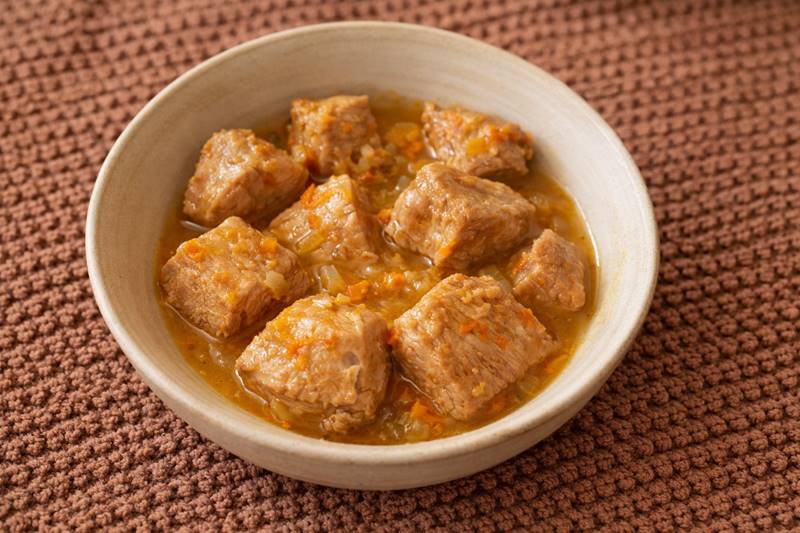
Pork with orange is one of those dishes that doesn’t need much to shine.
It was traditionally cooked in the Peloponnese and Central Greece, mainly during winter, when oranges were fresh and abundant.
This is not a modern recipe. It contains no honey, no wine, no spices.
The orange is not used to sweeten the dish, but to provide aroma and acidity, lifting the pork and naturally balancing the sauce.
It is a Sunday meal, a dish for a proper family table, slowly simmered, filling the house with comforting aromas.
Why This Recipe Works
- The pork is properly browned before simmering
- The orange is added at the end, preventing bitterness
- The sauce thickens naturally, without tricks
- The flavor remains clean, honest, and deeply Greek
Pork with Orange – Traditional Greek Recipe (20th century)
Ingredients
- 1 kg (2.2 lb) pork (shoulder or neck), cut into portions
- 1 large onion, finely chopped
- 4-5 tbsp olive oil
- Juice of 2 oranges
- Zest of 1 orange (only the orange-colored part)
- 1 cup hot water
- Salt
- Black pepper
- 1 bay leaf (optional but traditional)
Method (Traditional One-Pot)
Heat the olive oil and brown the pork well on all sides.
Add the onion and cook until soft and lightly golden.
Pour in the hot water and add the bay leaf.
Cover and simmer gently for about 45–60 minutes, until the meat is tender.
When the pork is almost done, add:
- the orange juice
- the orange zest
- salt and pepper
Uncover and simmer for another 10–15 minutes, until the sauce thickens.
The orange is added at the end to prevent bitterness.
Extra Traditional Tips
- Use sweet oranges, not overly acidic ones
- Zest only the orange-colored part – the white pith is bitter
- Pork shoulder takes slightly longer but becomes wonderfully tender
- Avoid stirring constantly at the end; let the sauce settle naturally
- It tastes even better the next day – classic Greek wisdom
Serving Suggestions
- With oven-roasted or stewed potatoes
- With crusty country-style bread
- With a simple salad (cabbage or lettuce)
What to Drink with It
- Dry white wine (Roditis or Savatiano)
- Old-school retsina, for true traditionalists
- Light red wine (low-tannin Agiorgitiko)
- Non-alcoholic: sparkling water with a slice of orange
Nutritional Value (approx. per serving)
Protein: high (pork)
Fat: moderate (mainly from olive oil and pork)
Vitamin C: from fresh orange juice
No added sugars
Filling and ideal for winter nutrition
FAQ – Frequently Asked Questions
- Why is the orange added at the end?
To prevent bitterness. We want aroma and acidity, not a sweet or overcooked sauce.
- Should I add honey or wine?
No, not if you want the authentic traditional recipe. Those are modern additions.
- Can I add potatoes?
Yes. Traditionally, potatoes are added near the end, cut into large chunks, so they absorb the sauce.
- Can I add lemon?
Yes. A little lemon juice together with orange juice is a very common traditional variation.





 CookTheGreekWay