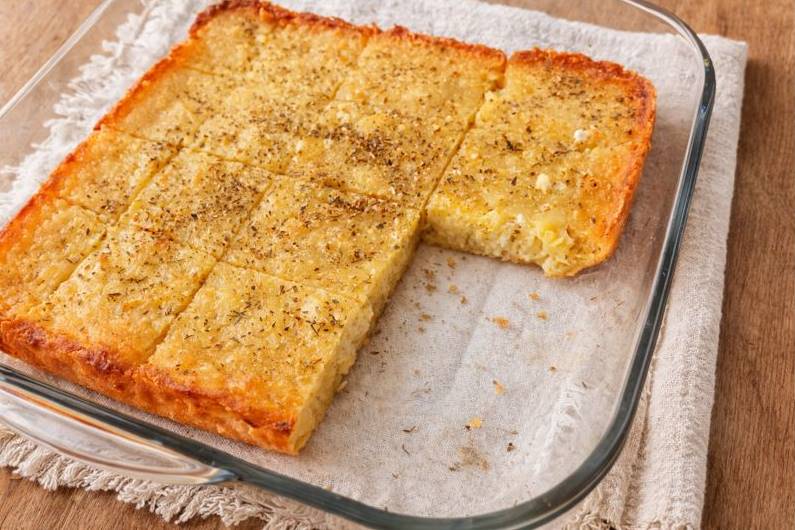
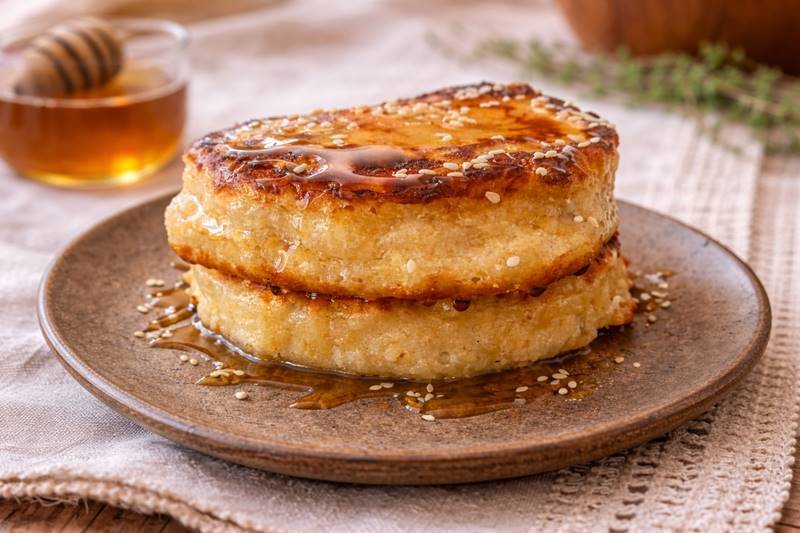
In Vlach tradition, especially in January, this pie wasn’t always called zymaropita as we know it today. You’ll find it under names like chylopita, winter batter pie, or the pie of the cauldron.
It is food born from cold weather, necessity, and wisdom. This is a dish of the mountains—where winters were harsh and ingredients few. No phyllo dough, no complicated steps. Just batter, fire, and time.
What kind of pie is it?
- Made without phyllo
- With wheat flour or cornmeal
- With milk or water, depending on availability
- With cheese only when there was some at home
- Baked in a tray, clay pot, or cauldron
- A true winter dish, meant for snow and frost
Vlach Batter Pie
(Mountain Epirus – Thessaly – Pindus | 19th–20th century)
Ingredients
- 1½ cups flour (traditionally half white flour, half cornmeal)
- 1 cup milk (or water if milk was unavailable)
- 3 tablespoons sheep’s butter or 4–5 tablespoons olive oil
- 3 eggs
- 1 cup grated cheese (feta, mizithra, galotyri—whatever the household
- Salt
- (Optional) 1–2 tablespoons trachanas or cracked wheat
Method
- In a bowl, mix the flour, milk (or water), eggs, and salt until you have a thick but pourable batter.
- Add the cheese and the melted butter or olive oil.
- Grease a baking pan very well.
Traditional tip: place the empty greased pan in the oven to heat the oil well, then pour in the batter.
- Bake at 200°C / 390°F for 40–45 minutes, until the top is crispy and the inside remains soft.
How It Was Eaten
- Hot, scooped with a spoon
- Served with sour milk or strained yogurt
- Alongside trachanas soup or another simple winter broth
This was everyday food —not festive— but deeply nourishing.
Why It’s a Vlach Winter Dish
- Made with whatever ingredients were available
- No phyllo, no extra labor
- High-energy and filling
- Perfect for cold weather and physical work
- A dish shaped by necessity and climate
Extra Tips
- For an extra crispy base, sprinkle a little cornmeal into the hot pan before adding the batter.
- Using half cornmeal gives it a more rustic, traditional texture.
- Leftovers are excellent eaten cold the next day.
- Baking it in a cast-iron or clay pot brings out a deeper, traditional flavor.
What to Drink With It
- Dry white wine from mountain vineyards
- Tsipouro without anise
- Ayran or sour milk, the old-fashioned way
Nutritional Value
(Approximate)
- Carbohydrates from flour for winter energy
- Protein from eggs and cheese
- Calcium and healthy fats for satiety
- Ideal for cold climates and physically demanding days
FAQ – Frequently Asked Questions
- Can I make it without eggs?
Yes, but it will be less fluffy and more compact.
- Can it be made vegan?
Yes—use water instead of milk, olive oil instead of butter, and omit the cheese.
- Can I add greens?
Traditionally no, but a small amount of wild spinach or leeks works well.
- Why is there no phyllo?
Because it was a dish of necessity. Phyllo requires time, skill, and warmth—luxuries in winter.

 CookTheGreekWay