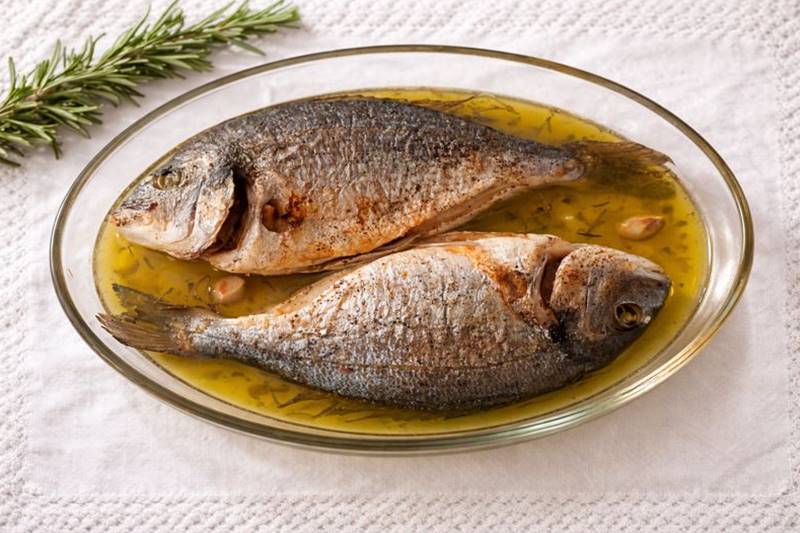
Epiphany in Greek tradition is more than a major religious celebration; it is a passage. The day when the waters are blessed, homes are spiritually cleansed, and the new year is welcomed with light and hope.
In coastal areas, the Ionian Islands, and the Peloponnese, the Epiphany table almost always featured fish. Not as luxury, but as a blessing.
Simply cooked fish, with olive oil, lemon, and local herbs — to welcome a year that would be pure, bright, and healthy.
Among the traditional Epiphany dishes, oven-baked fish with rosemary holds a special place. A recipe passed down from the late 19th century to today, carrying memories, faith, and the authentic flavors of the Greek land.
Ingredients
- 1 large fish (1–1.5 kg / 2.2–3.3 lb)
Traditionally sea bass, red porgy, sea bream, grouper, or dentex. Inland areas often used desalted cod. - 1 cup olive oil
- Juice of 1–2 lemons
- 2–3 sprigs fresh rosemary
- 2–3 garlic cloves (optional)
- Coarse sea salt & black pepper
- 1 small glass dry white wine
Instructions
Clean the fish, season lightly with salt, and let it rest briefly.
In a greased baking pan, place a few rosemary sprigs and potatoes (if available).
Lay the fish on top, adding garlic cloves — some cooks placed them inside the fish cavity.
Drizzle with olive oil, lemon juice, and, where available, a splash of white wine.
Bake in a moderate oven (about 180°C / 350°F) for 35–45 minutes, depending on size.
— In the past, this dish was baked in wood-fired ovens, with the saying: “Let the house smell of rosemary, and the year be filled with light.”
Once cooked, finish with a little fresh lemon juice and, in households that observed the custom, a single drop of holy water.
Extra Tips – Tradition & Cooking
Rosemary was believed to cleanse and protect the home, which is why its aroma was essential on Epiphany Day. If using desalted cod, reduce the salt and add extra lemon.
For a more authentic old-style flavor, place the fish directly on rosemary sprigs, not just on top.
White wine can be replaced with a little potato cooking water, as done in more modest households. Avoid turning the fish while baking
— “Let it rest, as the day of Epiphany itself,” they used to say.
What to Serve It With
- Lemon-roasted potatoes
- Boiled wild greens or cabbage with olive oil and lemon
- Beetroot salad with garlic and vinegar
- Rustic country bread or cornbread
- A glass of dry white wine or traditional retsina
Nutritional Value
(Approximate)
This dish is:
- High in high-quality protein
- Rich in Omega-3 fatty acids
- A good source of vitamin D, selenium, and phosphorus
- Low in saturated fats
- Ideal for light eating after the festive season
- Rosemary also aids digestion and offers antioxidant benefits.
FAQ – Frequently Asked Questions
- Why is fish eaten on Epiphany in Greece?
Fish symbolizes purification, water, and spiritual simplicity, making it ideal for the Epiphany table.
- Can this recipe be made without an oven?
Yes. Traditionally, it was also cooked in wood-fired ovens or covered clay pots over embers.
- Which fish is most traditional?
Sea bass, sea bream, red porgy, grouper, or cod in inland regions.
- Is holy water necessary?
Not for cooking — but in many households, it was part of the blessing ritual and a symbolic wish for the year ahead.






 CookTheGreekWay