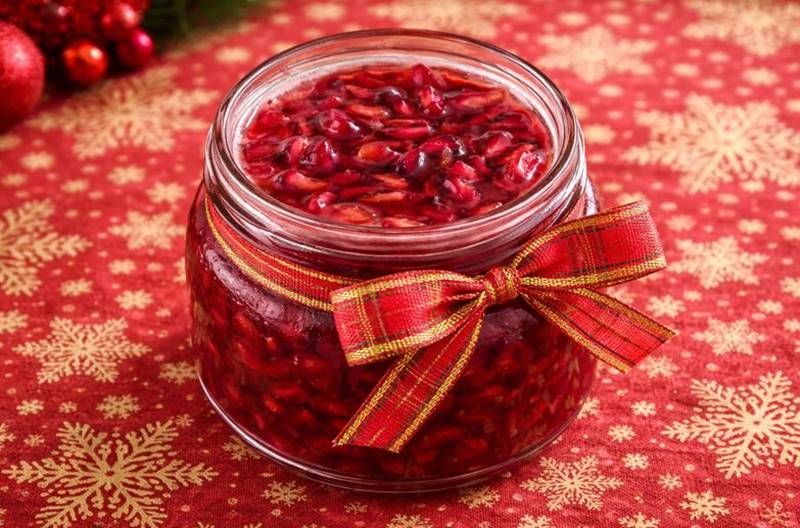
Pomegranate spoon sweet is one of the most elegant and symbolic traditional Greek preserves. Deeply rooted in the Peloponnese, it represents abundance, prosperity, and hospitality.
At CookTheGreekWay, we cherish authentic recipes passed down from generation to generation—and this one is exactly that: simple, pure, and full of Greek aroma.
With just a few ingredients and gentle cooking, the ruby-red “pearls” of the pomegranate transform into a glossy spoon sweet that pairs beautifully with Greek coffee, yogurt, or festive treats.
Ingredients
- 3 cups pomegranate seeds (only the “pearls,” cleaned)
- 3 cups sugar
- 1 cup water
- Juice of ½ lemon
- (Optional) 1–2 small pieces of rose geranium or a little vanilla
Instructions
Cleaning the Pomegranate
Carefully remove the pomegranate seeds, making sure there are no white membrane pieces left, as they cause bitterness.
Preparing the Syrup
In a saucepan, add the water and sugar. Simmer over medium heat until the sugar dissolves and a light syrup forms.
Adding the Pomegranate Seeds
Add the pomegranate seeds and gently simmer for about 15 minutes, stirring lightly with a wooden spoon.
Setting & Flavoring
Once the syrup becomes glossy and takes on a deep red color, add the lemon juice and, if desired, the rose geranium or vanilla.
Storing
Remove the aromatic leaves. Spoon the hot sweet into sterilized jars, seal tightly, and let cool completely.
Extra Tips for Perfect Pomegranate Spoon Sweet
Clean the pomegranate in a bowl of water to prevent the seeds from bursting.
Do not overcook—the syrup will thicken more as it cools.
For extra aroma, add a small strip of lemon peel (without the white pith).
Store in a cool, dark place for up to 1 year.
Nutritional Value
(per tablespoon approx.)
Calories: ~60 kcal
Carbohydrates: 15 gFat: 0 g
Protein: 0.2 g
Pomegranate is rich in antioxidants, polyphenols, and vitamin C.
Although this spoon sweet contains sugar, it still retains part of the fruit’s valuable nutrients.
FAQ – Frequently Asked Questions
- How do I know when the spoon sweet is ready?
Place a drop of syrup on a plate—if it holds its shape and doesn’t spread, it’s ready.
- Can I reduce the sugar?
You can slightly, but it may affect the syrup consistency and shelf life.
- Why did my spoon sweet turn bitter?
Usually due to leftover white pith from the pomegranate or overcooking.
- How is it traditionally served?
With Greek yogurt, vanilla ice cream, soft cheeses, or simply with Greek coffee.
- Can I skip the aromatic ingredients?
Absolutely! The natural flavor of pomegranate is beautiful on its own.

 CookTheGreekWay