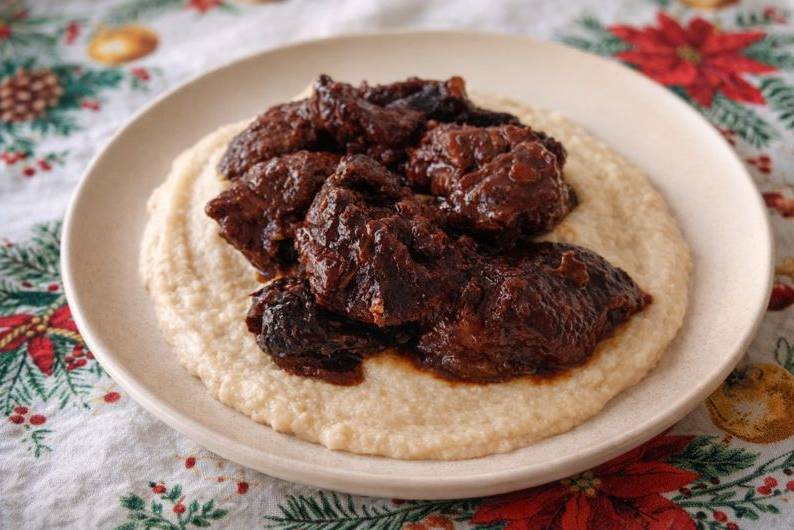
Some dishes are more than just food — they are memories simmering slowly in a pot. Beef with prunes and red wine is one of the most emblematic dishes of Asia Minor and Constantinopolitan cuisine, lovingly prepared for the most important moments of the year.
This is a dish made for celebration. Tender beef cooked gently in a rich sweet-and-sour sauce, scented with cinnamon, allspice and red wine, while the prunes melt into the sauce and give it depth, warmth and festive elegance. It is exactly the kind of dish that belongs at the Christmas and New Year’s table, filling the house with aromas that instantly signal celebration, togetherness and comfort.
In Greek households with roots in Smyrna and Constantinople, this recipe was often reserved for holidays, family gatherings and special occasions. It is hearty yet refined, traditional yet timeless — and perfect for serving to guests. Pair it with rice, oven potatoes or, especially, creamy mashed potatoes, which beautifully absorb the velvety sauce.
Beef with Prunes & Red Wine
(Asia Minor – Constantinopolitan Tradition)
Ingredients (Serves 6)
- 1.5 kg beef (chuck or shoulder), cut into large chunks
- 250 g dried prunes, pitted
- 1 large onion, finely chopped
- 2 cloves garlic (optional)
- 1 cup dry red wine
- 3 tbsp olive oil
- 1 tbsp butter (optional but traditional)
- 1 tbsp tomato paste
- 1 tbsp honey or grape molasses
- 1 cinnamon stick
- 2–3 allspice berries
- 1 bay leaf
- Salt and freshly ground black pepper
- Hot water or beef stock
Method
- Soak the prunes in warm water for 20–30 minutes. Drain and reserve a little of the soaking liquid.
- Heat olive oil (and butter) in a large pot. Sear the beef over high heat until well browned on all sides.
- Add the onion (and garlic, if using) and sauté until soft and glossy.
- Stir in the tomato paste and cook briefly to remove its raw taste.
- Deglaze with the red wine and let the alcohol evaporate for 3–4 minutes.
- Add cinnamon, allspice, bay leaf, honey, salt and pepper.
- Pour in enough hot water or stock to cover the meat. Lower the heat and simmer gently for 1½–2 hours, until the beef is meltingly tender.
- Add the prunes and a little of their soaking liquid during the last 20 minutes of cooking, until the sauce becomes thick, glossy and aromatic.
Tips for Perfect Results
- Proper browning of the beef is key to deep flavor
- Use cinnamon sparingly — it should perfume the dish, not dominate it
- This dish tastes even better the next day
- For a more old-style Constantinopolitan version, omit the tomato paste
What to Serve It With
- Dry red wine such as Agiorgitiko or Xinomavro
- For a more elegant pairing: dry Mavrodaphne
- Non-alcoholic option: sparkling water with lemon zest
Serving Suggestions
Serve with:
- Plain white rice or pilaf
- Oven-roasted potatoes
- Creamy mashed potatoes, ideal for soaking up the rich sauce
Nutritional Value (per serving – approx.)
Calories: ~480 kcal
High-quality protein from beef
Rich in iron and vitamin B12
Dietary fiber from prunes
A balanced and satisfying festive main course
FAQ – Frequently Asked Questions
- Can I prepare this dish in advance?
Yes. In fact, the flavors develop even more beautifully the next day.
- Can it be cooked in the oven?
Absolutely. After searing, bake covered at 170°C (340°F) for about 2 hours.
- Can I substitute the prunes?
You may use dried apricots, but the flavor profile will change.
- Is this suitable for holiday meals?
It is ideal for Christmas and New Year’s — festive, comforting and impressive.






 CookTheGreekWay