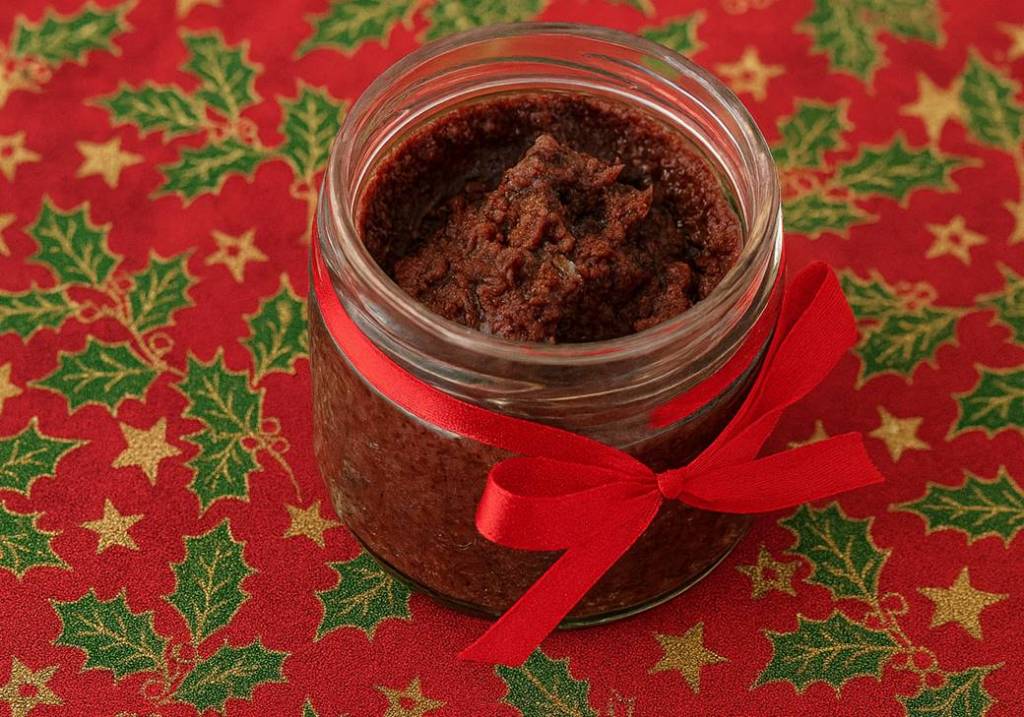
Traditional olive tapenade, or eliokrema as it’s called in many villages of the Peloponnese and Crete, is one of the most iconic flavors of Greek cuisine.
A savory spread made with just a few but precious Mediterranean ingredients: black olives, extra virgin olive oil, a bit of garlic, and oregano.
Spread it over fresh bread, serve with breadsticks or Cretan rusks, or pair it with cheese and cold cuts — it instantly brings the taste of Greece to your table.
And it also makes a beautiful handmade food gift!
Fill sterilized jars, decorate with festive ribbons, and share a touch of Greek tradition with loved ones at Christmas — or any time of the year!
In some regions, they add cumin or crushed walnuts for a more festive flavor.
Ingredients
- 500 g black olives (preferably throubes or well-ripened)
- 100 ml high-quality olive oil
- 1–2 garlic cloves (optional)
- 1 tsp oregano or throubi
- 1 tsp red wine vinegar or lemon juice (for brightness)
Instructions
- Prepare the olives
If using olives with pits, remove them. Traditionally they were cracked in a mortar first and then pitted by hand. - Crush
Place olives, garlic, and oregano in a mortar or blender. Work until it becomes a smooth paste. - Blend
Slowly drizzle in the olive oil and vinegar, mixing until you get a silky, homogeneous cream. - Store
Transfer into sterilized glass jars. Cover the surface with a thin layer of olive oil and seal well.
Serving & Gift Idea
Delicious with:
- Fresh bread & rusks
- Breadsticks
- Cheese & charcuterie boards
Mediterranean vegetable dishes
As a gift
Decorate jars with red and green ribbons and a tag saying “Traditional Olive Tapenade.”
Nutritional Info (per 1 tbsp / 15 g)
Calories: ~50 kcal
Fat: 5 g (mostly heart-healthy monounsaturated fats)
Carbs: <1 g
Protein: 0.3 g
Sodium: High (due to brined olives)
Vitamins E & A: Good source
Antioxidants: Very high
Rich in polyphenols, which support cardiovascular health.
FAQ – Frequently Asked Questions
- How long does it keep?
Up to 3 months refrigerated in sterilized jars.
After opening: consume within 2–3 weeks and always use a clean spoon.
- Can I make it without garlic?
Yes — many areas traditionally made it without garlic.
- Which is better, vinegar or lemon?
Both! Vinegar gives a deeper flavor, lemon makes it fresher.
- What type of olives are best?
Prefer throubes or well-ripened black olives for a richer taste.
- What can I add for variations?
Capers, rosemary, sun-dried tomato, walnuts, or cumin.



 CookTheGreekWay