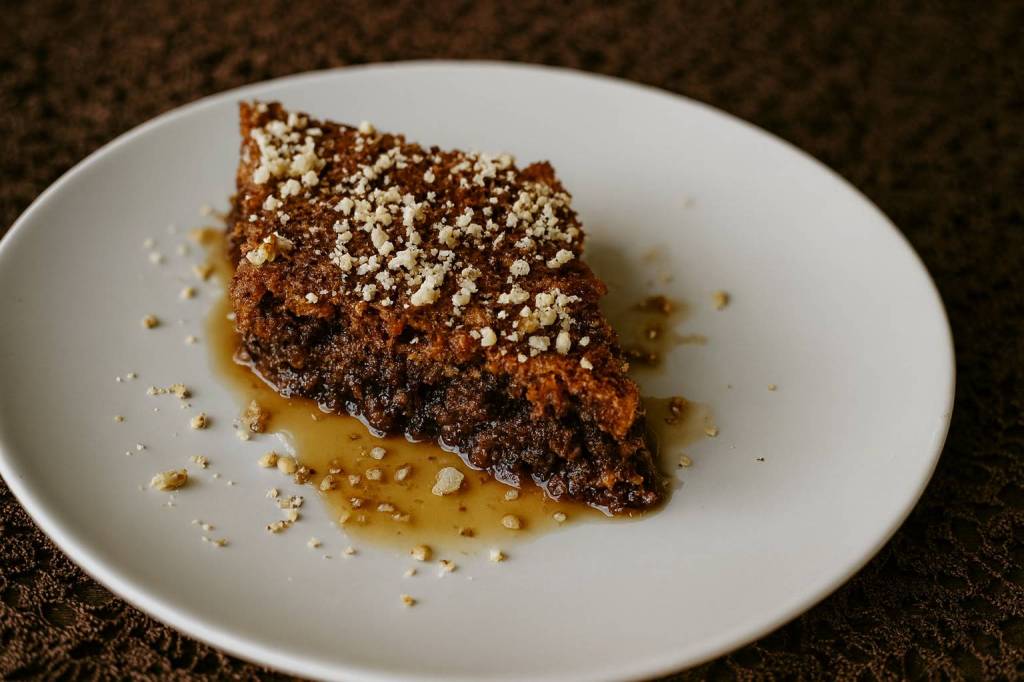
A Sweet Taste of Memory and Tradition
The melachrini of Thessaly is more than a dessert. It’s a spoonful of history, a journey to the villages of Pelion, Karditsa, Trikala, Larissa and Farsala — places where this cake was born and lovingly kept alive.
This is a sweet that grew out of simplicity and necessity: equal parts breadcrumbs, walnuts and sugar, mixed with plenty of eggs — no semolina, no oil, no butter. Easy to remember, easy to prepare, and always made with what every home already had.
Breadcrumbs made from stale bread added volume and lightness, walnuts were abundant in mountain villages, and the syrup brought moisture and longevity to a cake with no fat.
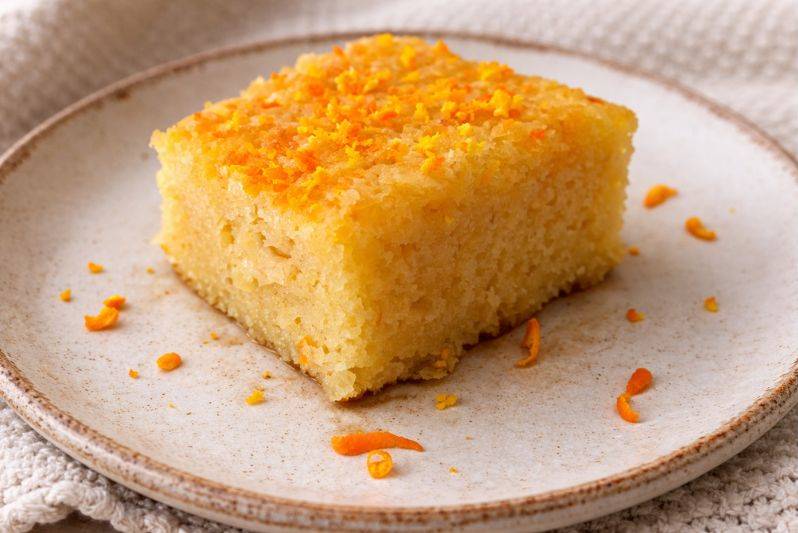
The result? A less oily, more “sponge-like” and aromatic walnut cake compared to modern versions.
For decades, the melachrini had a social role as well. It appeared:
- At winter celebrations and especially Christmas
- At engagements and small family feasts
- As the “Sunday sweet” in wealthier homes
- Even at memorial meals in some regions, before modern syrup cakes took their place
Always with its proud name: melachrini.
Traditional Melachrini – The 1:1:1 Recipe
Ingredients
(Quantities are equal — if you change the 1 cup, adjust all the others accordingly.)
For the cake mixture
- 1 cup fine breadcrumbs
- 1 cup coarsely chopped walnuts
- 1 cup sugar
- 6 eggs
- 1 tsp cinnamon
- ½ tsp ground clove
- 1 tsp baking powder
- 1/2 tsp baking soda
- Zest of 1 orange
- 2 tbsp cognac or plain tsipouro (no anise)
For the syrup
- 2 cups sugar
- 2 cups water
- Peel of lemon or orange
- 1 cinnamon stick
Instructions
1) Make the syrup (it must cool completely)
- Place all syrup ingredients in a pot.
- Boil for 5 minutes from the moment it starts bubbling.
- Set aside to cool.
Traditional rule: hot cake – cold syrup.
2) Prepare the cake mixture
- Separate the eggs.
- Beat egg yolks + sugar until pale and fluffy.
- Add the alcohol, zest and spices.
- Mix breadcrumbs + walnuts + baking powder + baking soda in another bowl.
- Add the dry ingredients to the yolk mixture.
- Whip the egg whites into stiff meringue and fold them gently into the mixture.
- Pour into a round baking pan.
3) Baking & Syrup
- Bake at 180°C / 350°F for 45–50 minutes.
- While still hot, cut into pieces.
- Pour the cold syrup gradually over the top.
- Let it rest 1–2 hours to absorb.
Extra Tips (including one for a stronger aroma!)
- Breadcrumbs give the signature “sponge-like” texture.
- A good meringue is the secret to a fluffy cake.
- Keep the walnuts coarsely chopped — they should be noticeable in each bite. – Proper syruping is essential since the cake contains no fat.
For extra aroma: Add a teaspoon of caramelized sugar to the batter or a few drops of pure vanilla extract. Both blend beautifully with the orange and spices and give the melachrini a warm, irresistible fragrance.
Nutritional Value per Serving (approx.)
(Based on 12 servings — values may vary with syrup quantity)
Calories: 280–320 kcal
Carbohydrates: 32–38 g
Protein: 5–7 g
Fat: 12–14 g (mostly from walnuts)
Fiber: 1.5–2.5 g
Sodium: low
Cholesterol: high (due to eggs)
Even without oil or butter, it is rich in nutrients thanks to the walnuts and eggs.
FAQ – Frequently Asked Questions
- Can I use semolina?
You can, but it won’t be the authentic Thessalian melachrini. The texture becomes denser and less airy.
- Can I make it without alcohol?
Yes. Replace it with orange juice — the flavor stays bright and aromatic.
- How long does it keep?
3–4 days at room temperature, well covered. The syrup helps it stay fresh.
- Can I add cocoa?
Yes, but that’s a modern variation, not the traditional village version.
- Will the syrup crystallize?
Usually not. If you’re worried, add 1 tsp glucose.
Regions where this recipe is recorded
- Magnesia / Pelion (Zagora, Makrinitsa, Portaria, Agios Ioannis, Agioi Saranta)
- Karditsa (mainly the villages around Lake Plastira and the Argithea region)
- Trikala (Kalabaka – Chassia – Pyli area)
- Larissa (Olympus region, Tsaritsani, Elassona, Kissavos)
- Farsala & surrounding villages
The use of semolina and butter begins to appear after 1960, when available ingredients and consumer habits start to change.
After the late ’60s–’70s, the recipe gradually becomes “enriched” with oil, butter, semolina, and even cocoa.

 CookTheGreekWay