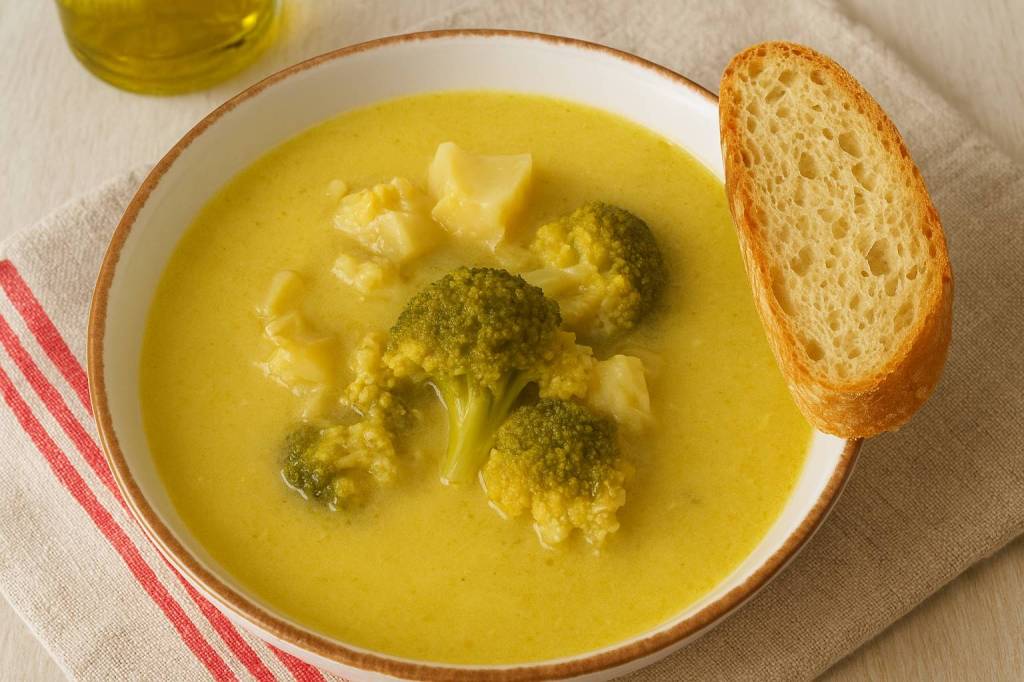
From the misty mountain villages of Epirus to the fertile plains of Thessaly, this broccoli avgolemono has long been a symbol of warmth and simplicity.
It’s a humble yet deeply flavorful and nourishing dish, cooked slowly in olive oil, kissed by lemon, and finished with the silky embrace of the traditional egg-lemon sauce (avgolemono).
The mild sweetness of broccoli, potato, and onion, gently spiced with a touch of cumin, creates a dish that feels like home — rustic, comforting, and full of heart. Perfect for a cozy evening or a light, nutritious family meal.
Traditional Greek Broccoli Avgolemono — A Warm Village Recipe from Epirus and Thessaly
Ingredients (serves 4)
- 1 large broccoli, cut into florets
- 1–2 potatoes, diced
- 1 small onion, finely chopped
- 4 tbsp olive oil
- Salt and pepper
- A little cumin
For the avgolemono sauce:
- 1 egg
- Juice of 1 large lemon
- A little broth from the cooked vegetables
Preparation
- Soak the broccoli florets in hot water to clean them thoroughly.
- In a large pot, sauté the onion in olive oil until it turns glossy and fragrant.
- Add the potatoes and broccoli. Stir gently to coat them in the oil.
- Pour in just enough water to cover the vegetables. Season with salt, pepper, and a pinch of cumin.
- Simmer over low heat until the vegetables are tender.
- Set the pot aside and reserve a little of the broth for the sauce.
To make the avgolemono:
- Beat the egg white until frothy, then add the yolk and continue whisking.
- Slowly add the lemon juice while whisking continuously.
- Gradually pour in a little hot broth, whisking to temper the egg mixture (so it doesn’t curdle).
- Pour the avgolemono back into the pot, shaking it gently to blend (do not stir with a spoon).
- Let it sit for 2–3 minutes to thicken slightly.
Serve with feta cheese, crusty village-style bread, and freshly ground black pepper.
Extra Tips
For a heartier version, add a small handful of rice to the broth — it thickens the sauce beautifully.
To make it vegan, replace the egg-lemon sauce with a mixture of lemon juice and tahini — creamy and delicious!
Add a little lemon zest just before serving for extra aroma and brightness.
Best Pairings
White wine with fresh acidity, such as Moschofilero or Roditis, complements the lemony avgolemono beautifully.
For a traditional Greek touch, serve with tsipouro (without anise) in small amounts.
Non-alcoholic option: sparkling water with lemon or mountain tea (Greek herbal tea) with a touch of honey.
Nutritional Value (per serving)
Nutrient Amount
Calories: ~180 kcal
Protein: 7 g
Carbohydrates: 16 g
Fat: 10 g
Fiber: 5 g
Vitamin C: >100% of daily intake
A light, wholesome dish — low in calories, gluten-free, and rich in antioxidants.
FAQ
- Can I use frozen broccoli?
Yes — just thaw and drain it well before cooking to prevent excess water from thinning the sauce.
- What if my avgolemono curdles?
Whisk in a tablespoon of cold water and gently reheat over very low heat while swirling the pot.
- Can I reheat this dish?
Yes, but very gently. Use low heat or a double boiler — the sauce may separate if heated too quickly.
- How long does it last in the fridge?
Up to 2 days in an airtight container. If the sauce thickens, loosen it with a bit of warm broth or water.
- What can I serve it with?
Pair it with feta, olives, and rustic bread — a true taste of Greek countryside comfort.
If you liked this recipe on CookTheGreekWay, you can also try Stewed Cauliflower (Greek “Kounoupidi Kokkinisto”) or the Traditional Greek Pumpkin Soup with Trahana







 CookTheGreekWay