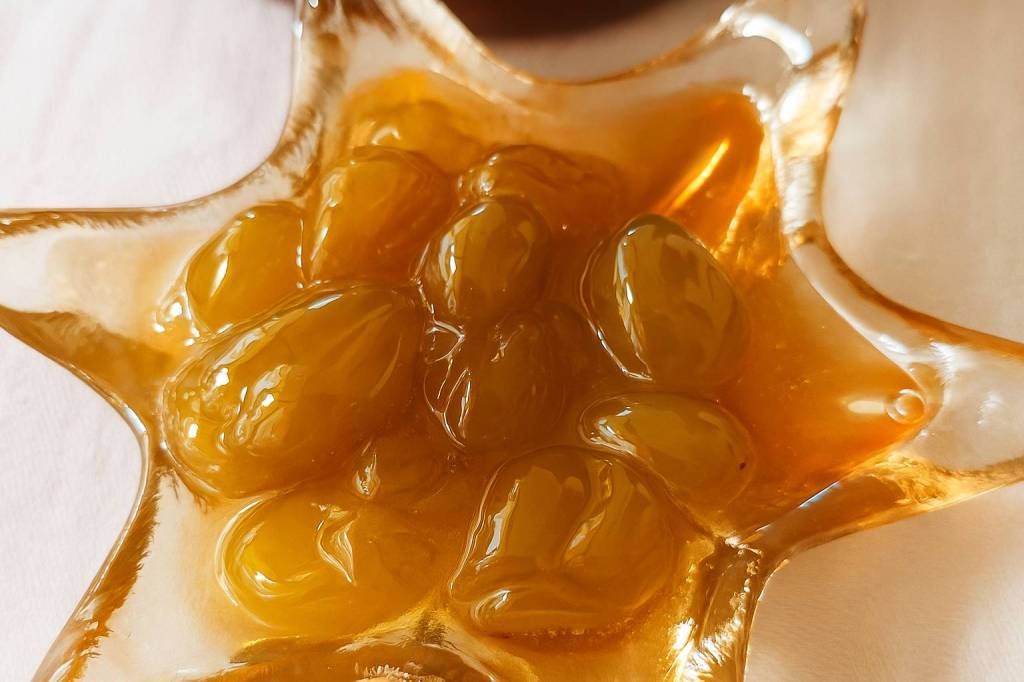
There are flavors that are not just food but living memories. A small glass dish, a silver spoon, and inside it a glossy grape, shining as if it holds the harvest sun within. Grape spoon sweet is one of those flavors: a true taste of Greece, passed down from generation to generation, unchanged and full of tradition.
In the old days, every Greek household had its “good cupboard,” where jars of spoon sweets were carefully stored. It was the most beloved treat, a symbol of hospitality and respect for the guest. Served in dainty little dishes with a glass of cold water or Greek coffee, it was a sweet promise: “Welcome to our home.”
The grape, fruit of Dionysus and symbol of abundance, has always been central in Greek culture. Beyond winemaking, grapes were preserved as sweets to capture the essence of the harvest.
Offering a spoon sweet was never just about flavor. It was an act of Greek hospitality (philoxenia), a gesture of warmth and generosity. Whether to a neighbor dropping by or to travelers passing through, a spoonful of sweet grapes symbolized welcome, abundance, and respect.
Traditionally, grape spoon sweet was often prepared during the grape harvest in September, when families would gather in the vineyards. In many villages, it was offered as a treat to harvest workers as a celebration of community and the fruits of labor.
Today, while lifestyles have changed, the custom of spoon sweets remains alive, connecting the modern Greek kitchen with centuries of tradition.
Ingredients
- 1 kg grapes (sultana or seedless varieties)
- 500 g sugar
- 180 ml water
- 2 leaves of scented pelargonium (arbaroriza)
- Juice of ½ lemon
Method
- Prepare the grapes
Carefully remove the grapes from the stem, wash them well, and drain thoroughly.
- First boil
In a pot, add the sugar and water. Bring to a boil for 5 minutes until a light syrup forms.
- Add the grapes
Add the grapes to the syrup and simmer gently for about 10 minutes. Skim off the foam from the surface for a clear and glossy syrup.
- Resting time
Remove from heat and allow the sweet to cool and rest for a few hours or ideally overnight.
- Final boil & thickening
The next day, bring the sweet back to the boil until the syrup thickens (test: a drop on a cold plate should hold its shape without spreading). Add the lemon juice and the pelargonium leaves for aroma.
- Storing
While still hot, pour into sterilized jars and seal tightly.
Extra Tips
- Lemon juice prevents the syrup from crystallizing and keeps the color bright.
- Do not overcook the grapes; they should remain whole and glossy.
- Avoid stirring with a spoon; instead, gently shake the pot to mix the grapes without crushing them.
- For a different aroma, replace lemon with vanilla extract or seeds.
Nutritional Value (per teaspoon ~15g)
Calories: ~45 kcal
Carbohydrates: 11 g
Sugars: 10 g
Vitamin C (from grapes and lemon)
Antioxidants (grape polyphenols)
Like all spoon sweets, grape spoon sweet is rich in natural sugars but also provides antioxidants and a small vitamin boost. It should be enjoyed in moderation as part of a balanced diet.
Serving Suggestions
- With thick Greek yogurt
- As a topping on vanilla ice cream
- On cheesecake or panna cotta
- With homemade fridge desserts
- Alongside Greek coffee or a small glass of liqueur
FAQs about Grape Spoon Sweet
- How long does grape spoon sweet last?
If stored in sterilized jars in a cool place, it can last for 8–12 months.
- Can I make it without sugar?
Sugar is essential for preservation. Alternatives like stevia or honey can be used, but shelf life will be much shorter.
- Why does the syrup crystallize?
Usually because not enough lemon was added or it was overcooked.
- Which grapes are best for this sweet?
Seedless grapes like sultana or other small, firm varieties are ideal.
- How do I know when the syrup is ready?
A drop of syrup on a cold plate should remain rounded and not spread.
If you enjoyed this recipe, explore more cozy fall dishes at cookthegreekway.com!

 CookTheGreekWay